
Livraison le jour même ou le lendemain

Qualité garantie

Débloquez vos offres de bienvenue: Livraison GRATUITE | Jusqu'à -80 % | 30 jours d'essai gratuits à JoyPlus
Téléchargez l'application
Choosing a new motorcycle helmet is never a decision to be taken lightly. Far more than a style accessory, it's your most important safety partner on the road. Full-face, modular, ECE 22.06 standard, dual visor… Faced with an overwhelming number of options and sometimes opaque jargon, it's easy to feel lost. Don't panic: this guide is here to break down the essential criteria and help you find the perfect helmet for your riding style, without getting bogged down in marketing hype.
Before you even start eyeing the latest trendy models, it's crucial to master the fundamentals that will guarantee your protection and comfort.
Since 2022, the ECE 22.06 standard has been the new benchmark in Europe. It replaces the old 22.05 standard with a much more demanding testing protocol. An ECE 22.06-approved motorcycle helmet has successfully passed a series of impact tests at different speeds, abrasion resistance tests, shell deformation tests, and, most importantly, rotational impact tests. This last point is crucial, as it simulates the conditions of a real accident much more accurately. Choosing an ECE 22.06 certified helmet means ensuring you have the highest level of protection currently available. To verify this, the homologation label, sewn onto the chin strap, must include the "E/ECE 22.06" mark.
The choice between these two main helmet families depends primarily on your riding style.
Certain features, far from being mere gadgets, can radically improve your riding experience.
Let's get practical with a few models that tick all the right boxes for different types of riders.
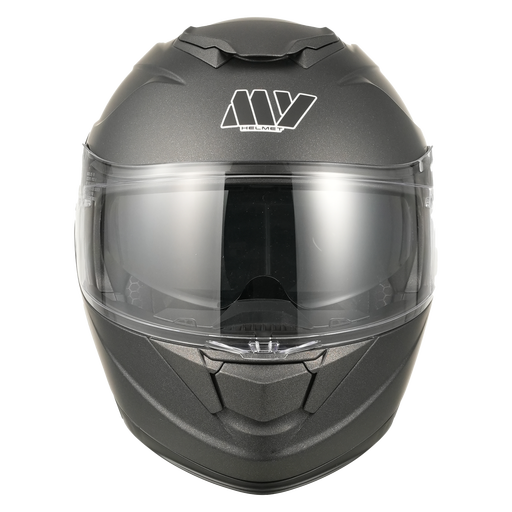
What sets it apart The MY-935 is a modular helmet that combines versatility and safety. Certified ECE R 22.06, it meets the strictest standards. Its unisex design is suitable for both men and women.
Key features
Who is it for? This helmet is aimed at motorcycle and scooter riders looking for versatility for mixed city/road use. It's the smart choice for those who want to be able to install a communication kit without any hassle.
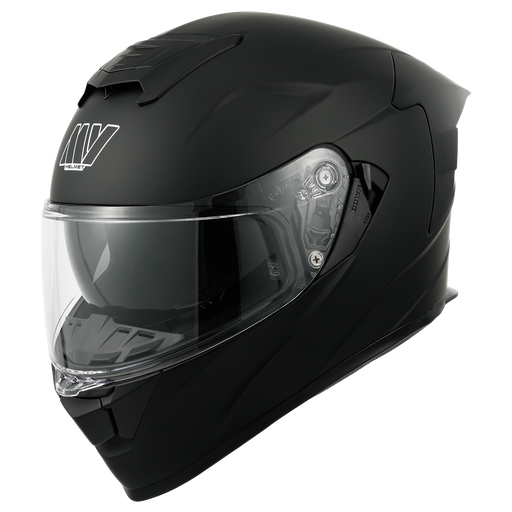
What sets it apart The MY-936 is a pure-bred full-face helmet, focused on protection and comfort for long-distance riders. Its ECE R 22.06 certification makes it a trusted ally on any road.
Key features
Who is it for? It will appeal to everyday riders who prioritise the safety of a full-face helmet above all else, whether for the daily commute or weekend getaways. Its comfort and sun visor make it an excellent road companion.
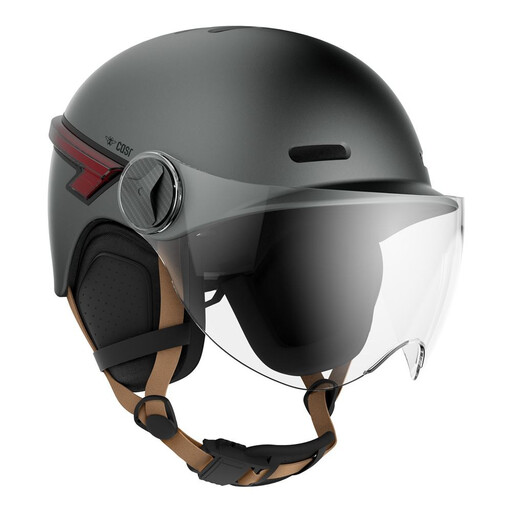
WARNING: This helmet is certified according to the EN 1078+A1 standard, which applies to helmets for cyclists and users of skateboards or scooters. It is in no way approved for use on a motorcycle or motorised scooter.
What sets it apart This model stands out with its integrated LED lighting system, designed to maximise visibility in the urban jungle. It features rear lights and turn signals, controllable from a remote attached to the handlebars.
Key features
Who is it for? This helmet is exclusively for users of bicycles, electric scooters, and other PMDs (Personal Mobility Devices) who want to maximise their visibility in the city.
Our selection covers the most common needs, but the world of motorcycle helmets is much vaster. If you can't find what you're looking for among these models or if you're seeking a different style (jet, motocross, etc.), many other options are available to you.
To explore a wider range, including other types of helmets and even other styles of men's headwear, feel free to browse the full category.
As a general rule, manufacturers agree on a lifespan of 5 years, even without any impact. Over time, exposure to UV rays and temperature variations causes the materials it's made of (polystyrene, glues, resins) to lose their effectiveness and their shock-absorbing capacity diminishes. Most importantly, a helmet must imperatively be replaced after any impact, even if no damage is visible on the outside.
To find your size, measure your head circumference with a tape measure. Place it about 2.5 cm (1 inch) above your eyebrows and at the widest part on the back of your head. Then, consult the brand's specific size chart, as sizing can vary. When trying it on, a new helmet should fit snugly and evenly, without creating any painful pressure points. Don't worry: the padding will always compress slightly with use.
In terms of safety, there is absolutely no difference. The structure and standards are identical. The distinctions are mainly in the range of sizes (sometimes smaller for so-called "women's" models) and in the choice of colours or graphics. Most helmets are, in fact, unisex. What matters isn't the women's motorcycle helmet or men's motorcycle helmet label, but finding THE helmet that perfectly fits the shape of your head.