
Livraison le jour même ou le lendemain

Qualité garantie

Débloquez vos offres de bienvenue: Livraison GRATUITE | Jusqu'à -80 % | 30 jours d'essai gratuits à JoyPlus
Téléchargez l'application
Getting up at night shouldn't be an obstacle course. Whether it's for a trip to the bathroom, comforting a child, or getting a glass of water, moving around in the dark too often means stubbed toes and the risk of falling. The motion sensor night light emerges as the perfect solution: a light that turns on just when you need it, and only when you need it.
However, the market is flooded with models that promise the world but are sorely disappointing in practice. As the head of product selection for Joybuy, my mission is to help you navigate this jungle. Let's break down the most common pitfalls together to help you make the right choice, with no regrets.
Before you jump on the first deal you see, beware of these deal-breakers that can turn a great idea into a frustrating gadget within a few weeks.
To avoid these unpleasant surprises, focus on a few key technical points. They are what will make all the difference in daily use.
The type of power source directly determines the versatility of your night light.
On this point, no compromise is acceptable. Most models feature a passive infrared (PIR) sensor, which reacts to body heat. Two elements must be scrutinised:
A good night light should be installable anywhere. For this, the magnetic LED night light is by far the smartest solution. The principle is simple: an adhesive base sticks to the wall, and the night light attaches to it magnetically. The advantage? You can detach it in a single gesture to recharge it, without peeling off the paint. Some models even include a hanging strap, a perfect option for a closet light.
Rather than endless lists, we've matched specific products to concrete needs, based on their objective features.
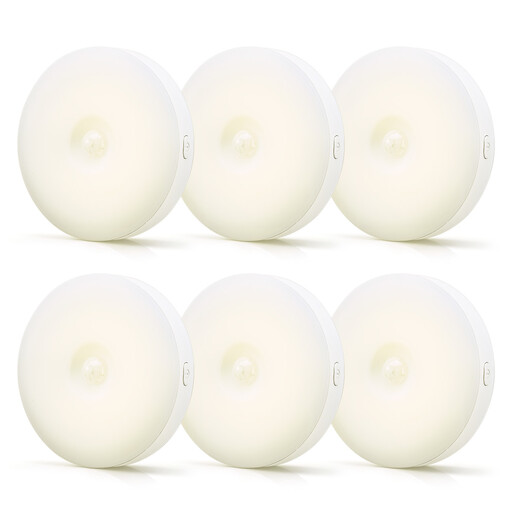
Why we chose it : Ideal for outfitting multiple areas (hallway, stairs, closets, toilets) at once. It's the turnkey solution for securing the whole house.
The pack format offers unbeatable value for money to equip several strategic points without fumbling with different products. The adhesive magnetic mount is a safe bet.
Complete and cost-effective solution. Wireless, tool-free installation. Three colour temperatures for a tailored ambiance.

Why we chose it : Perfect for those who want full control over the lighting ambiance, especially in a bedroom where a light that's too harsh can ruin your sleep.
It bypasses the "all-or-nothing" sensor trap with its fully adjustable modes. Its 500 mAh battery ensures solid battery life, putting an end to constant recharging.
3 colour temperatures (warm, neutral, cool) and 5 brightness levels. An ultra-customisable rechargeable night light.
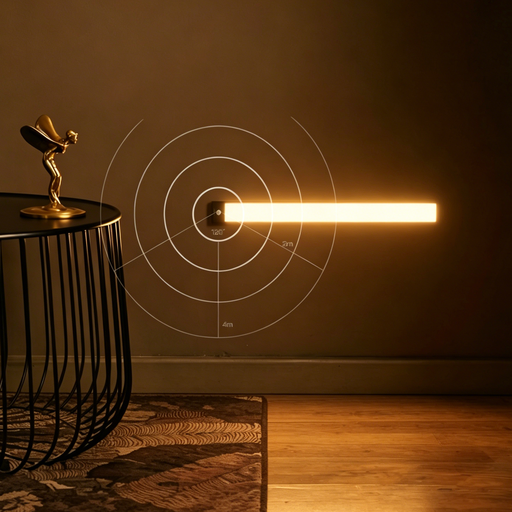
Why we chose it : Specially designed for confined spaces like wardrobes, large drawers, or under kitchen cabinets. Its bar shape ensures light is evenly distributed along its length.
Its ultra-slim design and magnetic mount are engineered for a discreet and sturdy integration, where a classic round night light would be both bulky and inefficient.
Ultra-slim design (less than 1 cm thick). Diffused and uniform light. Perfect as a closet light or for a countertop.
Now that your indoor nighttime wanderings are secure, why not extend that peace of mind to your outdoor spaces?
We've compiled a complete, up-to-date list of products that meet our strict selection criteria and safety standards.
Its longevity depends on two components: the battery and the LED. A quality lithium-ion battery can easily handle 300 to 500 full charge cycles. As for the LED, its lifespan is massive (typically 20,000 to 50,000 hours), ensuring years of peace of mind.
In a hallway or on a staircase, the ideal placement is low, about 20-30?cm from the floor, so the sensor can properly detect the movement of your legs. In a closet, mount it inside near the opening, facing downwards. Above all, avoid installing it opposite a heat source (like a radiator) or a reflective surface, which could cause false triggers.
No, its consumption is negligible. Most LED night lights have a power rating between 0.3?W and 1?W. Since a sensor-activated model only turns on for a few moments each day, its impact on your electricity bill is completely insignificant—we're talking about a few cents per year, at most.