
Livraison le jour même ou le lendemain

Qualité garantie

Débloquez vos offres de bienvenue: Livraison GRATUITE | Jusqu'à -80 % | 30 jours d'essai gratuits à JoyPlus
Téléchargez l'application
Getting up at night without turning the hallway into an obstacle course? It's possible. Whether it's for a late-night trip to the bathroom without waking the whole house, reassuring a child who's afraid of the dark, or simply getting down the stairs without risking a fall, well-designed accent lighting is a life-changer. The rechargeable motion-sensor night light has emerged as the game-changing solution, but be warned: the market is flooded with models that make tempting but often disappointing promises.
To ensure your smart purchase doesn't become a source of frustration, here are the three most common traps to avoid.
To make the right choice, focus on these few technical points. This is where true quality lies.
Since we're talking about wireless, battery life isn't optional. It's the number-one criterion. A good USB rechargeable light should last several weeks, or even months, on a single charge in automatic mode.
The sensor is the brains of the night light. Most models combine an infrared motion detector (PIR) and a light sensor.
The appeal of a wireless LED night light is being able to place it anywhere without taking out the drill.
Forget endless lists. Here are models that meet specific needs, chosen based on the criteria we've just detailed.
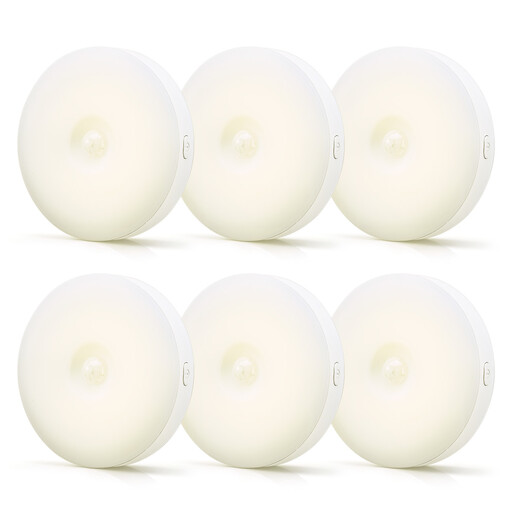
Why we chose it: The perfect pack for outfitting several strategic areas at once (stairs, closets, hallways) without worrying about outlets. This pack of night lights offers a turnkey solution.
Its mounting system is twofold: an adhesive magnetic base and a lanyard. You stick the base on once and for all, then simply detach the light to recharge it. Goodbye to single-use adhesives that fall off after three days.
100% wireless, rechargeable, and 3 light colours to vary the mood. The sensor promises a range of up to 6 metres.
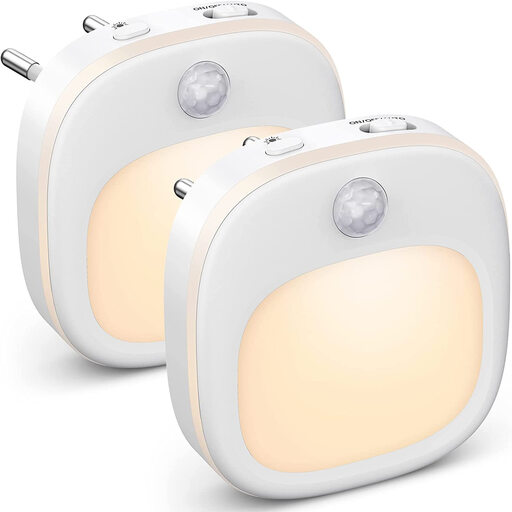
Why we chose it: For those who want a "plug and forget" solution where an outlet is available. Zero batteries to manage, zero charging to worry about.
Here, the battery life trap is eliminated at the source. Plugged into the mains, this night light provides continuous service with no charging constraints.
Installs in 2 seconds for total peace of mind. It offers 3 colour temperatures and 5 brightness levels for customised lighting.
Explore our full selection of night lights that meet our criteria for performance and reliability.
The lifespan depends on two factors. On one hand, the battery is designed to withstand several hundred charge cycles, which translates to several years of normal use. On the other, the LED itself often exceeds 15,000 hours of operation. For occasional use like a night light, that's practically forever.
Absolutely, that's their main advantage. They almost always come with a small, adhesive metal disc. You just stick this disc to your wall (plaster, wood, tile...), and the magnetic night light will attach to it. The mount is secure, yet the light remains removable for easy recharging.
Be aware that this is pathway lighting, not a stadium floodlight. Their brightness (usually between 20 and 60 lumens) is designed to help you make out the path and steps without blinding you in the middle of the night. For a sensitive area like a staircase, the ideal solution is to use a pack of night lights and install one every three or four steps for continuous and safe lighting.