
Livraison le jour même ou le lendemain

Qualité garantie

Débloquez vos offres de bienvenue: Livraison GRATUITE | Jusqu'à -80 % | 30 jours d'essai gratuits à JoyPlus
Téléchargez l'application
Whether you're navigating a dark hallway, finding something in a dim closet, or securing the area around your home, motion-activated lighting quickly proves to be an everyday essential. The catch? The market is flooded with models that make tempting promises but often disappoint once installed.
To avoid falling into the trap, it's best to know the most common pitfalls and steer clear of a purchase you might regret.
Knowing how to spot these weak points is the first step toward investing in a reliable and durable model.
To help you see more clearly, here are the technical specifications to examine closely. They determine the performance and longevity of your lighting.
Not all detection technologies are created equal. It's crucial to understand the technology inside:
The power method will depend on your intended use and installation location.
For outdoor use, this criterion is non-negotiable. The IP (Ingress Protection) rating consists of two digits:
In practical terms, for outdoor lighting:
Rather than an endless list, we've selected products that meet specific needs, applying the reliability criteria we've just discussed.
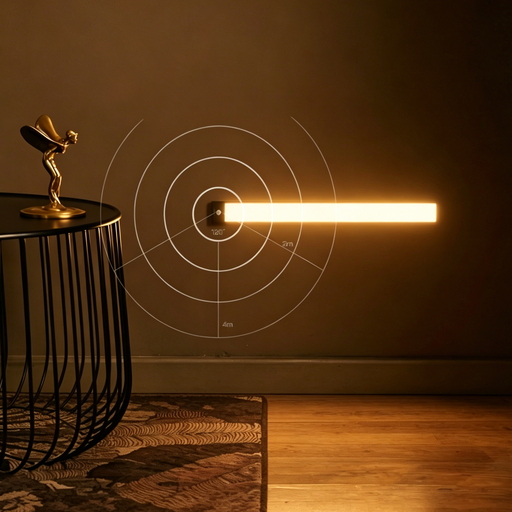
Why we chose it: Perfect for those looking for a "ready-to-use" solution to light up closets, drawers, or worktops. Its slim design and magnetic mount allow for tool-free installation in seconds. In short, it's the ultimate practical wireless closet light.
This USB-rechargeable model includes a reliable sensor that only activates in darkness and when motion is detected, saving it from the endless-recharging syndrome.
Ultra-slim design (less than 1 cm thick) and a detachable magnetic mount for effortless recharging.
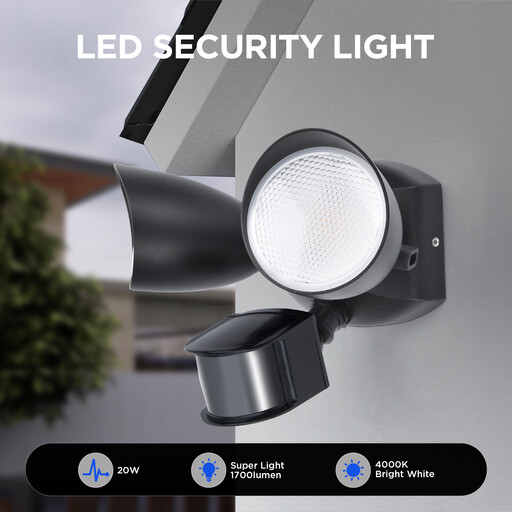
Why we chose it: For homeowners who take security seriously. This wired floodlight is built for the outdoors, and its 1700-lumen output is powerful enough to flood a yard, driveway, or garden with light.
As a wired model, it completely eliminates battery life issues. Its robust construction and high IP rating shield it from the elements, preventing the nasty surprise of a failure during the first storm.
Its high brightness of 1700 lumens and two adjustable heads provide security lighting that is both customisable and highly deterrent.
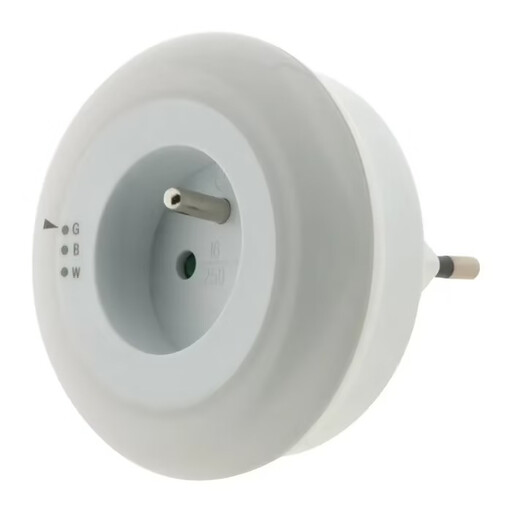
Why we chose it: Perfect for parents looking for an automatic night light for a child's room, or for anyone who wants to light a hallway at night. Its main advantage is its "pass-through socket" design, which lets you plug it in without sacrificing the wall outlet.
It uses a simple but incredibly effective dusk-to-dawn sensor: it turns on at nightfall and off at daybreak. No superfluous motion sensor that might trigger unnecessarily. Its power consumption is negligible (0.5 W).
The power outlet remains available for another device. A detail that makes all the difference in daily use.
We have compiled a complete and up-to-date list of products that meet our demanding selection criteria and current safety standards.
1. What is the real-world battery life of a rechargeable motion sensor light? Battery life depends on two things: the battery's capacity (mAh) and the frequency of use. A model with a 1000 mAh or larger battery, used in a moderately trafficked area (closet, hallway), can last several weeks, or even months, between charges. For a kitchen LED strip light used daily, you will obviously need to recharge it more often.
2. Can an outdoor motion sensor light be triggered by animals? Absolutely, it's a classic issue with standard PIR sensors that react to heat and movement. Some more advanced models offer sensitivity adjustments to ignore small animals. High-end systems, like security cameras with integrated lighting, use artificial intelligence to differentiate between people, animals, and vehicles, which drastically reduces false alerts.
3. How do I install a wireless LED strip light in a kitchen or closet? Most of these models are designed for ultra-simple installation. They usually come with an adhesive metal strip. Simply stick this strip to the desired location (under a kitchen cabinet, inside a wardrobe). The light, which is magnetic, then attaches to it. This system allows you to detach it in a single motion to recharge it via a USB cable, without damaging anything.