
Livraison le jour même ou le lendemain

Qualité garantie

Débloquez vos offres de bienvenue: Livraison GRATUITE | Jusqu'à -80 % | 30 jours d'essai gratuits à JoyPlus
Téléchargez l'application
Navigating a dark hallway, fumbling for your keys in a poorly lit entryway, or going down the stairs in the middle of the night… These everyday situations can quickly become uncomfortable, or even risky. The solution? A wireless motion-sensor light. Easy to install and energy-efficient, it promises to turn on only when you need it.
The problem is that the market is flooded with models making tempting promises that, in practice, don't always live up to the hype. To prevent a good idea from turning into a disappointing purchase, let's review the most common pitfalls.
To help you see clearly, let's focus on the few technical specifications that truly make a difference.
Rather than relying on marketing claims, analysing a few technical points will allow you to choose a product that is genuinely suited to your needs.
Here, two main options compete:
This is the brain of the light. A good sensor must be both responsive and intelligent. Two points to check without fail:
The great advantage of these lights is, of course, their drill-free installation. The most common systems are:
To illustrate these criteria, here are a few models that stand out, each meeting a specific need.
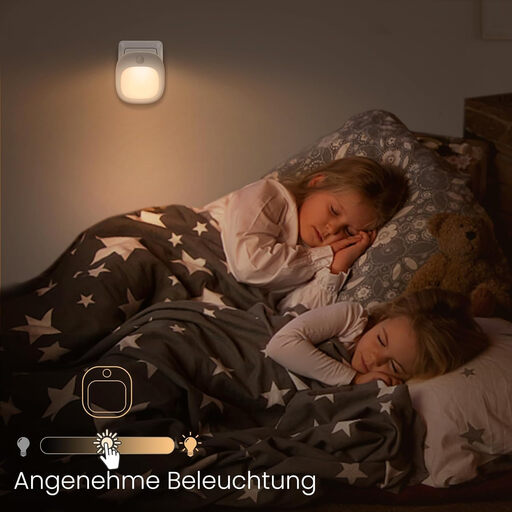
Best for: Perfect for anyone looking for a discreet hallway night light or an accent light in a child's room. Its compact size and multiple settings create a reassuring atmosphere, without ever being dazzling during nighttime trips.
No more single, harsh, cold light. With its 3 colour temperatures and 5 brightness levels, it adapts to any situation: warm, soft light for the bedroom, or a more neutral, bright light for a hallway.
Absolute versatility: the choice between warm, cool, or neutral white, combined with the dimmer, offers total control. 500 mAh battery is rechargeable via USB to free you from disposable batteries.
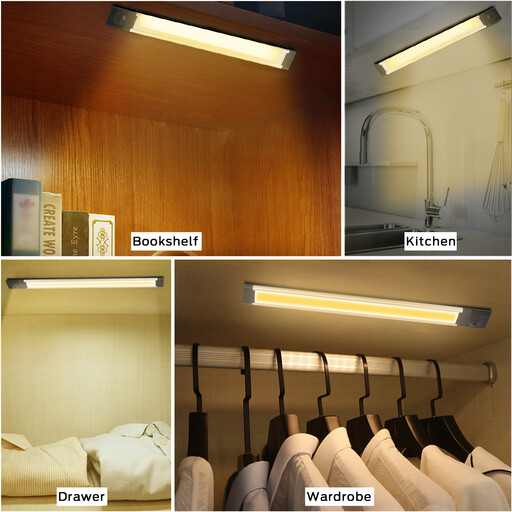
Best for: Perfect for those who need an automatic wardrobe light that truly illuminates, or a powerful wireless closet light. Its 400 lumens and strip format are a must-have for wardrobes, garages, or for lighting up a kitchen worktop.
This model sidesteps the low-brightness trap. While many lights merely provide path marking, its 400 lumens offer genuine functional lighting. Its aluminium and ABS construction inspires more confidence than all-plastic models.
High brightness: the 36 Epistar LEDs deliver a powerful 400 Lm output. Versatile installation: magnetic mounting or suspension hooks, all without drilling. The gesture control for power and dimming is a real plus.
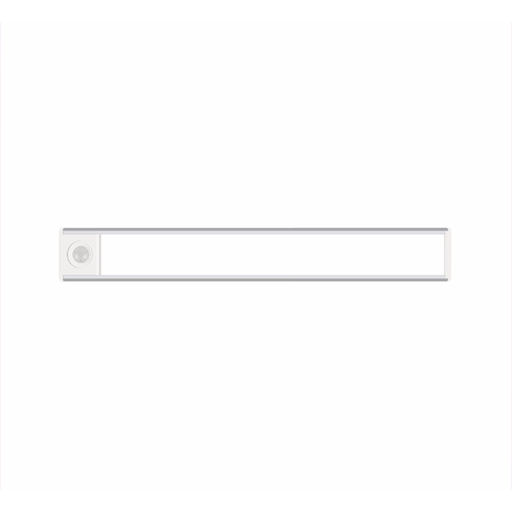
Best for: Specifically designed to secure critical traffic areas like stairs and long hallways. Its magnetic LED bar shape and its ultra-slim profile (10 mm) allow for discreet and effective installation, for example along skirting boards or stair risers for a stair light.
This model solves the headache of fragile or destructive mounting. Its magnetic system allows it to be removed for charging without ever weakening the initial adhesive. Its reliable sensor (3m range) prevents both false triggers and activation delays.
Ultra-practical magnetic installation: it snaps on and off effortlessly for recharging. Extra-slim profile: at only 10 mm thick, it blends into any decor. Li-Pol battery rechargeable via USB.
Discover our full selection of products that meet our quality criteria and European safety standards.
1. What is the lifespan of a rechargeable LED light? The lifespan depends on two components: the LED itself and the battery. LEDs have an exceptional longevity (often over 20,000 hours), which translates to years of use. The battery, on the other hand, typically withstands between 300 and 500 full charge cycles before its capacity begins to noticeably decline.
2. Will the adhesive damage my wall? It all depends on the quality of the adhesive and your wall surface. To minimise risk, clean and dry the surface thoroughly before applying. To remove a stubborn adhesive, heat it for a few seconds with a hairdryer to soften the glue before gently peeling it off. Models with magnetic mounts remain the best safeguard, as only the thin metal plate stays stuck to the wall.
3. Is a motion-sensor light energy-intensive? No, quite the opposite! This is one of their greatest strengths. They are designed to be ultra-efficient. They only consume energy during the few seconds they are on, and their standby consumption is almost zero. The dusk-to-dawn sensor, which prevents activation in daylight, is the key to maximising battery life.