
Livraison le jour même ou le lendemain

Qualité garantie

Débloquez vos offres de bienvenue: Livraison GRATUITE | Jusqu'à -80 % | 30 jours d'essai gratuits à JoyPlus
Téléchargez l'application
Fumbling around in a dark closet, cooking on a dimly lit countertop, or crossing a hallway in the middle of the night… These minor daily hassles quickly become a source of frustration. The motion-sensor LED light bar stands out as THE simple and effective solution. The problem? The market is saturated with models making tempting promises, and it's easy to make a poor choice.
To avoid buyer's remorse, here are the 3 deal-breakers that too often turn these lights into useless gadgets after just a few months:
To avoid these pitfalls, a few key technical points are worth checking. They will help you choose a model that truly fits your needs, whether it's for automatic closet lighting or an under-cabinet kitchen light.
A battery-powered LED light bar offers unmatched flexibility. But its usefulness depends directly on its endurance.
The brains of the light bar is its sensor. Most models use a PIR (Passive Infrared) sensor, which reacts to the body heat of a moving object.
The light produced should be suitable for the location where you install it.
Here are a few options that meet specific needs, taking into account our performance and reliability criteria.
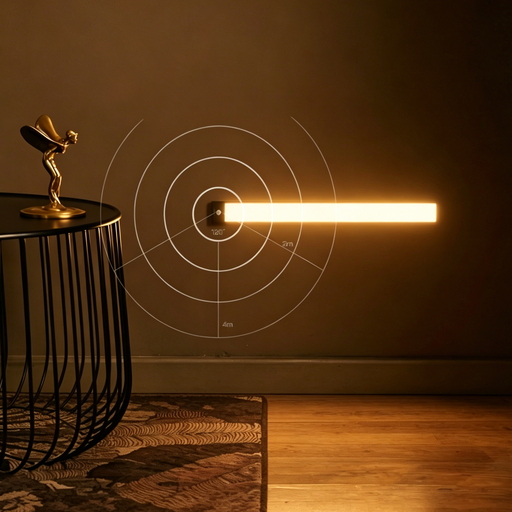
Why we love it: Perfect for lighting a drawer, a small cabinet, or a shelf. Its compact 20 cm size fits anywhere a standard light bar would be too bulky.
Its precise sensor limits false triggers. Say goodbye to the "temperamental sensor" trap that drains the battery for no reason.
Its ultra-slim design and magnetic mount make recharging a breeze.
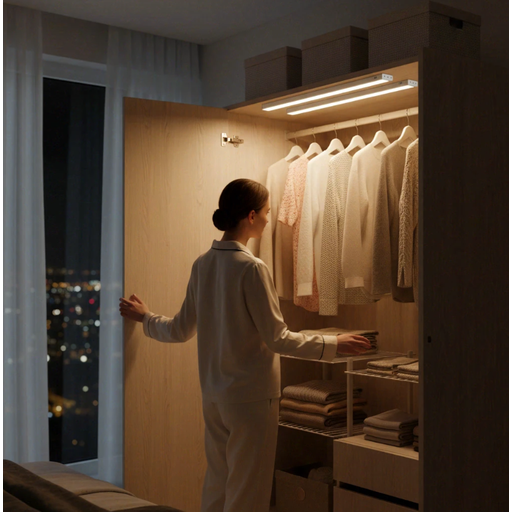
Why we love it: The solution for those who want customised lighting. With its three colour temperatures, it's equally suited for a countertop (cool light) and a closet (neutral light). Sold in a two-pack, it's excellent value for money.
It sidesteps the "unrealistic battery life" trap with its 1100 mAh battery, a much higher-than-average capacity that significantly extends the time between charges.
The 3 selectable colour temperatures and its high-capacity battery.
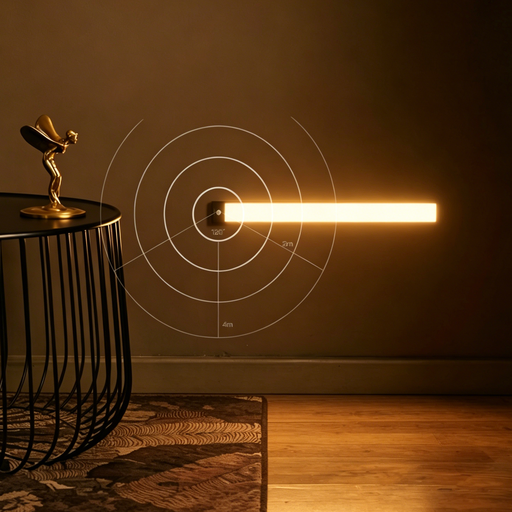
Why we love it: At 60 cm, this light bar is designed for large spaces. It bathes a deep wardrobe or a long hallway in light, leaving no dark spots.
Here, you can forget the "flimsy mounting" trap. Its wide contact surface and reinforced magnetic mount are built to last, even on smooth surfaces.
Maximum light coverage, combined with a slim design and an impeccable finish.
Discover our full selection of tested and approved products that meet our criteria for reliability and safety.
You have to distinguish between the lifespan of the LEDs and that of the battery. The LEDs are virtually eternal (over 20,000 hours, which is decades at this rate). The battery, like a smartphone's, wears out over charge cycles (typically 300 to 500 cycles). In practical terms, you have several years before you'll notice a significant drop in battery life.
Yes, the risk is real, especially on painted furniture or a fragile varnish. The trick to limiting damage: clean and dry the surface perfectly before applying the mount. To remove it, gently heat the adhesive with a hairdryer to soften the glue, then pull very slowly, parallel to the surface (not towards you). Fortunately, most models use an adhesive metal plate: the light attaches to it magnetically and can be detached for charging without ever touching the adhesive again.
Absolutely not. The consumption is negligible. LED technology is already very energy-efficient, but the motion sensor makes it even more so: it only turns on when needed. No more forgetting the pantry light on all day. On your electricity bill, the annual cost of recharging is trivial.