People looking for a sugar-free spread
If this claim is essential, don’t confuse it with ‘no added sugars’. Check the claim on the jar and the amount of sugars listed per 100 g.


For Mother’s Day, start by choosing what best suits your needs. A spread labelled ‘no added sugars’ isn’t necessarily ‘sugar-free’, while a classic recipe could make a lovely sharing gift if reducing sugar isn’t a priority. Before you buy, compare the ‘of which sugars’ figure per 100 g, check the allergens and pack size, and read the storage instructions.
If this claim is essential, don’t confuse it with ‘no added sugars’. Check the claim on the jar and the amount of sugars listed per 100 g.
A recipe like this may still contain naturally occurring sugars. For example, Auchan’s product page for Lucien Georgelin’s no-added-sugars spread lists 8.5 g of sugars per 100 g.
If you’re giving a jar for Mother’s Day, check the recipient’s allergies, choose a size that’s suitable for sharing and read the storage instructions.
Decide whether your priority is a sugar-free recipe, no added sugars or a jar to share. Each option suits a different need.
| What matters to you | What to check | Who is it for? |
|---|---|---|
| A genuine ‘sugar-free’ claim | Check the exact claim and the ‘of which sugars’ figure per 100 g on the label. | If sugar content is my deciding factor, a simple ‘no added sugars’ claim isn’t enough for me. Around 45% of consumers would make this their top priority. |
| No added sugars | Read the ingredients, then compare sugars, energy and fat per 100 g. | For breakfast, I might look for a recipe with no added sugars while accepting that it contains naturally occurring sugars. Around 36% of consumers would have this as their priority. |
| A gift to share | Check the allergens, net weight and instructions for after opening. | Before giving someone a jar, I want to make sure it suits the recipient and is the right size for how they’ll use it. Sharing would be the main concern for around 19% of consumers. |
Auchan’s product page for Lucien Georgelin spread, which is labelled no added sugars, lists 8.5 g of sugars per 100 g. The two claims don’t mean the same thing.
If you’re specifically looking for a sugar-free spread, check the claim and the ‘of which sugars’ figure for the product you choose rather than relying on the recipe name alone.
According to the French Ministry of the Economy, displaying Nutri-Score is voluntary. Whether it appears or not, you should still check the nutritional information and ingredients.
If it’s shown on the jar, use it as a guide when comparing products in the same category, then check the figures per 100 g and the allergens.
The recipes mentioned here don’t all contain the same ingredients. For example, Joybuy’s product page for the 3 kg Nutella jar lists hazelnuts, milk and soya.
Ask the recipient about any allergies and check the ingredients and any ‘may contain’ warnings on the jar you buy. The DGCCRF reminds shoppers that allergenic ingredients must be clearly highlighted.
The amount you give should suit the number of people and how often they’ll eat it. Instructions for after opening vary by recipe.
Check the net weight and storage instructions for the product you choose. For its 400 g no-added-sugars spread, Lucien Georgelin recommends using it within a month of opening.
Its 400 g no-added-sugars spread is a useful example of the difference between this claim and ‘sugar-free’.
The 3 kg jar featured on Joybuy is a classic recipe in a larger size. It could suit you if sharing matters more than reducing sugar.
Its organic hazelnut spread contains no palm oil, offering a different ingredient profile, but it isn’t sugar-free.
These two products suit different uses: a large jar of chocolate and hazelnut spread to share, and a peanut butter to consider for toast. The second product’s name alone isn’t enough to confirm that its sugar content meets the ‘sugar-free’ claim.
 Image unavailable
Consider this for a gift to share if the large size suits how it’ll be used. Joybuy’s product page for the 3 kg jar lists 56.3 g of sugars per 100 g and mentions hazelnuts, milk and soya, so it isn’t suitable if you’re looking for a sugar-free spread.
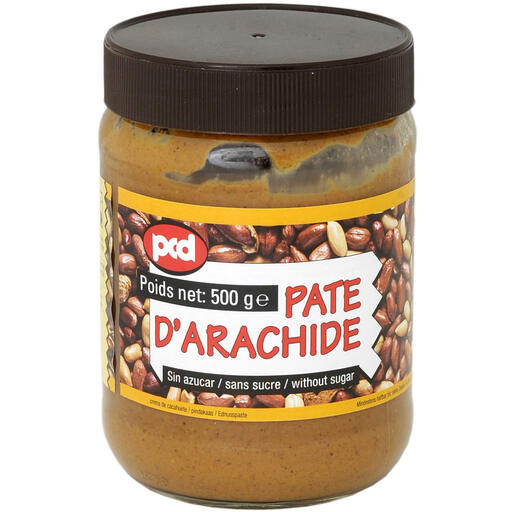 Image unavailable
This 500 g peanut butter could work well on toast if you’re looking for something different from chocolate and hazelnut spread. Despite the English wording in its product name, check the ‘of which sugars’ figure per 100 g before choosing it to meet a strict sugar-free requirement. Check the label for peanut allergens, too.
No. In the European Union, the claim ‘sugar-free’ means a maximum of 0.5 g of sugars per 100 g or 100 ml, according to the rules on nutrition claims set out by the European Commission. A spread with no added sugars may still contain naturally occurring sugars, so check its ‘of which sugars’ figure per 100 g.
No. According to the French Ministry of the Economy, displaying Nutri-Score is voluntary. However, as the DGCCRF points out, a nutrition declaration is mandatory for most pre-packed foods. If Nutri-Score is shown, compare products in the same category and don’t overlook their ingredients and figures per 100 g.
Check the highlighted ingredients and any ‘may contain’ warnings on the jar you’re planning to give. The recipes mentioned don’t all have the same ingredients: Joybuy’s product page for the 3 kg Nutella jar lists hazelnuts, milk and soya, while the PCD product is a peanut butter.
Follow the instructions for the jar you’ve bought. For its 400 g no-added-sugars spread, Lucien Georgelin recommends keeping it away from heat and moisture and using it within a month of opening. This advice doesn’t automatically apply to other recipes.