Anyone looking for a gift that’s ready to give
A box of chocolates is a good choice if you want to give the gift as it is, particularly if it’s to be enjoyed together. Check the format and availability of the box you’ve chosen for Mother’s Day.


For a gift that’s ready to give and offers several bites to enjoy, choose a box of chocolates. Chocolate spread makes more sense if the recipient already enjoys it as part of her daily routine. Either way, her tastes and the ingredients in the specific product matter more than the packaging alone: check the allergens and nutritional information on the pack.
A box of chocolates is a good choice if you want to give the gift as it is, particularly if it’s to be enjoyed together. Check the format and availability of the box you’ve chosen for Mother’s Day.
If she prefers dark, milk or white chocolate, or praline, check the product description and the chocolates’ ingredients rather than relying on the box design. France’s Ministry of the Economy explains that chocolate descriptions give information about their composition.
If the recipient avoids certain ingredients, check the label on the exact product, including the fillings and any ‘may contain’ warnings. The DGCCRF says allergens must be highlighted in the ingredients list on pre-packed foods.
First, decide between a gift made up of individual chocolates and a jar to enjoy at home. Then narrow down your choice based on the recipient’s tastes, ingredients to avoid and the information on the packaging.
Choose this if: you want to give a nicely presented box of chocolates to enjoy or share.
Bear in mind: an assortment may include several recipes and fillings, so it’s worth checking each one.
Choose this if: the recipient already enjoys chocolate spread, or if the jar is part of a hamper.
Bear in mind: a jar on its own doesn’t offer the presentation or variety of a box of chocolates.
| What to consider | What to check | Who it matters to |
|---|---|---|
| Gift presentation | The type of packaging, net weight and, for a box, the number of chocolates. | I want to give a gift that’s already nicely presented, rather than a product to use at home. Around 25% of consumers put presentation at the top of their list. |
| Tastes and varieties | The types of chocolate and fillings listed for each variety. | If the recipient has a clear preference, I want the contents to suit her rather than choosing a box for its appearance. Around 25% of consumers prioritise taste. |
| Ingredients and allergens | The ingredients list, highlighted allergens and any ‘may contain’ warnings for the exact product. | If an ingredient needs to be avoided, I check the product’s composition before considering it as a gift. Around 31% of consumers put this compatibility first. |
| Nutritional information | Sugars and saturated fat per 100 g, as well as the portion size you have in mind. | I want to compare the nutritional values of similar products without judging their composition by a single logo. Around 19% of consumers say this is their top priority. |
Chocolate spread may suit the recipient’s usual habits, but it doesn’t offer an assortment of individual chocolates or the presentation of a gift box.
Decide whether you want to give her something she already enjoys or a gift that’s ready to savour and share.
In France, displaying the Nutri-Score is voluntary, as the DGCCRF explains. Its absence doesn’t tell you what’s in a chocolate product or a chocolate spread.
Instead, compare the ingredients and nutritional values per 100 g. If the logo is on the packaging, use it as an extra piece of information.
Fillings and pralines may contain ingredients that differ from what the general name on the box suggests. For example, a Carrefour product listing mentions allergens in its chocolates and possible traces of other ingredients.
Check the full ingredients list and any ‘may contain’ warnings for the specific product you plan to give.
An old listing for a gift box doesn’t guarantee that the same assortment is available at the shop where you plan to buy it.
Check which product is currently available, then look at its ingredients and best-before date on the packaging.
Nutella is a chocolate and hazelnut spread sold in a jar, rather than a box of individual chocolates.
This range has included a 195 g box of milk chocolate praline snails.
The retailer offers Lindt chocolate boxes designed to be given as gifts or shared.
E.Leclerc lists categories of chocolate boxes and confectionery online.
ALDI has listed a Gourmet Finest Cuisine box of Belgian chocolates in gift packaging.
These two products show the difference between a box of chocolates to give as a gift and a jar of chocolate spread for someone who already enjoys it. Check the ingredients of your chosen product before giving it.
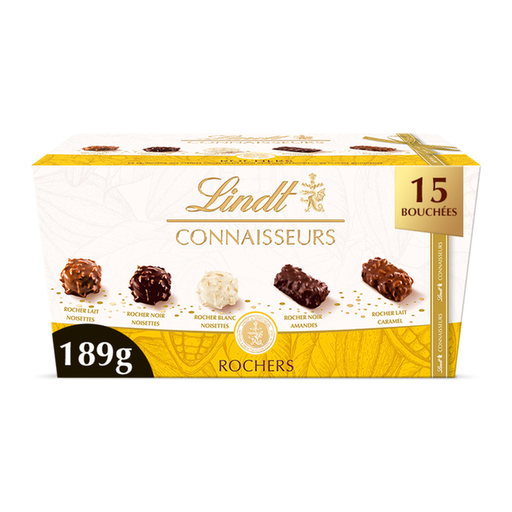 Image unavailable
This is a good choice if you’re looking for a box of chocolates to give as a gift.
Assorted chocolate rochers, 189 g. Check the ingredients for each variety and the packaging for any ‘may contain’ warnings.
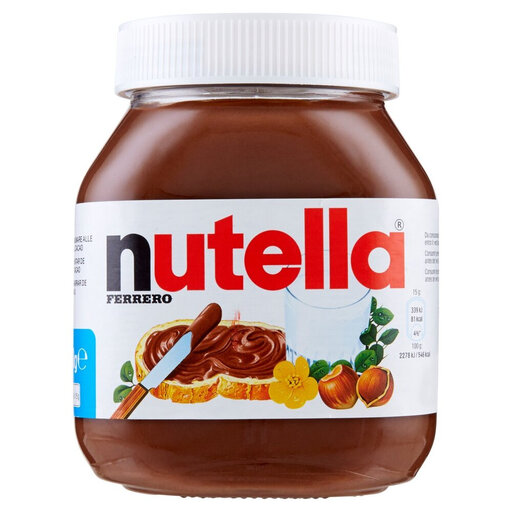 Image unavailable
This jar may suit someone who already enjoys chocolate spread, if you’re not looking for an assortment of individual chocolates.
630 g jar. Check the ingredients list and allergens on the packaging before giving it as a gift.
No. In France, the so-called ‘soda tax’ applies to sugary drinks, according to the Ministry of the Economy, not to these two product categories. To compare their composition, check the amount of sugar per 100 g in the nutritional information instead.
No. The Nutri-Score is a voluntary label, as the DGCCRF explains. If it’s not shown, you’ll still need to check the ingredients and nutritional values on the packaging.
Check the description of each variety: an assorted box may include dark, milk and white chocolates. France’s Ministry of the Economy explains that ‘dark chocolate’ refers to a category defined by its composition, so you can’t identify the contents of the box by looking at the chocolates alone.
Check the ingredients and any ‘may contain’ warnings on the exact product packaging, particularly for filled chocolates. The DGCCRF says allergens are highlighted in the ingredients list on pre-packed foods. Don’t assume an allergen is absent based on the product name or picture.
Yes. Check the best-before date and storage instructions on the box you buy. This is particularly useful if you’re planning to give it at a later date.