For a chocolate drink in the morning, choose a pre-sweetened powder if you want a ready-mixed recipe that’s easy to measure, or unsweetened pure cocoa if you’d rather decide whether to add sugar yourself. If you’re mainly looking for a stronger cocoa flavour, compare recipes with a higher stated cocoa content, but don’t assume this means they contain less sugar. Check the ingredients and nutritional values per 100 g and per serving too.
Who are these options for?
Anyone looking for an easy-to-measure recipe
If you want the same chocolate drink every morning, a powder with a pre-mixed recipe saves you from measuring out the cocoa and sugar separately. Still, compare the sugar per 100 g and the amount of powder used per cup.
Anyone who prefers to control the sugar
With unsweetened pure cocoa, you can decide whether to add sugar when you make your drink, and how much to use. Check the product description and ingredients for the specific product you choose, rather than relying on the word “cocoa” alone.
Those who enjoy a stronger cocoa flavour
The stated cocoa percentage can help you tell some recipes apart, but it doesn’t tell you everything about the taste once prepared or the nutritional values. Check the recommended serving, sugar content and ingredients separately.
What should you look for?
First, decide whether you want a ready-mixed recipe or prefer to measure out unsweetened cocoa yourself. Then compare the flavour intensity and pack size within those options: a powder with a stronger cocoa flavour can still contain sugar.
| Criteria |
What to check |
Who it matters to |
| Sugars |
Compare the “of which sugars” line per 100 g, then check the amount of powder used and the ingredients in the prepared drink. |
If I want to know how much sugar is in my morning cup, I need to distinguish between the powder and a drink made with milk. Around 36% of consumers rank checking sugar content as their top priority. |
| Making your own recipe |
Check the product description for “unsweetened pure cocoa”, the ingredients and the preparation instructions. |
I prefer to start with unsweetened cocoa so I can decide how sweet to make my drink, even if I have to measure out each ingredient. This freedom is the main priority for around 29% of consumers. |
| Cocoa flavour |
Check the cocoa percentage if one is stated, but don’t use it as a substitute for checking the sugar content and recommended serving. |
If I’m mainly looking for a stronger cocoa flavour, I compare recipes without assuming that a higher cocoa content means less sugar. Around 21% of consumers prioritise this intensity. |
| Pack size |
Consider the net weight in relation to how often you’ll use it, and read the storage instructions for after opening. |
If the tin is for regular drinks for the household, I want a size we can use and store properly. Pack size is the top priority for around 14% of consumers. |
What should you avoid?
-
Assuming the Nutri-Score label is mandatory
In France, the DGCCRF describes Nutri-Score as a voluntary scheme. Its absence doesn’t tell you what’s in a powder; when it appears on the pack, it doesn’t replace the full ingredients list and nutritional information.
To compare two products, read their nutritional information per 100 g and check the serving you’ll use.
-
Assuming more cocoa means less sugar
According to Chocolat Poulain, Grand Arôme contains 32% cocoa and Grand Arôme Intense 70%. These percentages distinguish the recipes, but don’t tell you the sugar content of either one on their own.
On each pack, compare the stated cocoa percentage, if there is one, with the “of which sugars” line and the recommended serving.
-
Choosing a large tin without considering how you’ll use it
Pack sizes stocked by retailers include 250 g, 800 g and 1 kg tins. The weight alone doesn’t tell you how long a pack will last based on your household’s habits.
Choose a size that suits how often you make a drink, and check the storage instructions for after opening.
A large tin that’s used infrequently needs extra care when it comes to storage.
-
Assuming every recipe contains the same allergens
Ingredients vary between products: Auchan’s product information for Cao Kido, for example, mentions soya. You shouldn’t judge another chocolate powder based on this recipe alone.
If an allergen matters to your choice, check the ingredients and the information on the packaging of the product you buy.
Brands and ranges to compare
These products give you some useful options to compare for your morning shop. The features of one recipe don’t automatically apply to other products from the same brand.
Poulain
According to Chocolat Poulain, Grand Arôme contains 32% cocoa and Grand Arôme Intense 70%: two recipes to consider if cocoa content matters to your choice.
- The stated percentage helps distinguish between these two products.
- The brand states that Grand Arôme contains 67 g of sugars per 100 g; check the values for the specific variant and pack size you buy.
Banania
Banania describes Original as a chocolate powder made with cocoa, cereals, banana and honey.
- The brand gives nutritional values for the powder, as well as an example made with semi-skimmed milk. Make sure you’re comparing like with like.
- The Banania Original product information states that the powder contains 69 g of sugars per 100 g. The value for a prepared drink also depends on how much powder you use and the milk.
Carrefour Classic'
Carrefour stocks Classic' chocolate powder in an 800 g tin, among other cocoa powders under its own brands.
- The 800 g pack size can be weighed against how often your household makes a drink.
- Compare the ingredients and nutritional information for the specific product: another Carrefour powder may have a different recipe.
Auchan
The retailer stocks both 100% pure unsweetened cocoa powder and Cao Kido chocolate powder.
- These product descriptions make it easier to choose between cocoa you sweeten yourself and a ready-mixed chocolate recipe.
- According to Auchan, the Cao Kido ingredients list starts with “sugar”; check the allergen information on the pack too.
Marque Repère / E.Leclerc
In its chocolate powder range, E.Leclerc stocks Equador 250 g unsweetened pure cocoa, as well as chocolate recipes under other range names.
- Product descriptions help you distinguish between unsweetened cocoa and chocolate powder before comparing recipes.
- For ingredients, nutritional values and pack size, refer to the exact product you’ve chosen for your shop.
Chocolate powders to consider on Joybuy
These products are mainly useful for comparing chocolate powders for your morning drink, in a range of pack sizes. Their inclusion here doesn’t mean they all give you the same control over the recipe as unsweetened pure cocoa: check the ingredients of each product before you choose.
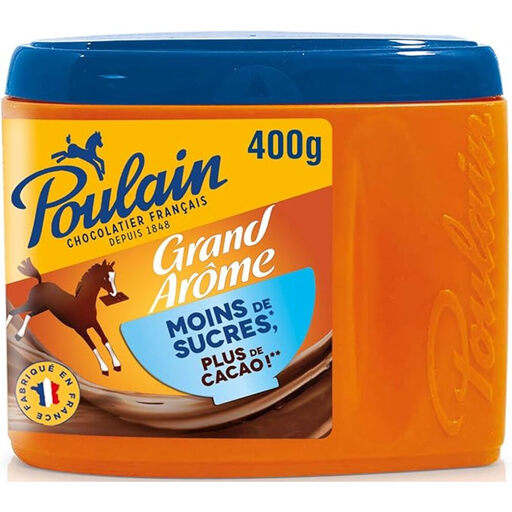 Image unavailable
Poulain Cocoa with Rich Flavor, 400 g
Worth considering if you’re comparing cocoa-based recipes for your morning drink. This pack contains 400 g of powder; check the sugar content on the packaging and how much to use per cup.
View on Joybuy
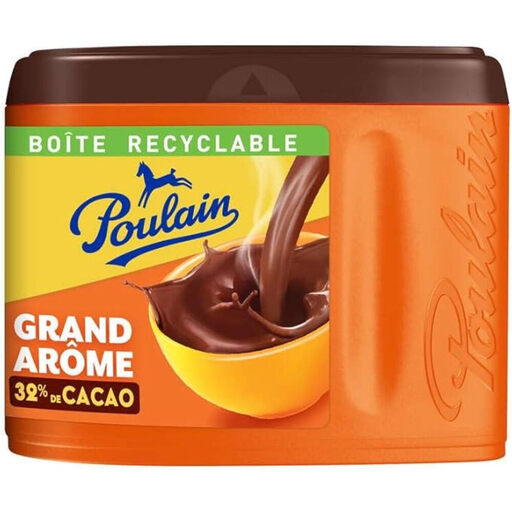 Image unavailable
Poulain Cocoa with Rich Flavor, 450 g
This 450 g variant may suit you if you’re looking for a ready-mixed chocolate powder. Compare the sugars per 100 g and the recommended serving on its own packaging; don’t use the values for the 400 g tin.
View on Joybuy
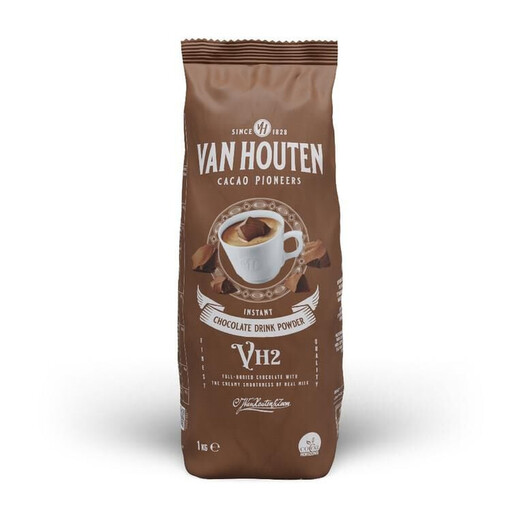 Image unavailable
Van Houten VH2 Cocoa Powder 34 %, 1 kg
Consider the 1 kg pack size in relation to your household’s consumption. Before comparing its cocoa content with another powder, check what the “34%” in the name refers to: the available information relates to one component of the recipe, not necessarily the powder as a whole.
View on Joybuy
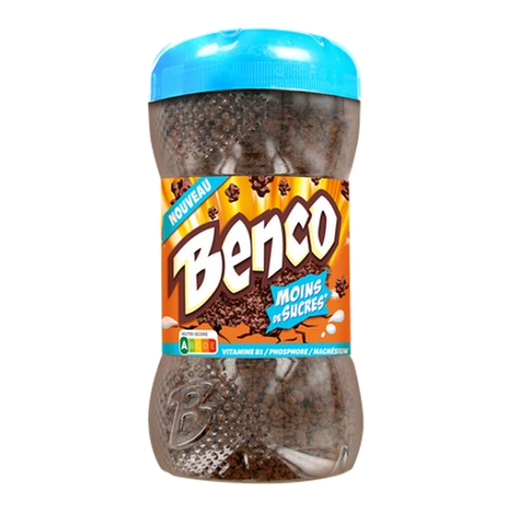 Image unavailable
Benco Less Sugar chocolate granules, 400 g
To compare this recipe with other chocolate powders, start by checking the sugars per 100 g on the packaging. “Less Sugar” is part of this variant’s name; without a specified product for comparison, the name alone doesn’t tell you whether it contains less sugar than another product.
View on Joybuy
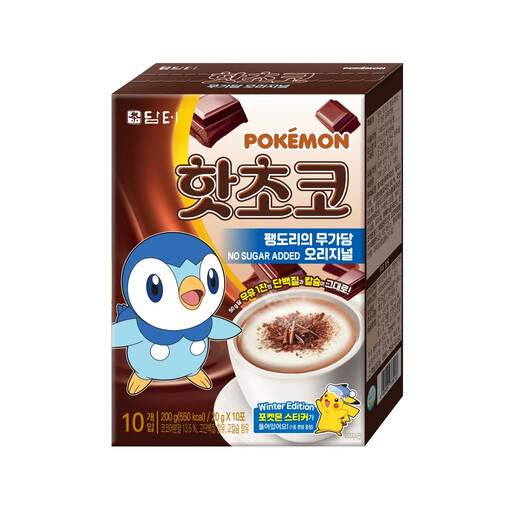 Image unavailable
DAMTUH Hot Chocolate Sugar Free Pokemon, 10 sachets of 20 g
The 20 g sachets make it easy to prepare a cup with a pre-measured amount of powder. Don’t assume anything about the sugar content based on the name “Sugar Free” alone: check the nutritional declaration and ingredients on the packaging, including any mention of maltitol and starch syrup.
View on Joybuy
Frequently asked questions
Is Nutri-Score compulsory on hot chocolate powder?
No. Nutri-Score is voluntary in France, as the DGCCRF explains. To compare prepacked foods that require nutritional labelling, check the values per 100 g even if there’s no Nutri-Score on the tin.
How do I compare two chocolate powders if the serving sizes differ?
Start with the nutritional values per 100 g: the DGCCRF explains that this gives you a common basis for comparison. Then check the amount of powder per cup and the preparation instructions. If a value is for the prepared drink, the milk used is also included in the calculation.
What should I check on the pack if I need to avoid an ingredient?
Read the ingredients and allergen information for the product you’re buying, rather than relying on another recipe from the same brand. For example, Auchan’s product information for Cao Kido mentions soya; this doesn’t describe all chocolate powders.


