Chai fans avoiding caffeine
You’re after a hot, spicy drink without choosing a black tea recipe. A chai infusion or a rooibos chai explicitly labelled caffeine-free fits the bill, although it will taste different from tea.


If you’d like a caffeine-free chai break, choose a spiced infusion or a rooibos chai that’s explicitly labelled as caffeine-free. Chai made with black tea won’t meet that need. If a tea is described as decaffeinated, check the specific product rather than relying on the word ‘chai’. Taste matters too: a spiced infusion or rooibos doesn’t have the same tannic character as black tea chai.
You’re after a hot, spicy drink without choosing a black tea recipe. A chai infusion or a rooibos chai explicitly labelled caffeine-free fits the bill, although it will taste different from tea.
What the drink is made with matters more than its name. The Anses states that caffeine can delay falling asleep and reduce sleep duration and quality. If you want to avoid it in the evening, check the ingredients.
You can keep the ritual of a hot, spiced drink without seeking out caffeine. If you prefer the character of black tea and are happy to have the caffeine it contains, that’s a different choice from a caffeine-free infusion.
For a morning chai break, start with the drink’s base and its stated caffeine content. Then compare the flavour you’re after, how it’s prepared and the ingredients in the specific recipe.
Choose this if: you want a pre-portioned brew and a recipe explicitly labelled caffeine-free, such as Pukka’s Infusion Chaï vanille.
Worth knowing: this spiced infusion doesn’t replicate the tannic taste of black tea chai.
Choose this if: you want a caffeine-free rooibos base and prefer to measure out the blend yourself, as with THEINE’s Chai Rooibos.
Worth knowing: loose-leaf tea needs an infuser, and rooibos doesn’t have the tannic character of black tea.
Choose this if: you’re after the flavour of spiced black tea and are happy with the caffeine it contains.
Worth knowing: Kusmi Tea’s Kashmir Tchaï and Tchaï of the Tiger recipes contain black tea, so they’re not suitable for a caffeine-free break.
| Factor | What to check | Who is it for? |
|---|---|---|
| Caffeine-free | Look for an explicit ‘caffeine-free’ or ‘theine-free’ claim, then check the base and ingredients list. | I want to keep chai as my go-to drink without choosing black tea. Around 40% of consumers are said to put caffeine-free options at the top of their list of priorities. |
| Spiced flavour | Compare the base and the spices listed. A rooibos recipe doesn’t have the same tannic character as one made with black tea. | Spices matter most to me, but I want to know which base will give my cup its character. Taste is said to be the main factor for around 30% of consumers. |
| Easy to prepare | Check the format, quantity and brewing time given for the product you’re considering. | In the morning, I’d rather make a cup without measuring loose tea. Around 20% of consumers are said to prioritise ease of preparation. |
| Ingredients | Read the ingredients list for the specific recipe, especially if you need to watch out for liquorice or other ingredients. | Before buying a spiced blend, I need to know exactly what’s in it. Ingredients are said to come first for around 10% of consumers. |
The name describes a spiced drink, not its caffeine content. Kusmi Tea’s product pages list black tea in Kashmir Tchaï and Tchaï of the Tiger.
If caffeine-free is your priority, look for an explicit claim and read the ingredients list before comparing flavours.
Rooibos doesn’t come from the tea plant. A rooibos recipe can offer a spicy flavour profile, but it won’t have the tannic character of black tea.
Choose the base according to what matters most to you: rooibos labelled caffeine-free if you want to avoid caffeine, or black tea flavour if you’re happy to have the caffeine it contains.
Pukka’s Infusion Chaï vanille recipe contains liquorice, among other ingredients. Kusmi Tea advises people with high blood pressure to avoid excessive consumption of its Tchaï of the Tiger, which also contains liquorice.
Check the ingredients and any precautions for the specific product you’re buying. If an ingredient raises a question about your health, ask a healthcare professional for advice.
A tea-bag option for anyone looking for a caffeine-free chai infusion rather than black tea chai.
A loose-leaf rooibos chai option for anyone who prefers to measure out their own infusion.
Its Kashmir Tchaï and Tchaï of the Tiger recipes are useful examples of chai made with a black tea base.
This chai infusion in tea bags is a good match for a spiced break where avoiding caffeine and preparing one cup at a time are priorities.
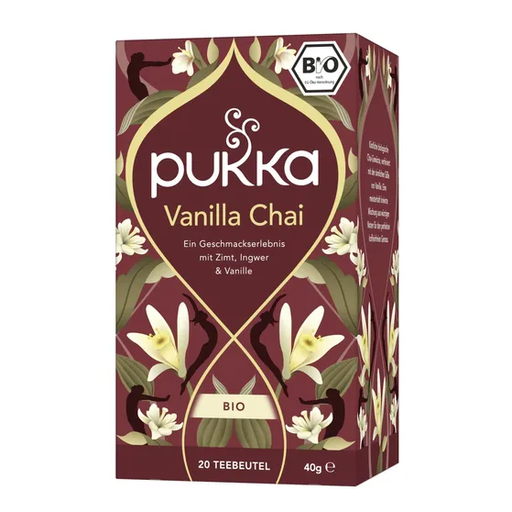 Image unavailable
A tea-bag chai for a break when you’re looking for an infusion labelled caffeine-free. The product page recommends one tea bag per cup and a brewing time of 3 to 5 minutes. The recipe contains cinnamon, ginger, liquorice, fennel and cardamom, among other ingredients; check these against your needs. It’s a spiced infusion, not black tea chai.
Look for an explicit ‘caffeine-free’ or ‘theine-free’ claim and check the ingredients list. Pukka’s Infusion Chaï vanille product page says ‘Naturally caffeine-free’, while the pages for Kusmi Tea’s Kashmir Tchaï and Tchaï of the Tiger list black tea. If a tea is described as decaffeinated, check the details for that specific product.
A chai infusion or rooibos chai explicitly labelled caffeine-free can help you avoid caffeine in the morning or evening. Black tea chai is a different choice: according to the Anses, caffeine can delay falling asleep and reduce sleep duration and quality.
Follow the instructions for the recipe you’ve bought. Pukka’s Infusion Chaï vanille product page recommends one tea bag per cup for 3 to 5 minutes; THEINE’s Chai Rooibos page recommends 2 g per 100 ml of water at 80 °C for 4 to 5 minutes. You’ll also need an infuser for loose-leaf tea.
First, check the product name and ingredients list to tell black tea, rooibos and spiced infusions apart. Then look out for any ingredients or allergens that are relevant to you. The DGCCRF notes that the name of the food and its ingredients list are among the labelling information required for prepacked foods in France.