
Livraison le jour même ou le lendemain

Qualité garantie

Débloquez vos offres de bienvenue: Livraison GRATUITE | Jusqu'à -80 % | 30 jours d'essai gratuits à JoyPlus
Téléchargez l'application
Buying a Montessori toy for your child is not simply a matter of choosing an attractive wooden structure. Whether you are considering climbing triangles, activity arches or learning towers, the dimensions, recommended age and storage options can have a significant impact on everyday use.
A poorly suited model may end up in the cupboard after just a few weeks, take up more space than expected or pose a risk if the installation instructions are overlooked. Here are the key points to consider before comparing different models.
The label “from 3 years” is not enough to determine whether a structure is genuinely suitable for your child. You should also consider:
An educational toy for children aged 3 to 7 will not be used in the same way as a wooden activity arch intended for a baby of just a few months. The stated age should always be considered alongside your child’s abilities and the instructions provided in the manual.
A structure offering several activities can be a great choice, provided it is compatible with your home. Measure the available space, including the area needed to move around the product, rather than considering only its external dimensions.
A foldable Montessori climbing triangle is often more practical in a flat. By contrast, a structure measuring 150 × 142 × 146 cm requires a sufficiently clear play area, both indoors and outdoors.
Screws, handles, ropes and removable parts should be checked regularly. A surface that is easy to clean is useful for everyday life, but it does not remove the need to inspect the fixings.
For wooden models, check in particular:
A Montessori activity arch mainly supports discovery, grasping and coordination activities for babies and toddlers. For a baby, an adult must remain nearby and the arch must be placed on a flat surface.
From around 12 months, a children’s learning tower can be used for certain everyday activities, such as watching an adult cook or reaching a suitable worktop. It must be used while standing, under supervision, and must never be treated as a climbing structure.
From the age of 3, a children’s climbing toy equipped with a ramp, bridge or net can encourage physical activity and imaginative play. Supervision remains essential, even when the structure appears particularly robust.
Compare the dimensions when the structure is fully assembled, as well as the space it takes up when stored. In a home where every square metre matters, the ability to fold the equipment away against a wall can be a major factor in your decision.
You should also leave a clear area around the corners and sides. A children’s climbing structure must be placed on a stable floor, with no nearby obstacles, in accordance with the manufacturer’s recommendations.
Beech, plywood, bamboo or metal: these materials do not offer the same feel in use or require the same level of maintenance. Check the product details for:
The stated maximum load does not mean that a child can jump on or hang freely from every part. Always follow the intended use for each section of the structure.
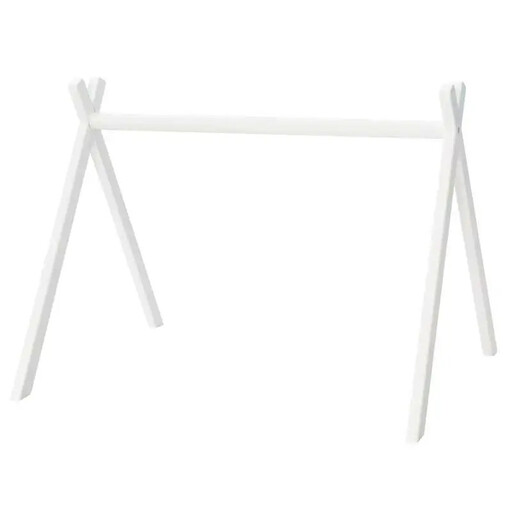
Why this choice suits this profile : This wooden arch is ideal for families looking for a compact first activity toy for their baby that is simple to install and easy to maintain.
Its dimensions of 52 × 70 × 50,5 cm are clearly stated, and its surfaces can be cleaned with a damp cloth. However, it must be used on a flat surface with an adult nearby.
White lacquered wood, stated weight of 1,4 kg, simple assembly and compatibility with accessories sold separately.
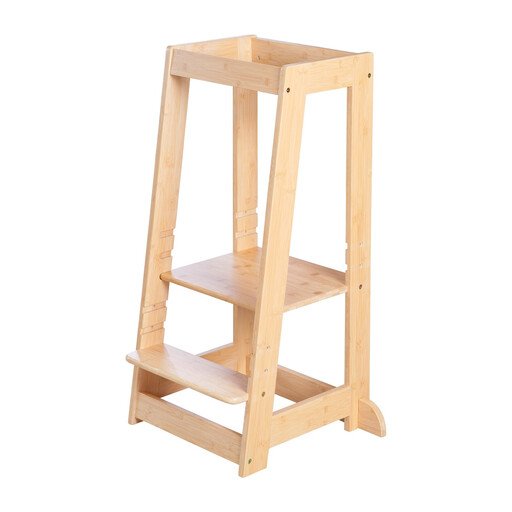
Why this choice suits this profile : This Montessori learning tower is designed for parents looking for adjustable equipment that can support their child in several rooms around the home.
The platform and steps each offer three height settings. The wide side feet improve stability, but use on a flat floor and supervision are still essential.
FSC-certified bamboo, adjustable platform from 34,5 to 44,5 cm and a stated maximum load of 80 kg.
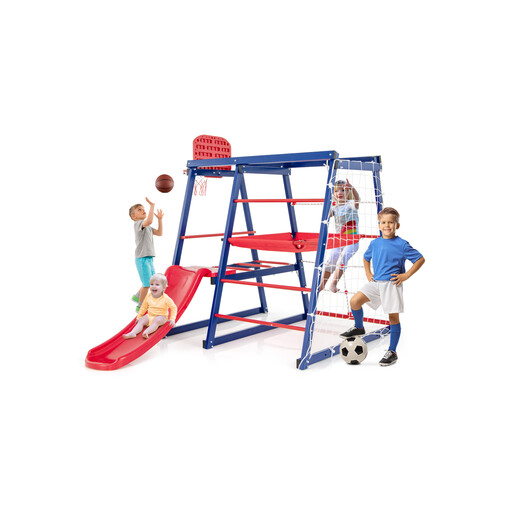
Why this choice suits this profile : This model is aimed at families with a spacious play area who want to combine several activities, both indoors and outdoors.
Its overall dimensions of 150 × 142 × 146 cm make it easy to assess the space required before buying. The joints and ropes should be checked regularly.
Seven activities in one, including a slide, net, ladder, rope and basketball hoop, with a stated load capacity of up to 100 kg.
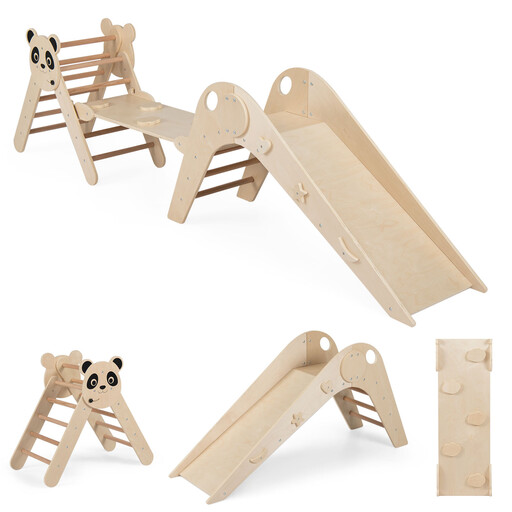
Why this choice suits this profile : This Montessori toy for children combines climbing, sliding and balancing in a foldable design, ideal for families who want to free up space quickly.
The triangle folds away and can be stored against a wall. The product details mention smooth edges, handles and side ramps, with a stated load capacity of 50 kg per element.
Beech wood and plywood, a bridge that converts into a ramp, and a design intended for children from 3 years.
We have put together a complete, real-time selection of products that meet these exacting selection criteria and European safety requirements.
Before first use, assemble the product carefully according to the instructions, then check every fixing. Place the structure on a flat, non-slip floor, well away from furniture and hard objects.
To keep a wooden activity toy or metal structure in good condition:
An indoor play area should remain clear and must not be used as an improvised climbing frame. An adult’s presence is particularly important with babies and during the first few uses.
An activity arch with hanging elements or grasping accessories may be suitable at this age. It must be placed on a flat surface and used under supervision. A climbing triangle or learning tower is not suitable for a baby who has not yet mastered standing.
No. Each model has its own age range, platform height and safety warnings. The roba tower featured here is suitable from 12 months to approximately 5 years, with three platform height settings. It is designed to be used while standing and must not be used as a climbing structure.
Its lifespan depends on the quality of assembly, frequency of use, storage conditions and your child’s growth. An adjustable or foldable model can adapt to different stages, but the recommended age, maximum load and intended function must always be respected. Regular inspection is still necessary, even when the product appears to be in perfect condition.