
Livraison le jour même ou le lendemain

Qualité garantie

Débloquez vos offres de bienvenue: Livraison GRATUITE | Jusqu'à -80 % | 30 jours d'essai gratuits à JoyPlus
Téléchargez l'application
A Montessori gross motor skills toy for children can quickly become the centrepiece of a play area. But choosing the right model is essential. Between development claims, flattering photos and dimensions that are sometimes unclear, your purchase may come with a few unwelcome surprises. Equipment that is too bulky may end up in the cupboard, a product that is unsuitable for your child’s age may pose safety risks, and time-consuming maintenance can often discourage parents.
Here are the criteria to consider before buying a Montessori developmental toy, foam gross motor skills blocks or an indoor gross motor skills course.
A foldable climbing triangle advertised as suitable « from 3 years » will not necessarily be right for a toddler who is only just learning to move around. Conversely, a wooden developmental arch designed for babies will not replace a structure intended for climbing or overcoming obstacles.
The manufacturer’s recommended age should be considered alongside several factors:
Photos rarely show how much space needs to be left around the toy. An indoor gross motor skills course should allow you to move around freely and leave enough room to cushion movements. Before ordering, measure the available area, as well as the width of the doors and the space allocated for storage.
A foldable model can be especially practical in a flat or shared bedroom. Foam blocks, meanwhile, are easy to move and can be rearranged into a tunnel, ramp or small climbing structure.
The EN71 marking refers to European requirements for toys, particularly in terms of mechanical, physical and chemical safety. It does not mean that a child can use the product without supervision, nor that every configuration is risk-free.
Also check:
For young children, foam gross motor skills blocks offer a soft surface that is easy to adapt. A removable, machine-washable cover is a real advantage when dealing with spilled snacks, shoe marks and repeated use in group settings.
Wood is better suited to structures that need to remain rigid, such as a climbing toy for children, an arch or a Montessori learning tower. Look for smooth surfaces, rounded corners and joints that are easy to inspect. If the product is used every day, plan regular checks of the screws, handles and fixing points.
When the maximum load is stated, check whether it applies to the product as a whole or to each component separately. The foldable triangle shown below has a capacity of up to 50 kg per component, while the roba towers state a maximum load of 80 kg. These figures do not replace supervision and should certainly not be interpreted as permission to climb on a learning tower.
To make the most of your space, compare:
An adaptable toy for children should offer several ways to play without adding lots of unnecessary accessories. XXL blocks can be used to create a course, crawling area or resting space. An adjustable tower will be useful for longer as your child grows, but its use is much more specific: the child stands in it to take part in an activity with an adult.
For a baby, choose a sensory toy with elements that are easy to grip and clean. Sounds and lights should be suitable for the room and your child’s sensitivity, without replacing opportunities for free play.
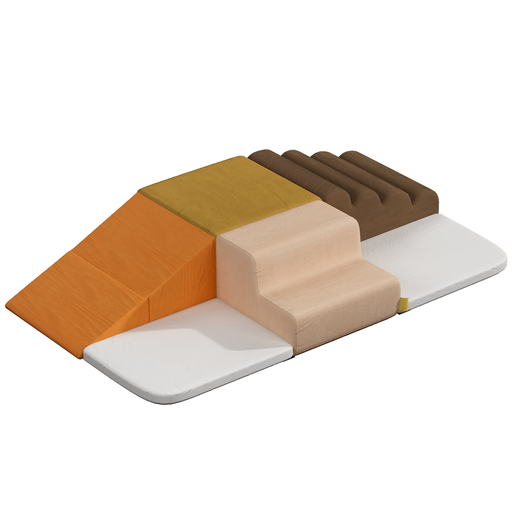
Why this choice suits this profile : This format lets you create an indoor gross motor skills course without installing a permanent structure. The blocks are easy to move and fit just as well at home as they do in a playroom.
The non-slip base, hook-and-loop fasteners and concealed zips address the main points to watch for with soft blocks. The product details state compliance with EN71-1, EN71-2 and EN71-3 standards.
Six pieces, removable machine-washable covers and vacuum-packed delivery. Allow 24 to 48 hours for the blocks to regain their full volume.
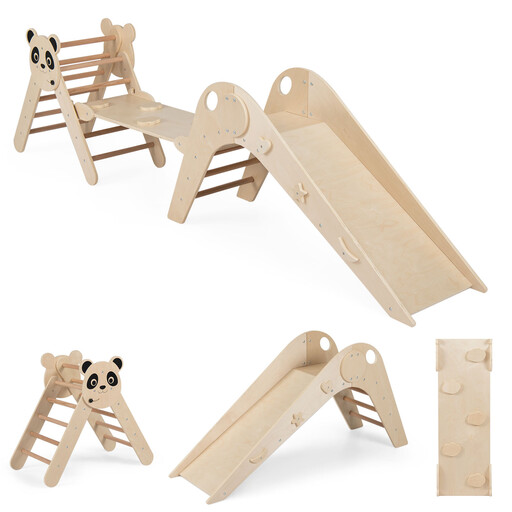
Why this choice suits this profile : This beechwood and plywood set combines several activities. It is designed for families with a dedicated space who are looking for a structure built to last.
The triangle folds flat against a wall, helping to minimise the space it takes up. The product details mention smooth edges, handles and side ramps. Recommended for use from 3 years, under supervision.
Triangle, slide, tunnel and balance bridge in one set. Each component is stated to support up to 50 kg. Assembly is required.
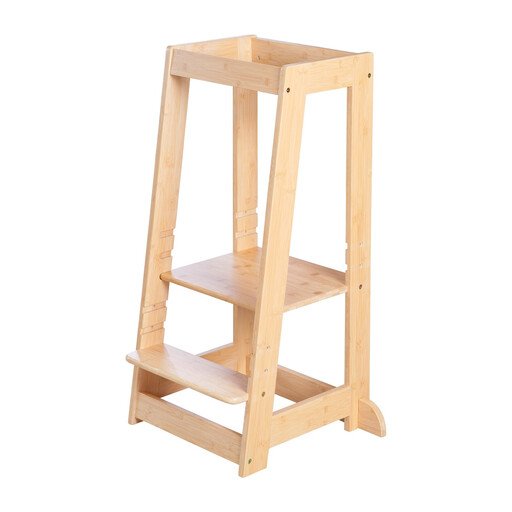
Why this choice suits this profile : This tower is designed for children aged from 12 months to around 5 years who want to take part in activities in the kitchen or bathroom, always with an adult nearby.
The platform and steps offer three height settings. The product details mention widened feet, side panels and rounded edges. This tower must not be used as a climbing structure.
Platform height adjustable from 34,5 to 44,5 cm, stated load capacity of up to 80 kg and FSC-certified bamboo. Assembly required.
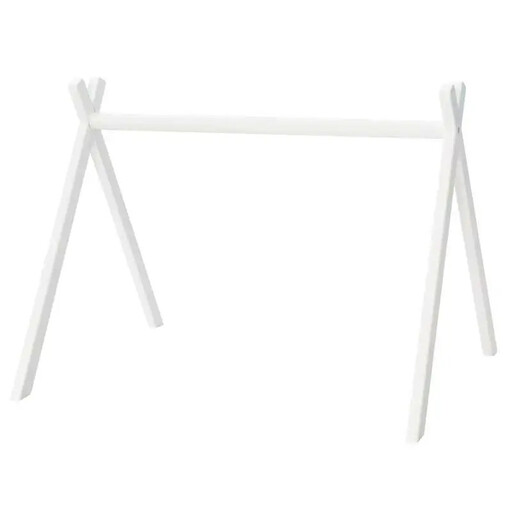
Why this choice suits this profile : This arch helps you create a stimulating corner for your baby, with activities focused on grasping, discovery and visual coordination.
The product details state that the surfaces can be wiped clean and recommend using it on a flat surface under supervision. It is not intended for climbing: its purpose remains that of a developmental toy.
White lacquered wood, dimensions of 52 × 70 × 50,5 cm and assembly described as simple. The product details recommend use from 3 months.
We have put together a complete, real-time selection of products that meet these demanding criteria and European safety regulations.
Set up the toy on a flat, clear floor, well away from furniture with sharp corners. A mat can make it more comfortable, but it will never compensate for an unstable structure. For blocks delivered vacuum-packed, follow the stated waiting time before use and check that they have fully regained their shape.
After each session:
In a nursery or reception class, record the dimensions, stated load capacity and cleaning procedure in the equipment’s internal information sheet. A washable cover makes it easier to rotate the equipment between groups, but it must be completely dry before being put back in place.
It depends entirely on the type of product. A developmental arch can be used during the early months, while a learning tower is generally intended for children from 12 months. Wooden climbing structures are often reserved for children aged at least 3 years. Always follow the recommended age, warnings and your child’s individual abilities.
Modular blocks can remain engaging for longer because their arrangement can change as your child grows. At first, your child may crawl between the elements, then build a ramp or create their own course. However, how long it remains useful depends on the space available, the durability of the components and the number of possible configurations.
Models with removable, machine-washable covers are generally the easiest to keep clean. Check the washing temperature, drying method and how long the blocks need to regain their shape after unpacking. If they will be used intensively, it is better to know this information before buying rather than after delivery.