
Livraison le jour même ou le lendemain

Qualité garantie

Débloquez vos offres de bienvenue: Livraison GRATUITE | Jusqu'à -80 % | 30 jours d'essai gratuits à JoyPlus
Téléchargez l'application
Walks, train journeys or visits to family are much easier when you can warm milk without hunting for a power socket. The Momcozy portable bottle warmer meets this need for mobility, but not all portable models are equal when it comes to compatibility, leak-proofing or maintenance.
Before you place an order, three pitfalls deserve your attention:
A cordless or rechargeable bottle warmer must have a built-in battery and clearly state its charging method. Check the cable supplied, the type of compatible adapter and the instructions in the manual.
For everyday use, also look at the claimed battery life and the conditions under which it was measured. A model that is fine for a short outing may not be up to a long car journey or a day without a power socket nearby.
The bottle warmer should also be placed on a stable, heat-resistant surface. Even though it is portable, it is still an electrical appliance: avoid using it in the rain, submerging it or leaving it running unattended.
A bottle warmer for breast milk must allow precise temperature control, with a manual temperature check before feeding. For a bottle warmer for infant formula, preparation and storage must follow the instructions on the packaging and the recommendations of healthcare professionals.
The material and shape of the bottle also play a role. Some devices offer separate settings for plastic and glass, while others rely on adapters. Before buying, check:
Leak-proofing depends as much on the design of the bottle warmer as on how it is assembled. The bottle must be screwed on correctly and the adapter must fit its size perfectly.
An automatic shut-off, a remaining-time display or protection against running empty make the device easier to use, especially during night feeds. However, these features do not replace the need to supervise the warming process.
After each use, drain any residual water if the model uses it, then clean and dry the various parts according to the manual. Removable parts that are dishwasher-safe can make maintenance easier, but always check the manufacturer's instructions.
Finally, test a few drops of milk on the inside of your wrist before giving the bottle. The bottle warmer is for warming milk, not for replacing the precautions related to its preparation or storage.
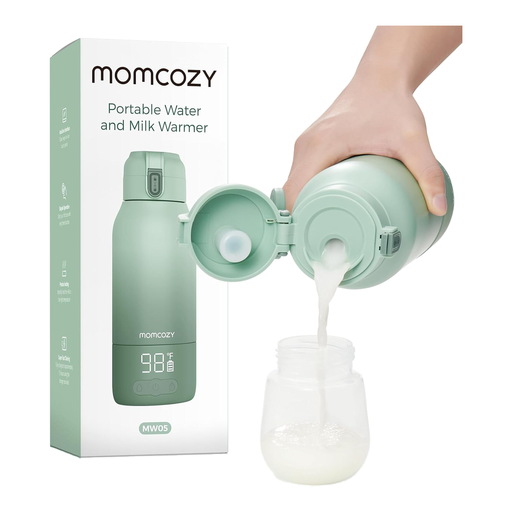
Why this choice suits this profile: Its portable format is ideal for parents who want a device dedicated to outings, without paying for a host of features before they know what they need.
Check the product page to confirm compatible bottle sizes, box contents and charging conditions before buying.
A portable format in a green colour. An option to compare with models that come with adapters or a temperature indicator.

Why this choice suits this profile: It is aimed at families who want multiple operating modes and a setting that adapts to the milk's starting temperature as well as the bottle material.
The NORM/COLD and plastic/glass settings indicate the heating conditions more clearly than a simple button with no explanation.
The product page states heating in approximately 2 to 5 minutes, automatic shut-off, a timer, plus keep-warm, defrost and steam sterilisation functions.
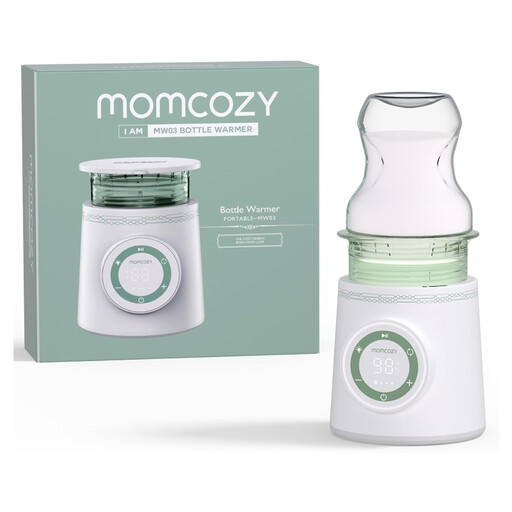
Why this choice suits this profile: Its travel-friendly design, built-in battery and multi-brand adapters are designed for frequent outings, journeys and days spent outdoors.
The dual leak-proof design and included adapters directly address the risks of spillage and incompatibility. Dr. Brown's bottles, however, require specific checking.
Built-in battery, portable design, stated package dimensions of 21 × 15.4 × 9.8 cm and weight of 800 g.
We have selected a comprehensive list, updated in real time, of products that meet these demanding criteria as well as European safety standards.
Models whose product page mentions both uses can warm breast milk as well as infant formula. Always follow the preparation, storage and temperature instructions for the milk you are using. Check its contents before feeding and always test the temperature by hand.
It depends entirely on the volume, the starting temperature, the container material and the setting selected. Some models claim a time of around 2 to 5 minutes under specific conditions. However, this figure is not a guarantee for every situation.
Yes, provided its battery is sufficiently charged and its battery life matches the length of the trip. Before you leave, check the claimed battery life, the cable supplied and the compatibility of the charging system. For a long journey, have a backup plan and never leave the device running unattended.