
Livraison le jour même ou le lendemain

Qualité garantie

Débloquez vos offres de bienvenue: Livraison GRATUITE | Jusqu'à -80 % | 30 jours d'essai gratuits à JoyPlus
Téléchargez l'application
For everyday outings, public transport journeys or travel, a Momcozy ergonomic baby carrier keeps your hands free while keeping your child close. However, product descriptions can sometimes be full of appealing promises without clearly outlining the practical limitations of each model. A baby carrier described as “lightweight”, “breathable” or “suitable from birth” will not necessarily be appropriate for every baby or every body shape.
Here are the criteria to review before buying, followed by a selection of models suited to different types of parents in France.
Several models advertise a capacity of approximately 3.18 to 19.96 kg, or around 3 to 20 kg. This does not automatically mean that they are suitable for a newborn. The product descriptions consulted generally recommend use from around 3 months, once the baby can hold their head up, in line with the manufacturer’s guidance.
Before ordering, always check:
A breathable baby carrier or mesh carrier is designed to encourage air circulation, which can be particularly welcome in summer. However, the sensation of heat also depends on the clothing worn by the parent and child, the contact between their bodies and the position used.
Air Mesh models are designed to improve ventilation. 100% cotton versions focus more on their soft feel and natural sensation, but do not offer the same properties as an open mesh fabric. In all cases, the child’s face must remain visible and their airways completely clear.
A baby carrier may feel comfortable for a few minutes, then become noticeably heavier over the course of a walk. Crossed shoulder straps, lumbar support and seat width all contribute to effective weight distribution.
For an ergonomic baby carrier, choose a seat that allows the baby to adopt the M position: the baby’s knees should sit higher than their bottom, with their thighs properly supported. This position depends on correct adjustment—not simply on the product’s marketing name.
A wide, padded seat can support the baby’s legs. Some models also feature C-shaped back panels, designed to follow the natural curve of the baby’s back. This does not replace reading the instructions or adjusting the carrier each time it is used.
Once the child is positioned, check the following:
A front baby carrier is suitable for parents who want to carry their child in front of them during everyday activities. The Momcozy models featured here have adjustable shoulder straps, often arranged in a crossed or X configuration, and some include a panel or belt with reinforced lumbar support.
The advertised weight of these baby carriers generally ranges from 760 to 810 g. This makes it possible to compare models, but comfort also depends on the width of the shoulder straps, the stiffness of the waist belt and how effectively the load can be distributed.
A machine-washable baby carrier makes everyday life easier, particularly after a rainy outing or a messy mealtime. The product descriptions for the selected models indicate that they can be machine washed; however, you should follow the recommended temperature and care instructions to protect the buckles, stitching and structure of the carrier.
100% cotton versions prioritise a soft, supple fabric. Breathable mesh models are better suited to warmer days. In every case, inspect the fabric, straps and fastenings before each use.
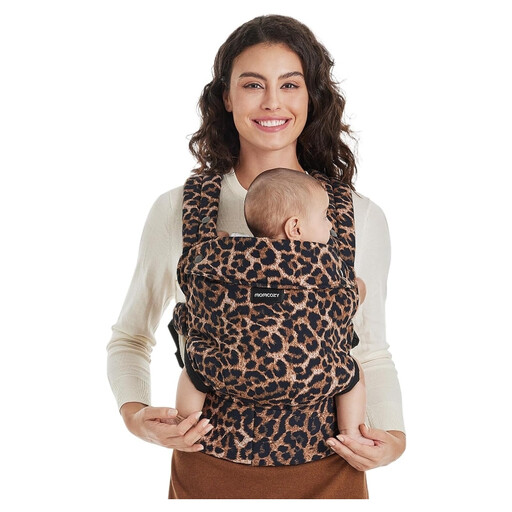
Why this choice suits this profile: a cotton option for everyday outings, advertised for babies weighing between 3 and 20 kg and equipped with adjustable shoulder straps.
The product description specifies the approximate age, weight range, front-carrying position and machine-washable care instructions—all useful information for checking whether it is suitable before buying.
100% cotton, advertised weight of 771 g, EVA back panel and machine-washable care.
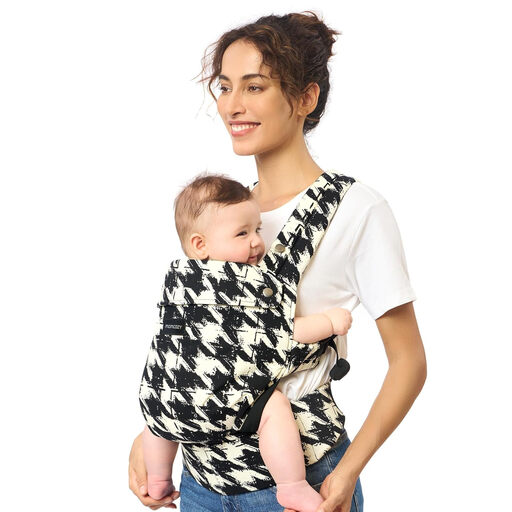
Why this choice suits this profile: according to the product description, this model combines OEKO-TEX Standard 100-certified cotton, crossed shoulder straps and reinforced lumbar support.
Three size adjustments allow the carrier to adapt as the child grows, rather than choosing a model based solely on its appearance.
Breathable cotton, X-shaped shoulder straps, padded seat, lumbar support and machine-washable care.
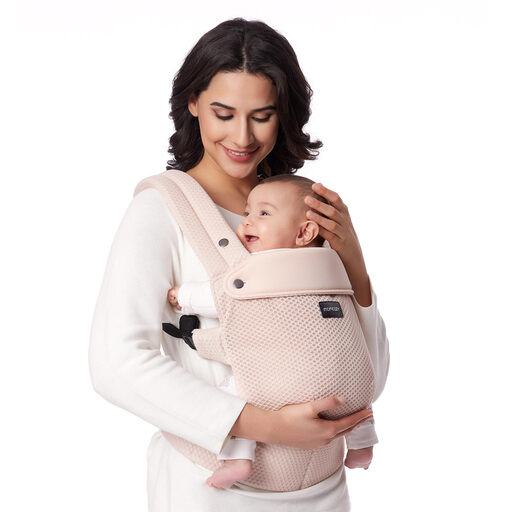
Why this choice suits this profile: the Air Mesh fabric and cooling contact material are designed for hot days, travel and frequent journeys.
Ventilation here relies on a specific material, rather than a vague marketing promise. You should still monitor the baby’s temperature and breathing.
Air Mesh fabric, EVA lumbar support, three size adjustments, front carrying position and machine-washable care.
Explore a complete, up-to-date selection of products that meet these carrying criteria and comply with the applicable French regulations.
Before every journey, take a few seconds to carry out these checks:
A baby carrier does not protect against falls. Avoid cycling, running, any activity involving a risk of falling, as well as proximity to an open flame or heat source. Also follow the weight range stated in the product description and instructions.
The models featured are generally indicated for babies aged approximately 3 to 24 months, weighing between 3.18 and 19.96 kg. Age alone is not sufficient: the child must also be able to hold their head up, in accordance with the manufacturer’s instructions. Always consult the instructions for the model you have chosen.
The appropriate duration depends on the child’s age, their position, the carrier’s adjustment and the comfort felt by both baby and parent. Start with short periods, regularly check the baby’s posture and take a break if the child appears uncomfortable or the wearer experiences pain. No baby carrier should be used without direct supervision.
The models described in this selection are advertised as machine washable. Before washing, follow the care instructions and fasten the buckles if recommended. Inspect the product before using it again. Do not use a baby carrier if any strap, buckle or seam shows signs of wear.