
Livraison le jour même ou le lendemain

Qualité garantie

Débloquez vos offres de bienvenue: Livraison GRATUITE | Jusqu'à -80 % | 30 jours d'essai gratuits à JoyPlus
Téléchargez l'application
A Momcozy ergonomic baby carrier makes walking, shopping and days out easier when your child wants to stay close to you. But a good-looking photo and a promise of comfort aren’t enough to help you choose the right one. The adjustment system, ventilation and how long you can realistically use it all matter too.
Before you place your order, watch out for these three common pitfalls:
The models featured here are designed for front carrying, with a stated weight range of around 3.18 to 19.96 kg, or approximately 7 to 44 pounds. Always check this against the manual for your chosen model and your child’s individual needs.
A baby must be properly supported, with their face visible and airways completely clear. If your baby can’t yet hold their head up unaided, carefully check the manufacturer’s restrictions before using the carrier. Don’t use a baby carrier while running, cycling, cooking near a flame or doing anything that could put you at risk of falling.
The M-position means the baby’s legs are bent, with their knees higher than their bottom. You need to achieve this with the right adjustment: the word ‘ergonomic’ in a product title doesn’t guarantee it on its own.
A cotton baby carrier may suit parents looking for a soft, easy-care fabric. Momcozy’s 100% cotton models weigh around 771 g and include features such as a fold-down neck support and padded leg openings.
For summer outings, a breathable baby carrier made with Air Mesh may feel more comfortable. These models combine a mesh panel with fabric described as cooling where it touches the neck. This design may improve airflow, but you’ll still need to keep an eye on your child’s temperature.
Whichever you choose, check the washing instructions and inspect the seams and buckles after every wash. A machine-washable baby carrier should be cared for according to the manufacturer’s recommendations to help protect the straps and support components.
A waistband with an EVA panel, adjustable shoulder straps and an X-shaped back can help distribute weight more evenly across your shoulders, back and waist. These features are particularly useful on longer journeys or when your child is approaching the stated upper weight limit.
However, a baby carrier with lumbar support can’t guarantee that you won’t experience discomfort. Adjust the straps so the carrier sits close to your body, check that your child is held securely against you, and stop using it if discomfort persists.
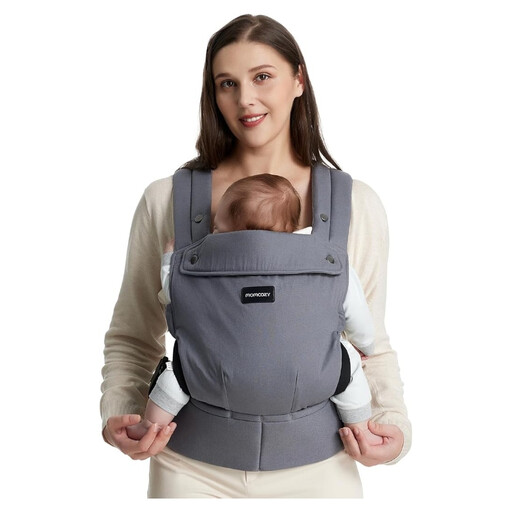
Why this is a good choice for this type of user: This cotton model is ideal for parents who want to start with a simple front carrier for everyday outings and keeping their little one close.
The fabric composition, 771 g weight, machine-washable design and stated usage range are all clearly listed.
100% cotton, adjustable shoulder straps, EVA support and an M-position for a stated weight range of around 3.18 to 19.96 kg.
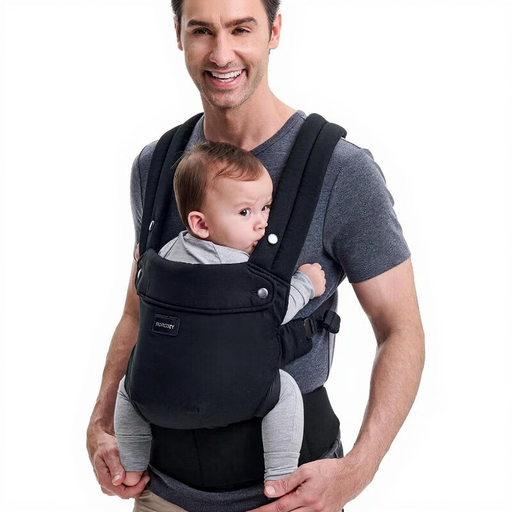
Why this is a good choice for this type of user: With its cotton design, EVA panel and cross-back straps, this carrier is suited to parents who prioritise quality finishes and adjustability for regular use.
Support doesn’t rely on the fabric alone: the shoulder straps, EVA panel, neck support and padded leg openings are all detailed.
100% cotton, front carrying, machine washable and three support points listed in the product details.
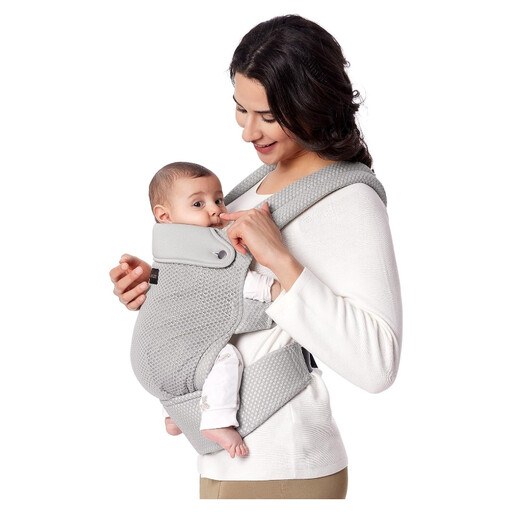
Why this is a good choice for this type of user: The Air Mesh and cooling fabric where it touches the skin make this a good choice for frequent journeys, holidays and warmer weather.
Ventilation comes from a clearly identified Air Mesh panel, rather than just a claim that the fabric is lightweight.
Stated weight of 771 g, machine washable, EVA lumbar support, X-shaped back and three adjustment positions.
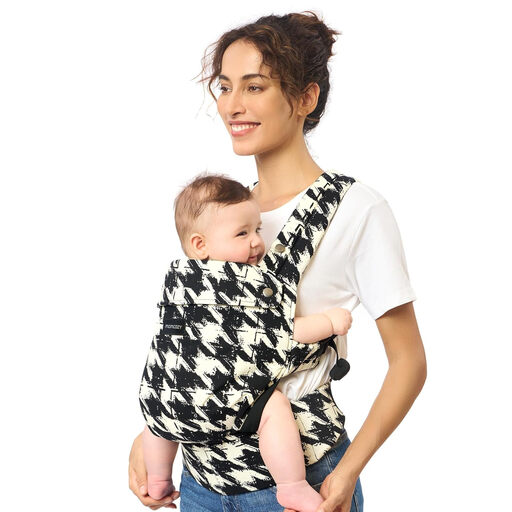
Why this is a good choice for this type of user: Its check pattern makes it a distinctive gift idea, while still offering the adjustments needed for everyday front carrying.
The product details specify front carrying, machine washing and a weight range of around 3.18 to 20 kg.
Breathable cotton, cross-back straps, padded seat, lumbar support and three stated adjustment positions.
We’ve put together a comprehensive, regularly updated selection of products that meet these strict criteria and European safety requirements.
The models featured generally have a stated minimum weight of 3.18 kg and a maximum weight of around 19.96 kg. This doesn’t replace the instructions in the manual: your child must be properly supported, positioned upright and have their face clear. Also check the recommendations for head support.
Position your child high against your chest, then adjust the shoulder straps and waistband so their back is well supported and their knees are higher than their bottom. Their legs shouldn’t dangle. Before setting off, check that their face is visible, no fabric is covering their nose and every buckle is fastened correctly.
It depends on how often you use it, the weight carried, how many times it’s washed and how it’s stored. Regularly inspect the seams, buckles, straps and fabric. Replace the carrier if any of these parts are frayed, misshapen, loose or damaged, even if the stated weight limit hasn’t been exceeded.