
Livraison le jour même ou le lendemain

Qualité garantie

Débloquez vos offres de bienvenue: Livraison GRATUITE | Jusqu'à -80 % | 30 jours d'essai gratuits à JoyPlus
Téléchargez l'application
An ergonomic Momcozy baby carrier can genuinely simplify outings with a newborn or young child – whether you're using public transport, going for walks, travelling, or tackling everyday tasks. But you need to know how to separate the marketing claims from the information that really matters. A "breathable" fabric, a wide weight range, or lumbar support alone aren't enough to guarantee comfortable babywearing.
Before you place your order, focus on three things: your baby's position, the fit for the parent, and how easy it is to clean. These criteria will help you avoid choosing a carrier that's too hot, fiddly to adjust, or uncomfortable after just a few weeks.
A claim of 3 to 20 kg doesn't necessarily mean the same setting will work at every stage. A baby of a few months and a toddler approaching 20 kg have very different body shapes and support needs. Check the available adjustments, whether there's a neck support, and the recommended age in the instruction manual.
The models featured here are generally recommended for children from around 3 to 24 months, with a load capacity between 3.18 and 19.96 kg depending on the specific product. However, you should always follow the manufacturer's guidelines for babywearing.
Cotton can feel pleasant against the skin, while an Air Mesh fabric or a mesh baby carrier promotes better air circulation. But no material removes the need for careful supervision: your baby's face must remain visible, their airways clear, and their body held in an upright position.
For summer, long outings, or warm homes, look at the design of the back panel and the material that comes into contact with the neck. If you're after a carrier you can use all year round, a cotton baby carrier can offer a softer feel and relatively simple care.
A lumbar panel or a waist belt with an EVA insert can help distribute the load more evenly, but comfort depends mostly on the overall fit. A strap that's too loose shifts the weight onto your shoulders; a belt placed too low can make walking awkward.
The right adjustment means keeping your baby close to your chest without compressing them, with balanced shoulder straps and a belt positioned according to your body shape.
A physiological baby carrier should allow your baby to adopt a position where their knees are higher than their bottom – often called the M position. Their legs shouldn't dangle, and their back should be supported without being forced.
Make sure the carrier includes:
The descriptions of the selected Momcozy models mention a C-shaped spine and an M-position for the legs. These are design features stated by the manufacturer, not a medical guarantee.
The cotton models in this selection measure approximately 36 × 15 × 13.5 cm and weigh around 771 g. The mesh version weighs roughly 760 to 771 g depending on the product. So the difference is minimal: support and weight distribution will generally have a much bigger impact than a few grams.
A lightweight baby carrier is handy if you're on the move a lot, but make sure the shoulder straps are padded and sufficiently adjustable. For keeping your hands free during a walk or a trip to the supermarket, stability matters more than the product's weight alone.
A machine-washable baby carrier can make life much easier, especially with spit-ups, food stains, or heavy use. Always follow the temperature and programme stated in the manual to protect the seams, buckles, and support panels.
Cotton will suit parents who prefer a soft texture. Mesh and cooling panels are worth considering if ventilation is your top priority. In any case, let the carrier dry completely before storing it away.
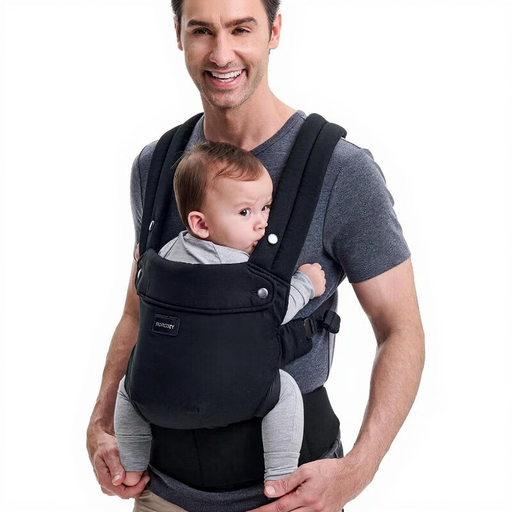
Why this suits this profile: Its 100% cotton design and front-facing carry will appeal to parents looking for a simple solution for everyday outings.
The product page specifies a range of 3.18 to 19.96 kg, machine washing, and the buckle checks to perform before each use.
100% cotton, front-facing position, foldable neck support, and padded leg edges.
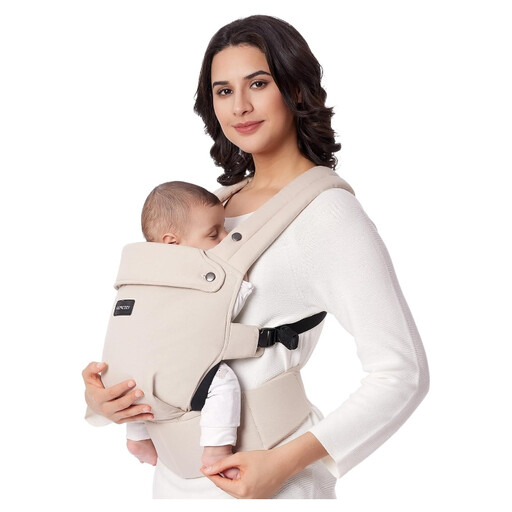
Why this suits this profile: It's designed for parents who are particularly focused on weight distribution and comfort during regular babywearing.
The EVA panel and crossed shoulder straps are presented as features designed to distribute the load more effectively.
Cotton composition, EVA lumbar support, adjustable settings, and a stated capacity of up to approximately 19.96 kg.
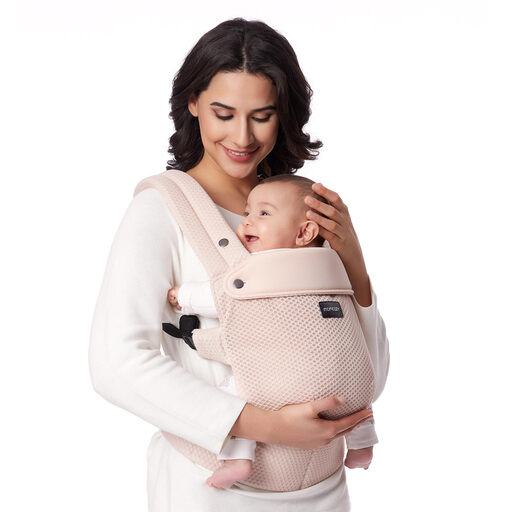
Why this suits this profile: This model is aimed at families who often go out in hot weather, travel, or need a breathable carrier for extended use.
The Air Mesh panel and cooling fabric against the skin address the need for ventilation, without replacing the need for supervision.
Mesh fabric, three adjustment positions, EVA lumbar support, and machine washable.
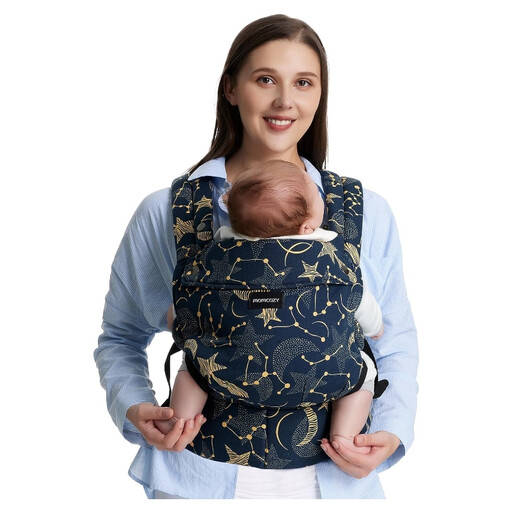
Why this suits this profile: Its cotton design and front-facing format will suit parents who want a single carrier for walks and everyday tasks.
The product page mentions an EVA panel, adjustable shoulder straps, a foldable neck cushion, and a padded seat.
100% cotton, machine washable, front-facing carry, and a stated range of 3.18 to 19.96 kg.
We've put together a complete, real-time selection of products that meet these demanding criteria as well as European safety standards.
Before each use, inspect the seams, buckles, and straps. Close each buckle until you hear it click, then check that your baby is securely held against you. Their face must remain clear and visible. Never cover their nose or mouth with clothing, a scarf, or the carrier's fabric.
Do not use the carrier for running, cycling, cooking near a flame, or any activity that carries a risk of falling. If your baby cannot yet hold their head up on their own, strictly follow the minimum age and recommendations in the manual. Stop using the carrier immediately if you experience pain, discomfort, or if the carrier becomes damaged.
The products featured here generally state a minimum weight of around 3.18 kg and a maximum weight close to 19.96 kg. This information doesn't replace the manual: your child's age, development, and ability to hold their head up must also be taken into account.
The mesh baby carrier is designed to promote air circulation thanks to its mesh panel. Cotton, on the other hand, can be appreciated for its soft feel. So the choice depends on your priority: better ventilation in hot weather or a more natural fabric feel.
There's no universal duration that suits every child. Start with short periods, regularly check your baby's position, breathing, and temperature, then take a break at the first sign of discomfort. The wearer should also readjust the straps if the load becomes uncomfortable.