
Livraison le jour même ou le lendemain

Qualité garantie

Débloquez vos offres de bienvenue: Livraison GRATUITE | Jusqu'à -80 % | 30 jours d'essai gratuits à JoyPlus
Téléchargez l'application
A Moleskine notebook can accompany you through countless tasks: taking notes in meetings, keeping a diary, creating a bullet journal, or sketching ideas on paper. But its iconic look alone isn't enough to make the right choice. The size, ruling, paper and cover all directly affect writing comfort and how long your notebook lasts.
A pocket-sized notebook slips easily into a bag or jacket, but its writing surface quickly shows its limits when you need to take lengthy notes or draw diagrams. On the other hand, a large format gives you more freedom, at the cost of being bulkier to carry around day to day.
A lined Moleskine notebook works well for continuous writing, lectures and meeting minutes. A blank Moleskine notebook offers more freedom for drawing, sticking in mementos or composing pages without any constraints. Dotted and grid pages provide subtle guidance, which is especially handy for bullet journals, tables and technical sketches.
A black, sapphire blue or illustrated cover says nothing about how comfortable the notebook is to use. Check its stiffness, whether it has an elastic closure, a ribbon bookmark, an inner pocket, and whether the notebook lies flat when open. A soft cover will be lighter, while a hardcover notebook will protect the pages better inside a bag.
Dimensions can vary from one collection to another, so it's best to check the product listing rather than relying solely on labels like "large" or "medium".
The range typically uses 70 gsm paper, which is ivory-coloured and acid-free. The term "acid-free" means the paper is designed to resist ageing over time. It doesn't, however, guarantee that the notebook is suitable for all felt-tip pens and paints.
For everyday writing, pencil and ballpoint pens, this weight is usually sufficient. With markers or heavily saturated inks, test your materials on a page at the back of the notebook to check they don't bleed through. Some special collection models, like the Casa Batlló, feature 100 gsm paper, while the pocket watercolour notebook uses 200 gsm paper.
The FSC-certified paper label indicates, according to the information provided for the relevant products, that the paper comes from certified forests and other controlled sources. It's a marker of traceability, not a guarantee of the notebook's lifespan.
A hard cover is a good choice if you write without a stable surface, on public transport or at an uneven table. A soft cover makes the notebook lighter, which can make a difference for on-the-go use or an XXL notebook.
The elastic closure keeps the notebook shut, while the ribbon bookmark lets you quickly find your page. The expandable inner pocket can hold receipts, cards or a few loose sheets. The 180° flat opening makes it easier to write across both pages, but avoid forcing the spine beyond its normal range.
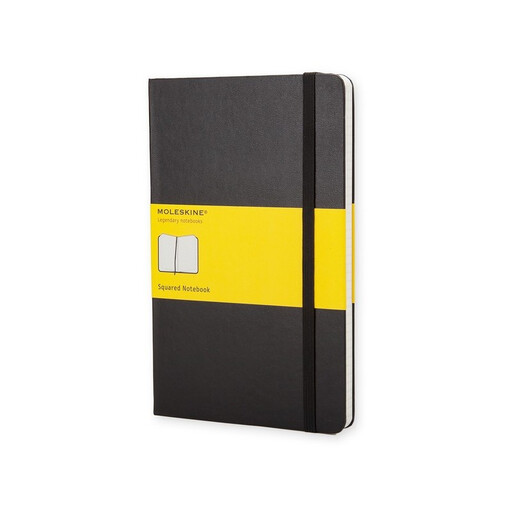
Why this suits this profile: Its pocket size is ideal for lists, notes taken on the go, and first experiences with structured planning.
The grid pages provide a guide without imposing writing lines, while the size stops you from lugging around an oversized notebook for daily use.
Hard cover, 70 gsm acid-free ivory paper, elastic closure, ribbon bookmark and inner pocket.
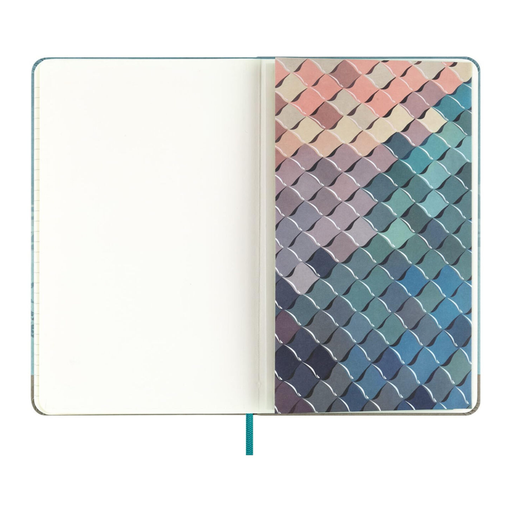
Why this suits this profile: Its cover, inspired by Casa Batlló, adds a decorative touch to a notebook designed for regular writing or for gifting.
The listing specifies 100 gsm lined paper, which sets this model apart from standard notebooks with 70 gsm paper.
Hard fabric cover, 100 gsm acid-free ivory paper, 180° flat opening, ribbon bookmark and expandable inner pocket.
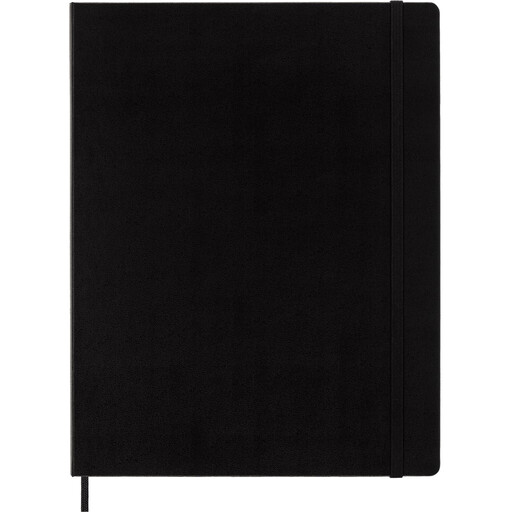
Why this suits this profile: Its large surface area meets the needs of architects, artists, designers and anyone who wants to bring a whole project together in one place.
The extra-large format stops you from spreading plans, mind maps and project notes across several notebooks. Just be aware that it takes up more space.
Pages available with several rulings depending on the version, hard cover, elastic closure, ribbon bookmark, inner pocket and flat opening.
We've put together a complete, real-time updated selection of products that meet these strict criteria and the requirements of European safety regulations.
A medium or large size gives you more room for regular writing. Lined pages work well for text, while dotted pages make it easier to create calendars, trackers and Moleskine bullet journal layouts. If you want complete freedom to organise your pages, go for a blank version.
The hard cover protects the pages better and provides a more stable writing surface, even without a table. The soft cover is lighter and slips more easily into a bag. The right choice therefore depends on how you travel and how you write.
The 70 gsm pages are best suited to pencil, pen and light dry techniques. For a sketchbook intended for wet media, check the weight listed: the pocket watercolour model uses 200 gsm paper. In any case, test your materials on a page before filling the notebook.