
Livraison le jour même ou le lendemain

Qualité garantie

Débloquez vos offres de bienvenue: Livraison GRATUITE | Jusqu'à -80 % | 30 jours d'essai gratuits à JoyPlus
Téléchargez l'application
Far more than a simple notepad, a Moleskine notebook is a personal space for your ideas, projects, and memories. But with a multitude of sizes, paper types, and covers to choose from, it's easy to make the wrong choice. An ill-fitting size quickly becomes cumbersome, unsuitable paper stifles creativity, and a flimsy cover wears out prematurely. This guide is designed to bring clarity and help you find your ideal companion.
To prevent disappointment, let's review the classic pitfalls that lead to a regrettable purchase.
To find your ideal ally, three fundamental parameters must be considered: they will define your entire experience.
The ruling (or lack thereof) is crucial. Each layout is designed for a specific purpose.
The size of your notebook should fit your daily life.
The cover type directly impacts the durability and daily use of your notebook.
To help you find the right fit, here are a few typical profiles and the models that suit them best.
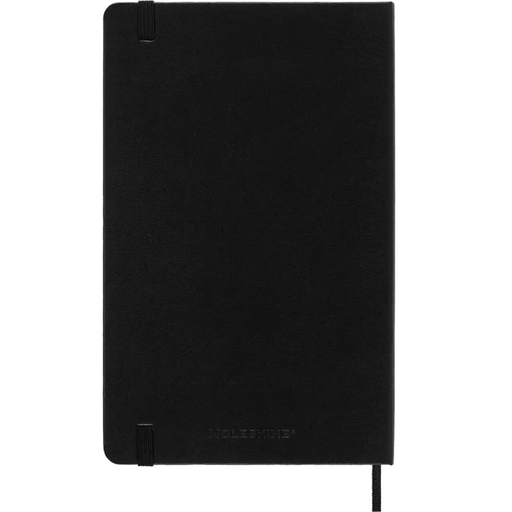
Why it's the right choice: For meetings, project management, and meticulous note-taking, the Large ruled format is the absolute standard. It offers enough space for comprehensive reports without being bulky, and its hard cover lets you write comfortably anywhere, even while standing.
The Large format strikes the perfect balance between space and portability for professional use. The ultra-durable hard cover protects strategic notes, and the lined pages ensure flawless organisation.
Ultra-resistant hard cover for maximum protection ; opens flat at 180° for total writing comfort.
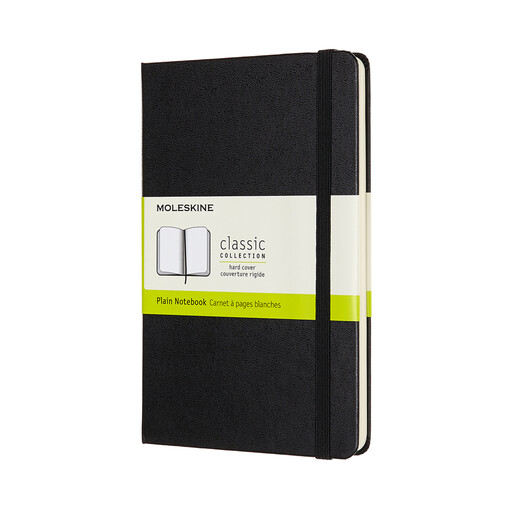
Why it's the right choice: Creatives thrive on freedom. The plain pages offer a blank, unconstrained space for sketches, mind maps, or collages. The Medium format is large enough to express yourself, yet compact enough to be carried everywhere.
With its completely blank pages, you can say goodbye to the frustration of lines or grids that stifle inspiration. The Medium format is the ideal compromise, so you no longer have to choose between creative space and portability.
A creative canvas with no limits ; FSC certified acid-free paper to ensure your work stands the test of time.
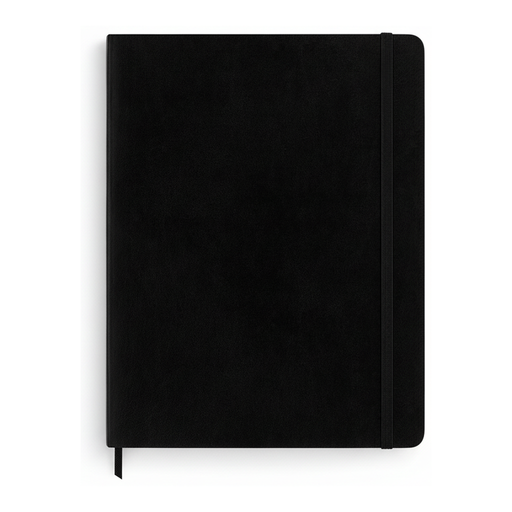
Why it's the right choice: Architects, designers, and fans of complex *bullet journals* need space and structure. The Extra Large squared format offers a huge work surface for diagrams, plans, and tables. The soft cover is a smart feature that makes it lighter than a hard cover model of the same size.
This model checks all the boxes: a large, structured space so you never feel cramped again, and a grid for precision. The soft cover is the solution to bypass the weight problem often associated with very large formats.
XXL format for maximum workspace ; squared grid for technical drawings and precision layouts.
Explore our full selection of notebooks that meet the same standards of quality and durability.
To prevent ink from bleeding through and ruining the next page, stick to ballpoint pens, high-quality gel ink rollers, and pencils. If you're a die-hard fountain pen user, opt for a fine nib (F or EF) and quick-drying ink. In any case, the best practice is to test your pen on one of the last pages.
It all depends on your use case. If you're the type to write while standing on public transport or on the corner of a table, the hard cover is essential: it will serve as your writing surface. It also offers superior protection. If, on the other hand, you prioritise lightness and flexibility, and your notebook is safely tucked away in your bag, the soft cover will be more comfortable.
Absolutely. The paper in Moleskine notebooks is acid-free and FSC (Forest Stewardship Council) certified. This means it comes from responsibly managed forests and other controlled sources. This provides a dual guarantee: a medium that preserves your writings over time and respects the environment.