
Livraison le jour même ou le lendemain

Qualité garantie

Débloquez vos offres de bienvenue: Livraison GRATUITE | Jusqu'à -80 % | 30 jours d'essai gratuits à JoyPlus
Téléchargez l'application
A Moleskine notebook can be used for taking notes at work, organising a project, writing, drawing or recording your travels. But looks aren’t everything. With different sizes, ruling styles and covers to choose from, certain details can make the difference between a successful purchase and a notebook that’s impractical for everyday use.
A pocket notebook slips easily into a bag or jacket, but its writing area remains limited. By contrast, a large Moleskine notebook offers more room to write, at the cost of taking up more space.
Before placing your order, check the dimensions provided by the seller and start with your main use:
A lined Moleskine notebook is ideal for writing, taking notes in meetings or making lists. A plain Moleskine notebook gives you more freedom to draw, create diagrams or stick in items. Grid ruling is particularly useful for tables, charts and evenly structured layouts.
Dotted pages offer a good compromise: they provide subtle guidelines for writing in a straight line, creating divisions or drawing boxes, without imposing visible lines. This ruling is well suited to bullet journalling and flexible planning.
A hard cover protects the pages better in a bag and allows you to write without support. On the other hand, it makes the notebook heavier and takes up more room. A soft cover may be more comfortable to carry, especially if you take several notebooks with you when travelling.
Also consider the features that genuinely affect how you use the notebook: elastic closure, bookmark, lay-flat opening, inner pocket or detachable pages. These practical details matter far more in everyday use than purely decorative appeal.
For professional or university use, Large and Extra Large sizes provide plenty of room for meeting notes and annotations. XXL size really comes into its own when notes sit alongside sketches, plans or large tables.
A pocket Moleskine notebook is better suited to ideas captured on the go, shopping lists, directions and notes scribbled down while travelling. For a long-term project, however, it may soon prove restrictive compared with a larger notebook.
Paper weight alone does not define the writing experience. You should also consider the paper’s shade, whether it is acid-free and the type of ruling. Several products featured here use 70 g/m² acid-free ivory paper, while some editions use 100 g/m² paper.
When the FSC label is mentioned on the product page, this means that the paper comes from certified forests and other controlled sources. This certification relates to paper sourcing; it is not a guarantee covering every environmental aspect of the product.
For a notebook that will be opened every day, look in particular for:
Sets can also be useful for separating different activities: work, personal notes, creative projects or journalling. However, check the number of notebooks included and the type of cover before ordering.
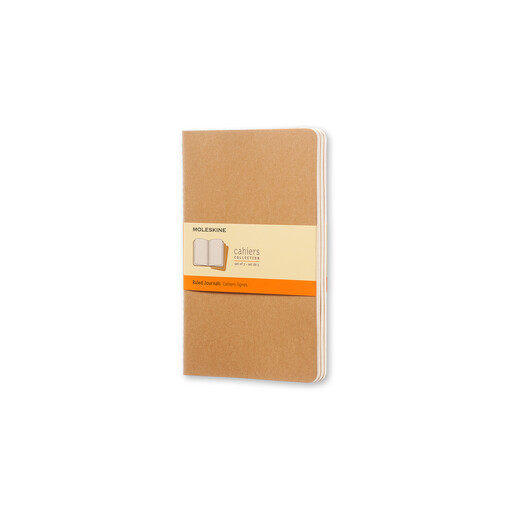
Why this choice suits this user: This set of three notebooks lets you separate different activities without making multiple purchases: lessons, work and personal notes can all stay neatly organised.
The lined ruling is clearly stated, while the Large size reduces the risk of running out of space during extended note-taking.
Three hard covers, 70 g/m² acid-free ivory paper, inner pocket and 16 detachable pages at the back of each notebook.
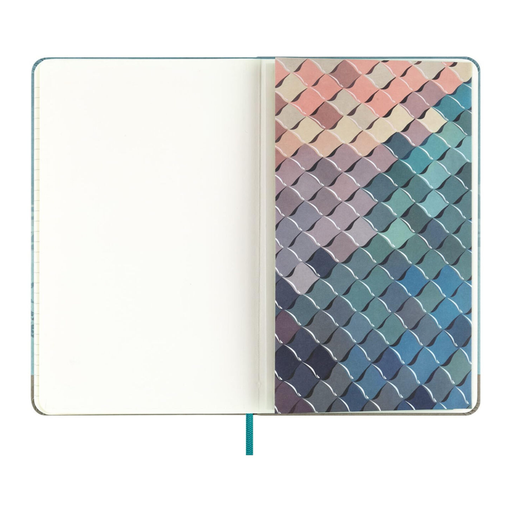
Why this choice suits this user: Its Casa Batlló-inspired cover will appeal to lovers of art, architecture and beautiful stationery, while remaining perfectly suited to regular use.
The product details specify a paper weight of 100 g/m² and lay-flat binding, so this choice is based on tangible features, not just its decorative design.
100 g/m² lined acid-free ivory paper, elastic closure, bookmark, expandable pocket and fabric cover.
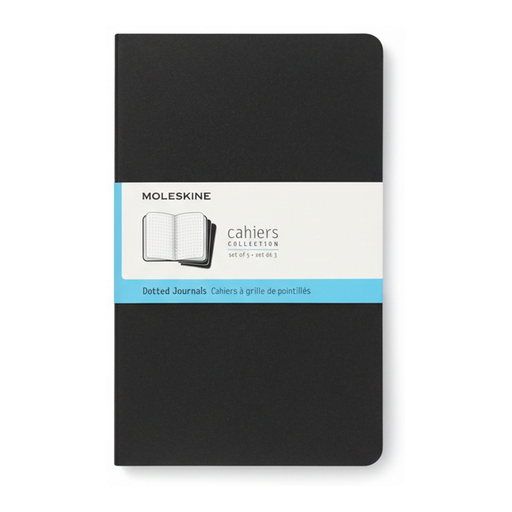
Why this choice suits this user: Professionals, artists and creatives can dedicate each volume to a different project, client or organisational method.
The dotted grid structures the page without imposing a rigid layout. The set also helps prevent several projects from being mixed together in one notebook.
Three large hard-cover notebooks, 70 g/m² acid-free ivory paper, elastic closure and 16 detachable pages at the back.
We’ve put together a complete, real-time updated selection of products that meet these strict criteria as well as European safety requirements.
A notebook is suitable for free-form content: ideas, text, drawings and notes. To organise your weeks, a Moleskine planner or dated diary will be more suitable. Weekly models provide an overview, while a daily diary offers more space for appointments and detailed lists.
A limited edition can make a lovely gift or an attractive collector’s item, but always check that its layout matches the way you intend to use it. An appealing design will never make up for unsuitable ruling or a format that is too small.
It depends on how often it is used, how it is transported and its storage conditions. A hard cover, elastic closure and pocket help protect the contents. However, it is best to keep the notebook away from moisture, heat and prolonged exposure to sunlight.
Choose a plain Moleskine notebook for complete freedom when drawing. Dotted pages are better suited to structured sketches, diagrams and bullet journalling. If you plan to carry it around regularly, also compare its weight and size with those of your art materials.
Yes, if you have several uses in mind or want to organise your notes by theme. A set of Moleskine notebooks lets you keep work, studies and personal projects separate. Just take the time to check the ruling, size and type of cover before ordering.