
Livraison le jour même ou le lendemain

Qualité garantie

Débloquez vos offres de bienvenue: Livraison GRATUITE | Jusqu'à -80 % | 30 jours d'essai gratuits à JoyPlus
Téléchargez l'application
A notebook is far more than a simple stack of paper—it's a companion. It's your personal space to organize your thoughts, plan your projects, or unleash your creativity. With its iconic design, the Moleskine notebook is often a sentimental favorite. Yet, faced with a multitude of sizes, paper types, and covers, the risk of choosing the wrong one and regretting it is all too real. This guide is here to help you navigate the options and find the Moleskine that’s truly right for you, steering you clear of common disappointments.
Before you splurge on a Moleskine, let's review the three most common disappointments so you can avoid falling into the same traps.
Making the right choice comes down to three key criteria. Your ideal notebook lies at the intersection of these three elements.
The ruling (the type of markings on the page) shapes how you'll make the page your own.
The size of your notebook should adapt to your daily life and your ambitions.
Hard or soft? More than a matter of style, this choice directly impacts the notebook's durability and user comfort.
To help you see more clearly, here is our selection for three distinct user profiles.
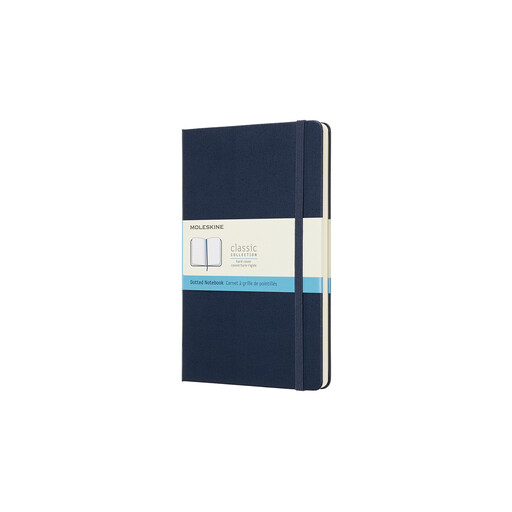
Why it's the right choice: The perfect tool for *bullet journal* enthusiasts and project managers. The dot grid provides just enough structure to create schedules and trackers without the rigidity of classic lines. Its Large format is the ideal compromise between workspace and portability.
Its dotted ruling is the ultimate solution to the "wrong format" trap, offering maximum versatility. Its hard cover and 180° lay-flat opening ensure writing comfort in all circumstances.
It combines the flexibility of a *bullet journal* with the elegance of a colored cover and the durability of a time-tested binding. The expandable inner pocket is perfect for loose papers.
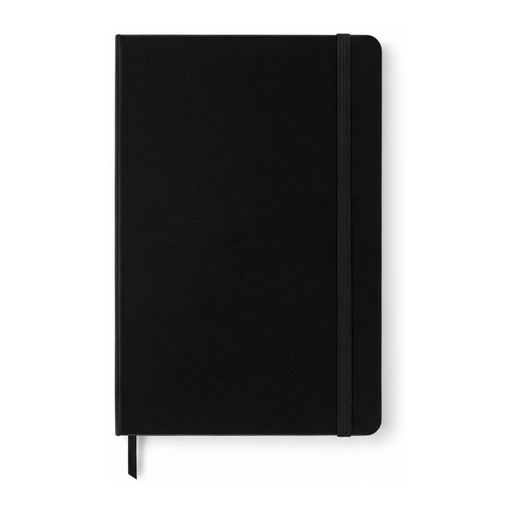
Why it's the right choice: For artists, designers, and anyone who thinks visually. The blank pages offer absolute freedom for drawing, sketching, or *mind-mapping*. Its hard cover provides a stable surface for drawing anywhere, anytime.
It immediately sidesteps the trap of a restrictive ruling. Its 180° lay-flat opening and acid-free 70 gsm paper make it a reliable medium, ideal for pencils and pens with less aggressive ink.
A quality blank canvas, built to last. Its ivory-colored paper, easy on the eyes, enhances lines and colors. Its iconic design remains a timeless classic.
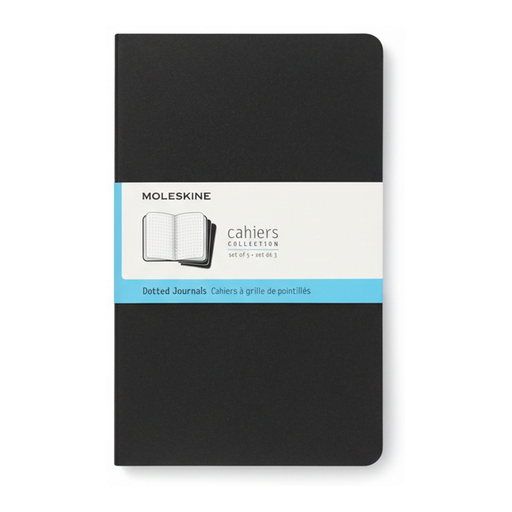
Why it's the right choice: Ideal for students or professionals juggling multiple projects. This **notebook set** allows you to dedicate one notebook per subject or project for crystal-clear organization. The Large format is as practical in class as it is in a meeting.
Buying in a set is an economical solution to avoid running out mid-year. The flexible cardboard cover ensures good durability while remaining lightweight, perfect for daily transport in a backpack.
Excellent value for money. The last 16 detachable pages are a real bonus for sharing a note or a to-do list. The visible Singer stitching on the spine adds an artisanal touch.
The dotted notebook has established itself as the champion of versatility. We've put together a complete selection of models that meet these same high standards.
It all depends on your priorities and your writing tools. Moleskine wins hearts with its iconic design, comprehensive ecosystem (planners, themed notebooks), and its famous 70 gsm ivory paper, which is suitable for most pens. On the other hand, the Clairefontaine notebook is an institution for its 90 gsm "Vélin Velouté" (brushed vellum) paper. It offers an unparalleled glide and near-perfect ink resistance, making it the darling of fountain pen lovers.
With a fountain pen that has a moderate ink flow and a fine nib, Moleskine paper performs honorably. However, with very wet inks or broad nibs (M, B), ghosting is almost inevitable. Our advice: always test it on one of the last pages. For heavy fountain pen use, a 90 gsm (or higher) paper remains a safe bet.
Durability is one of the brand's strengths. To preserve it, simply keep it in a dry place, away from moisture and direct sunlight. Remember to use the elastic closure to protect the pages during transport. If you get a spot on the cover, a soft, dry cloth is usually enough to remove it.