
Livraison le jour même ou le lendemain

Qualité garantie

Débloquez vos offres de bienvenue: Livraison GRATUITE | Jusqu'à -80 % | 30 jours d'essai gratuits à JoyPlus
Téléchargez l'application
The dawn of a new year is the perfect time to get your projects in order. To get your ideas down on paper, never miss an appointment, and plan for success, the classic paper planner remains a trusted choice. And in this field, Moleskine sets the standard with its iconic design and impeccable build quality.
But with the vast array of formats and layouts, how do you find the perfect one? Don't worry, this guide is here to help you choose the 2026 Moleskine planner that will perfectly match your daily life and ambitions.
To ensure you make the right choice, let's review the key factors that will help you find the ideal organizational tool.
This is the number one criterion. The choice of layout depends entirely on the level of granularity you need for your planning.
Does your planner go everywhere with you, or does it sit neatly on your desk? The answer dictates the ideal size. A large Moleskine planner (Large, 13?x?21?cm) ensures maximum writing comfort, perfect for the office. Conversely, the pocket size (Pocket, 9?x?14?cm) is a true nomad, slipping easily into any bag.
The choice of cover isn't just about aesthetics. The hardcover version is a reliable choice: it provides a stable writing surface in any situation, even on your lap during your commute. A softcover Moleskine is lighter and more flexible, sliding more easily into an already full bag.
Your planner should adapt to your life, not the other way around. For a 2026 professional planner, a clear structure is best, like a vertical weekly layout with time slots to schedule appointments with precision. For more creative or personal use, a 12-month notebook planner with plenty of note pages allows for more spontaneity, freely blending planning and sketching.
Enough theory, let's get practical! To help you see more clearly, we've reviewed three flagship Moleskine models, each designed for a specific need.
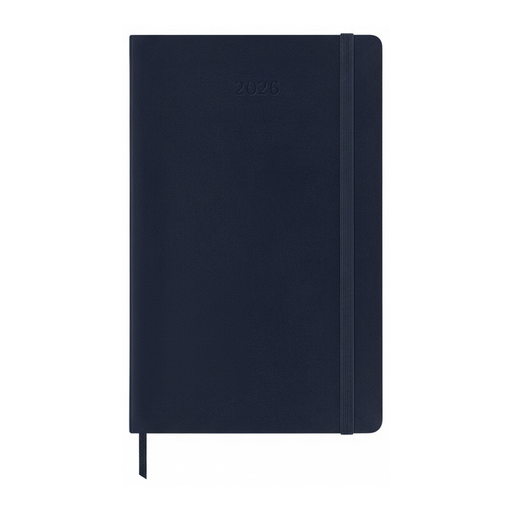
Why It Stands Out
The ideal companion for those who never want to run out of space. With a full page dedicated to each day of the year, it allows for meticulous planning, daily journaling, or detailed note-taking without ever feeling cramped. Its soft cover makes it pleasant to handle and easy to carry despite its generous size.
Key Features
Who Is It For?
Professionals, students, and creatives with busy schedules who appreciate having a dedicated space for each day, whether for listing tasks, noting appointments, or writing down their thoughts.
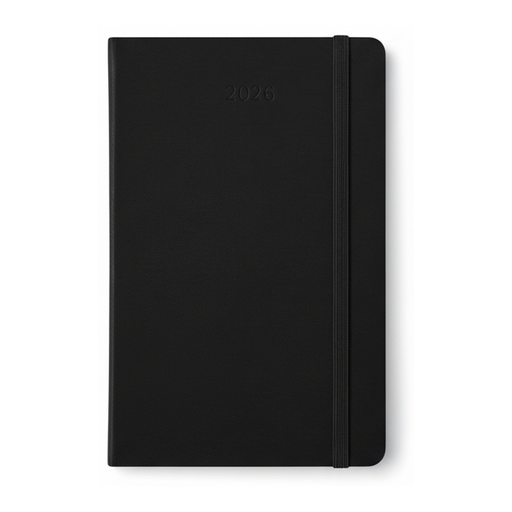
Why It Stands Out
This is the classic organisational tool, striking the perfect balance between an overview and note-taking space. The week is presented on a two-page spread with a horizontal layout: the days of the week on the left and a ruled page on the right for to-do lists, ideas, and memos.
Key Features
Who Is It For?
Anyone who likes to plan their week in advance, from project managers to consultants, and anyone looking to clearly balance appointments and to-do lists.
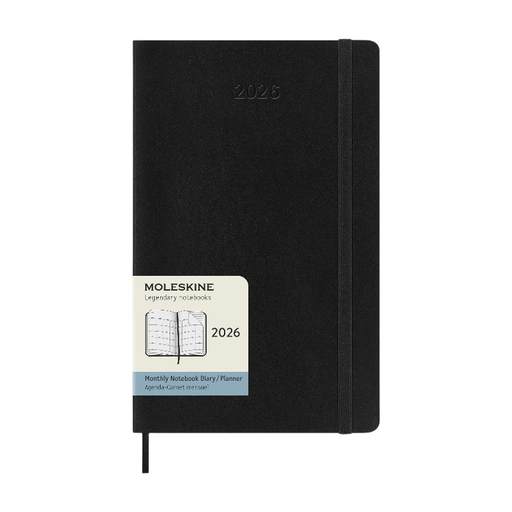
Why It Stands Out
The ultimate tool for long-range thinkers and planners. Each month is presented on a two-page spread, followed by pages for weekly planning and notes. This unique structure allows you to easily switch from a macro view (the month) to a micro view (the week and its tasks).
Key Features
Who Is It For?
Strategists, event planners, and anyone managing long-term projects. It offers a clear overview of deadlines without sacrificing space for weekly details.
If these models didn't catch your eye, or if you're dreaming of a different size, colour, or layout, Moleskine has many more treasures to offer.
Explore our complete collection of desk planners to find the perfect companion to see you through 2026.
It's all a matter of perspective! The daily planner gives you an entire page per day, perfect for noting every detail. The weekly planner, on the other hand, displays the whole week on a two-page spread, giving you an immediate overview of your schedule.
Let's be honest: while Moleskine's 70?g/m? paper is high-quality and pleasant to write on, it's not the best friend of fountain pens with heavy ink flow. It pairs perfectly with ballpoint and rollerball pens. With a fountain pen, especially one with very fluid ink, you may experience some "ghosting" on the reverse side of the page. Our advice: test it on one of the last pages of the notebook before you commit.
It's simple—it all depends on your lifestyle: