
Livraison le jour même ou le lendemain

Qualité garantie

Débloquez vos offres de bienvenue: Livraison GRATUITE | Jusqu'à -80 % | 30 jours d'essai gratuits à JoyPlus
Téléchargez l'application
Condensation on windows, a musty smell in a wardrobe, trainers that stay damp or a poorly ventilated car: a moisture absorber can help reduce humidity in small spaces and certain rooms. But you need to choose a model that suits your intended use.
Before placing an order, it’s best to avoid three common mistakes: picking a capacity that’s too low, confusing odour neutralisation with moisture treatment, or underestimating the cost of refills. Here are the criteria to consider when finding a solution that works with your home and your habits.
A sachet designed for a wardrobe or a car won’t necessarily work in a bedroom or bathroom. Compact absorbers are generally intended for small spaces, often around 1 to 2 m². For a room of up to 20 m², a 450 g refill unit will be far more suitable.
An odour absorber can reduce a musty smell, but it won’t fix a leak, an infiltration or a ventilation problem. Activated charcoal is a supplementary solution for cupboards, bags, shoes or vehicles. It doesn’t replace regularly opening windows or finding the cause of the dampness.
Crystal-based models turn absorbed moisture into gel or liquid. So you need to check the collection system, monitor the fill level and know the recommended disposal method. Refills and sachets must be kept out of reach of children and pets, away from food, heat sources and electronic devices.
Start by roughly estimating the volume or surface area of the space in question:
The mention “up to 20 m²” is a general guideline, not a guarantee that works in every situation. Temperature, ventilation and humidity levels all directly affect how quickly it becomes saturated.
A non-electric dehumidifier works silently using hygroscopic crystals. It doesn’t use any energy, but its refill needs to be replaced regularly. Disposable sachets are practical in small spaces, while a unit with a reservoir will be better for regular use in a room.
Also think about the details that really make a difference in everyday use: a level indicator, a pouring spout, a top opening and a stable casing. These features reduce handling and lower the risk of spills.
A dehumidifier refill must be compatible with the unit you’re using: check the size, weight and fixing system. Rubson 450 g refills are designed for AERO 360° units as well as certain absorbers compatible with this weight. The 300 g refills from the Sensation range use a different format.
Then you need to choose between a neutral, scented or fragrance-free version. Scented crystals can boost the feeling of freshness, while fragrance-free bamboo charcoal bags are designed to absorb certain odours in small spaces.
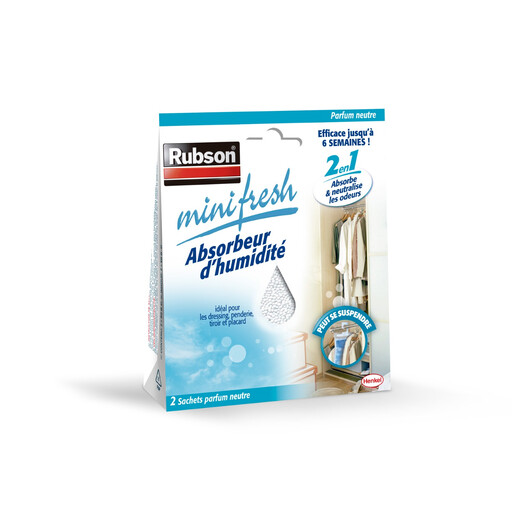
Why this choice suits this profile: The two 50 g sachets are suitable for wardrobes, drawers, shoe cabinets and small lockers of 1 to 2 m².
Its usage area is clearly limited to small spaces, which prevents overestimating its capabilities.
Hygroscopic beads that turn into gel, adhesive fixing possible and a neutral scent.
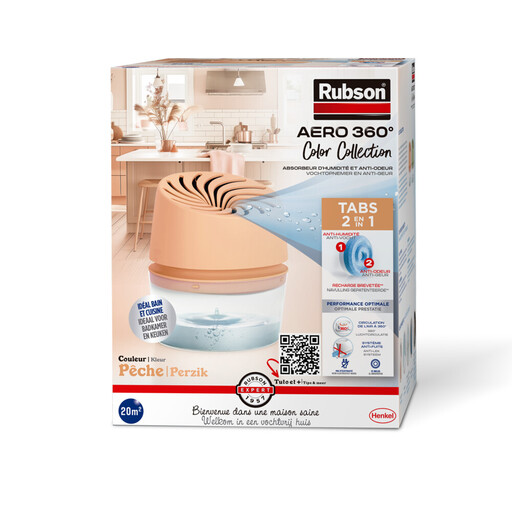
Why this choice suits this profile: Its casing, designed for 360° air circulation, and its level indicator make it suitable for a room of up to 20 m².
The indicator and pouring spout let you know when to replace the refill or empty the reservoir.
Silent operation without electricity, a 450 g refill and a convenient top opening.
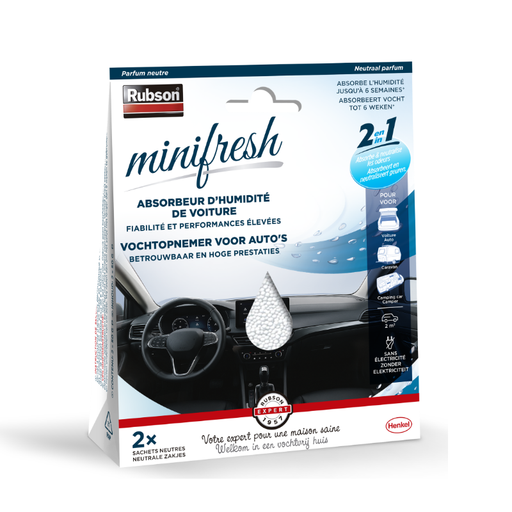
Why this choice suits this profile: These sachets are designed for vehicles, caravans and enclosed spaces of up to 2 m².
Its compact size avoids installing an oversized unit in a cabin where every centimetre counts.
Two sachets, no electricity required and moisture turned into gel.
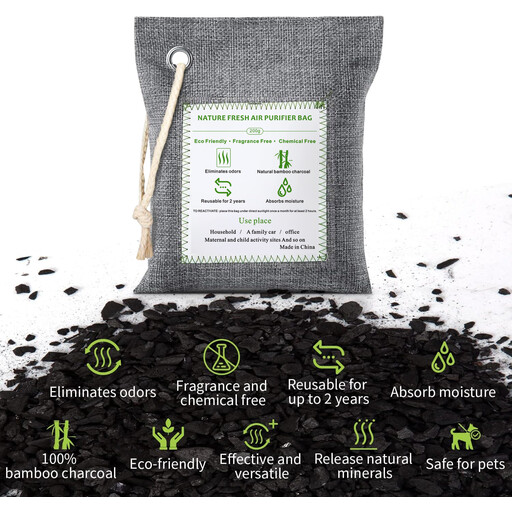
Why this choice suits this profile: These bags can be spread across several small spaces in the home, a car, a shoe cabinet or a sports bag.
This is a fragrance-free odour absorber, to be used alongside proper ventilation, not a unit intended for a large room.
Bamboo charcoal, a breathable cover, a hanging cord and monthly reactivation in sunlight as per the product page.
We’ve put together a comprehensive, real-time updated list of products that fully meet these strict selection criteria and European safety regulations.
To use a moisture absorber correctly:
In a wardrobe, leave a little space between your clothes and the back of the unit so that air can circulate. In a car, remove the product before moving the vehicle if its contents might spill. Charcoal bags must stay dry and be reactivated according to the instructions on their packaging.
It all depends on the air volume, temperature and humidity level. Some sachets intended for small spaces can last several weeks. According to the usage conditions stated by the manufacturer, a 300 g refill can last around two months in a 10 m² room. A 450 g refill can last several weeks in a larger room, but the indicator or the state of the crystals remains the best guide.
Put it on a stable shelf or hang it if the model has a hook. Don’t cover the active side of the sachet and avoid direct contact with clothes, food, electrical appliances and delicate surfaces. In a large wardrobe, several small sachets can be more practical than a bulky unit.
It can help reduce ambient humidity in a suitable space, but it won’t treat an infiltration, a leak or poor ventilation. If marks persist, you need to identify their source, air the room regularly and consider having your home assessed. The absorber remains a supplementary solution for limiting condensation and musty smells.