
Livraison le jour même ou le lendemain

Qualité garantie

Débloquez vos offres de bienvenue: Livraison GRATUITE | Jusqu'à -80 % | 30 jours d'essai gratuits à JoyPlus
Téléchargez l'application
Choosing a new motorcycle helmet can sometimes be a real headache. Between the marketing jargon and endless spec sheets, it's hard to know where to start. A modular motorcycle helmet promises the best of both worlds: the safety of a full-face and the convenience of a jet helmet. But be warned, not all models are created equal. Certain design compromises can quickly turn a promising purchase into a costly disappointment.
Before you take the plunge, let's review the most common pitfalls awaiting the unwary rider:
To make the right choice, focus on a few non-negotiable technical criteria. These are the true guarantors of your future helmet's quality, safety, and comfort.
Since 2023, the ECE 22.06 standard has been the new safety benchmark in Europe. Choosing an ECE 22.06-certified motorcycle helmet isn't an option; it's a life insurance policy.
A helmet with an integrated sun visor (or dual-visor motorcycle helmet) is a real daily convenience. It allows you to instantly adapt to changes in light (entering a tunnel, low sun) without having to stop to change glasses.
If you plan to use a Bluetooth communication system, choosing an intercom-ready motorcycle helmet will make your life much easier.
Rather than an exhaustive list, we have selected a few models that cater to specific rider profiles, always keeping in mind the safety and practicality criteria we've just discussed.
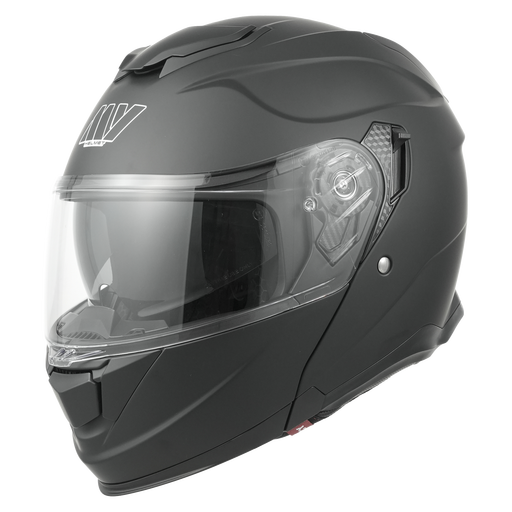
Why this one? This model gets straight to the point: it offers everything a rider needs for safety and versatility on daily commutes or weekend rides. No frills, just pure function.
It avoids unnecessary gadgets and focuses on a solid foundation: ECE 22.06 certification for up-to-date safety and a reliable, integrated dual sun visor.
Its main strength is the balance between safety and comfort. The ABS shell and EPS liner absorb impacts according to the new standards, and the dedicated space for an intercom is a real plus.
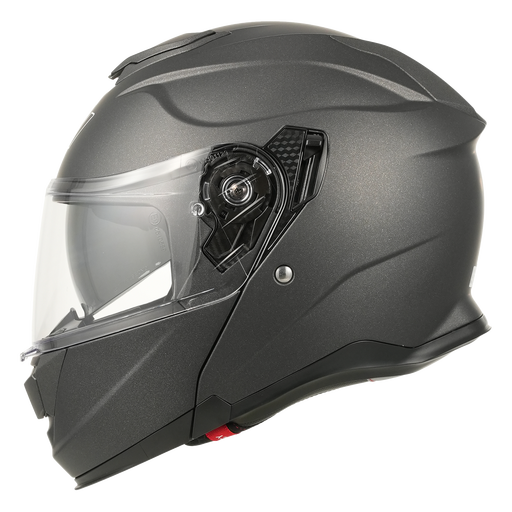
Why this one? Perfect for those who navigate the city on two wheels and want to combine practicality with style. Its matte titanium finish is a modern alternative to the classic matte black motorcycle helmet.
Here, style doesn't sacrifice safety. The technical base is the same as the matte black model, with a robust shell and ECE 22.06 certification. The look is a bonus, not a compromise.
The modular aspect is ultra-practical for frequent stops in the city (errands, refuelling...). Its refined finish allows you to stand out with understated elegance.
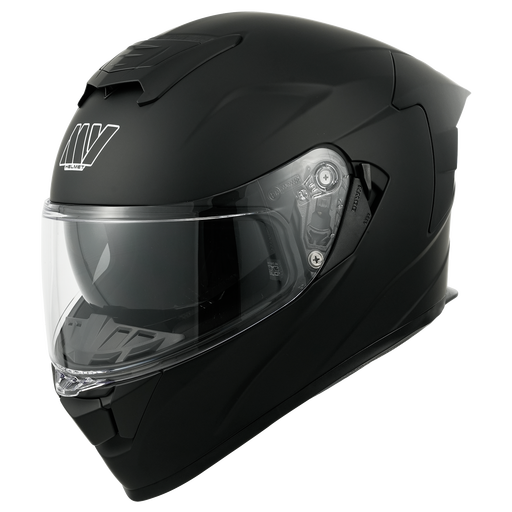
Why this one? This model is built for long distances. Its interior is fully removable and washable, a crucial detail for hygiene and comfort on multi-day road trips.
It counters the classic trap of comfort that degrades over time. With its easy-to-maintain interior, it guarantees a pleasant experience over the long term, well beyond the initial fitting.
Comfort and hygiene for long-haul rides. The hypoallergenic lining remains comfortable even after hours in the saddle, without ever neglecting safety, which is ensured by the ECE 22.06 certification.
Discover our full selection of helmets that meet our selection criteria and the latest safety standards.
As a general rule, it is recommended to replace a thermoplastic shell helmet (like ABS) every 5 years. UV rays, temperature changes, and minor daily impacts eventually degrade the materials. Most importantly, it is imperative to replace it immediately after a fall or impact, even if no damage is visible to the naked eye.
A good modular helmet, certified ECE 22.06, offers an excellent level of protection with the chin bar closed and locked. The standard specifically tests the strength of this mechanism. Some models even have dual P/J certification, allowing you to ride with it in the open position (Jet, "J") as well as closed (Protective, "P"). For maximum safety, always ride with the chin bar closed on main roads and highways.