
Livraison le jour même ou le lendemain

Qualité garantie

Débloquez vos offres de bienvenue: Livraison GRATUITE | Jusqu'à -80 % | 30 jours d'essai gratuits à JoyPlus
Téléchargez l'application
Choosing a modular motorcycle helmet can often be a daunting task. Between marketing promises and the maze of regulations, it's easy to get lost. Yet, a poor choice can not only ruin the joy of riding but, more importantly, compromise your safety. This guide is here to help you see things more clearly and focus on the criteria that truly make a difference.
Before you start, watch out for these common pitfalls:
To make the right choice, you don't need to get bogged down in the details. Focus on these three key points.
Safety is non-negotiable. Since 2023, the ECE 22.06 standard has established itself as THE new benchmark in Europe. Unlike its predecessor, it mandates more rigorous impact tests, including oblique impacts to better assess resistance to rotational forces, which are particularly dangerous for the brain. An ECE 22.06 modular helmet has therefore undergone tests that validate the robustness of its shell, chin bar, and mechanism. It's your guarantee of a modern design and maximum protection.
A motorcycle helmet with an integrated sun visor is a daily game-changer. No more fumbling with sunglasses and a clear visor. With a simple gesture, you can lower the internal sun shield to combat glare, then raise it when entering a tunnel or as light fades. It's a real plus for comfort, but also an active safety feature, as it allows you to maintain perfect visibility in all conditions. Make sure the shield is UV-treated and that its mechanism is easy to operate, even with winter gloves.
In the age of GPS and communication, a Bluetooth-ready motorcycle helmet is a significant advantage. These models have dedicated recesses for the speakers and microphone of an intercom system, which prevents makeshift installations that end up creating unbearable pressure points. Also, think about hygiene: fully removable and washable inner liners are a must-have to keep your helmet fresh and comfortable, especially for daily use.
To illustrate these criteria in practice, here are a few models suited to different rider profiles.
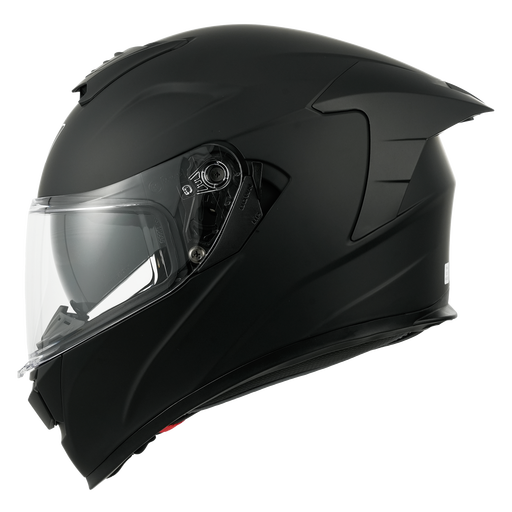
Why we love it: Perfect for daily commutes, this helmet focuses on practicality and understated style. Its matte black motorcycle helmet finish is discreet, while its integrated sun visor is a major asset for dealing with changing light conditions in the city. Its removable and washable interior is a must for intensive daily use.
With its ECE 22.06 certification, it ensures you have protection that meets the latest standards. Say goodbye to the trap of obsolete homologations.
Excellent value for money for daily riding, with a focus on practical features (sun shield, washable liner).
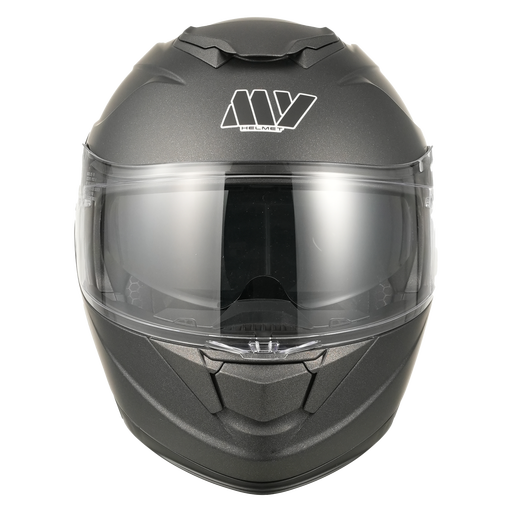
Why we love it: Built for long distances, this model goes all-in on comfort and connectivity. Its padding is designed for long-lasting comfort, and its Bluetooth-ready design makes installing an intercom—a touring essential—much easier.
It directly tackles the pitfall of long-ride discomfort: its internal design and intercom-ready features prevent those notorious painful pressure points.
Comfort and connectivity designed for long journeys, making it a prime choice for long-distance travellers.
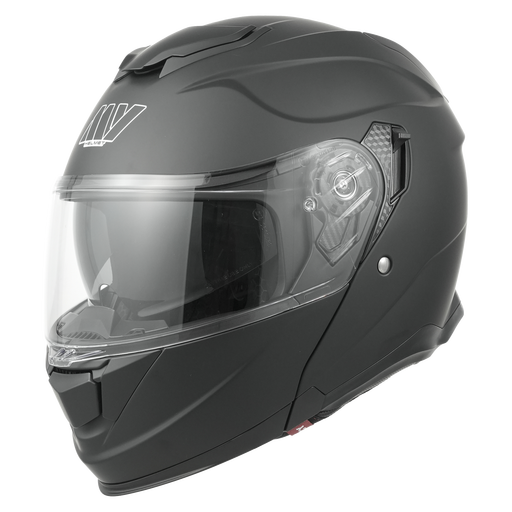
Why we love it: This modular full-face helmet successfully combines a modern look with maximum versatility. Its timeless and trendy matte black finish suits all styles of bikes. Its modular concept allows you to easily switch between casual urban use and full-face protection on the open road.
It proves that style and safety can go hand in hand. With its ECE 22.06 certification and dual-visor motorcycle helmet system, it makes no compromises on essential features.
Its city/road versatility, coupled with a sleek design and comprehensive features.
Discover our full selection of models that meet our strictest safety and comfort criteria.
It is generally recommended to replace a helmet made of thermoplastic or polycarbonate (like ABS) approximately five years after its first use. Over time, the materials (shell, EPS liner) gradually lose their shock-absorption properties due to exposure to UV rays, temperature changes, and contact with sweat or hair products. And of course, a replacement is mandatory after any drop or significant impact, even if the helmet appears undamaged on the outside.
Yes, provided it is of high quality and certified ECE 22.06. Once the chin bar is locked, a modular full-face helmet offers a level of protection comparable to a very good full-face helmet. The 22.06 standard has also strengthened tests on the robustness of the chin bar's mechanism and lock, making recent models much safer. The crucial point: never ride with the chin bar up, unless the helmet has the well-known dual P/J homologation (for Protective full-face and Jet).
It's a classic method, but it works: get a soft tailor's measuring tape. Wrap it around your head, about 2 cm (0.8 inches) above your eyebrows and across the widest point at the back of your head. Then, compare this measurement with the manufacturer's size chart. When you try it on, a new helmet should feel snug (but not painful!) on your cheeks and should not create any painful pressure points, especially on your forehead. Remember that the padding will break in and compress slightly over time.