
Livraison le jour même ou le lendemain

Qualité garantie

Débloquez vos offres de bienvenue: Livraison GRATUITE | Jusqu'à -80 % | 30 jours d'essai gratuits à JoyPlus
Téléchargez l'application
Buying a new motorcycle helmet isn't an impulse purchase. The market is flooded with models, and the modular motorcycle helmet, with its promise of versatility, is certainly appealing. But be warned: not all helmets are created equal. Some models hide deal-breaking flaws that can quickly turn your investment into a regret. Before you pull the trigger, it's crucial to know the most common pitfalls to make an informed decision that combines safety and comfort.
Here are the 3 main pitfalls to avoid during your purchase:
To guide you toward a reliable and durable model, here are the technical specifications you should never compromise on. They are the true hallmark of your future helmet's quality.
Since 2022, the ECE 22.06 standard has established itself as the new benchmark for new helmets. It imposes much stricter tests than its predecessor:
Demanding an ECE 22.06 certified helmet is therefore the first step toward a purchase with peace of mind.
Riding into the sun or entering a tunnel can quickly become dangerous if your visibility is reduced. A motorcycle helmet with an integrated sun visor solves this problem. This retractable, tinted shield, which operates with a simple gesture, allows you to instantly adapt your vision to changing light conditions without having to stop to change visors or put on sunglasses. It's an active safety and comfort feature that should not be underestimated.
Whether for following a GPS, listening to music, or chatting with a passenger, an intercom has become an almost indispensable accessory. A Bluetooth motorcycle helmet doesn't necessarily include the communication system, but it must at least be "pre-disposed" or "intercom-ready." This means that dedicated cutouts are provided in the shell and padding to accommodate the speakers and microphone without creating painful pressure points. Verifying this compatibility will save you a lot of hassle during installation.
To help you see how these criteria apply in practice, here are a few models that cater to distinct rider profiles.
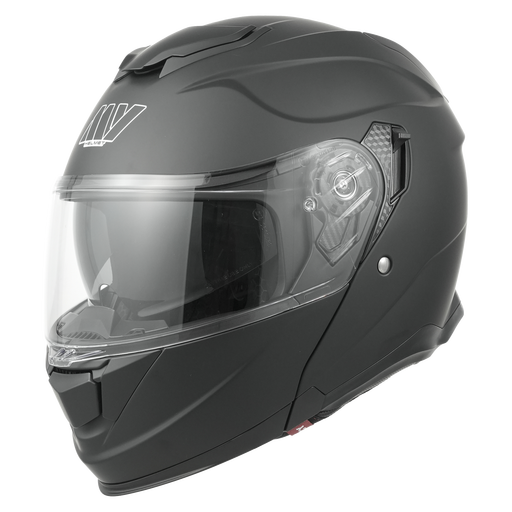
Why we recommend it: Perfect for daily commutes, it combines the safety of the ECE 22.06 standard with the convenience of a Bluetooth-ready design, ideal for navigation and calls in the city.
This model is clearly ECE 22.06 certified and includes an intercom-ready design, which prevents nasty surprises with compatibility and comfort.
The Bluetooth-ready design is a real bonus for urban and suburban use, offering connectivity that's been considered from the ground up.
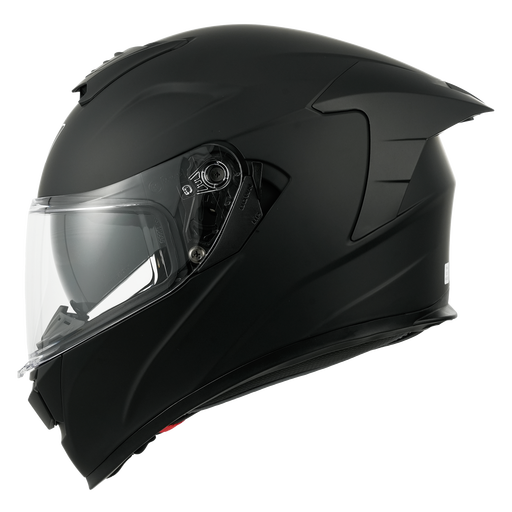
Why we recommend it: Designed for long-distance rides, it focuses on comfort with its hypoallergenic, removable, and washable inner lining. This ensures perfect hygiene and a pleasant fit during long rides.
It tackles the pitfall of long-ride discomfort head-on. Its liner, designed to be soft and easy to maintain, makes all the difference on extended journeys.
Its removable and washable interior ensures the helmet stays fresh and comfortable, even after several hours on the road under the sun.
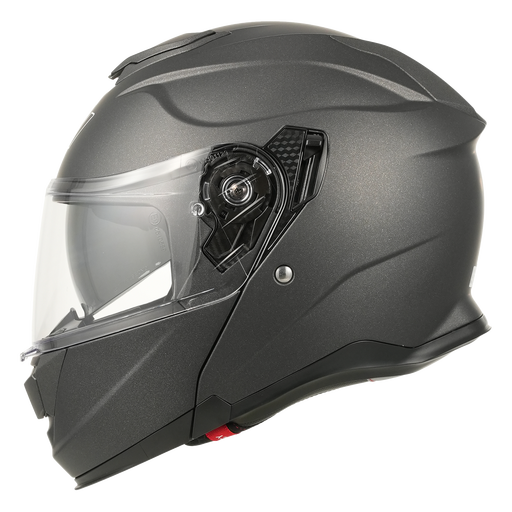
Why we recommend it: This model is an excellent unisex modular helmet thanks to its clean design and wide range of sizes. Its matte titanium finish is a stylish alternative to classic black that suits any style.
It avoids the trap of an overly specific design by offering a modern, unisex aesthetic that's easy to match with any gear.
The winning combination—ECE 22.06 certification, dual visor, and Bluetooth-ready design—makes it an ultra-complete and versatile choice.
Explore our complete, up-to-date selection of helmets that meet all our selection criteria and the latest safety standards.
As a general rule, it is advisable to replace your helmet every 5 years, even without any apparent impact. The absorbent materials, like expanded polystyrene (EPS), degrade over time due to sweat and temperature changes, losing their effectiveness. And of course, a helmet must be replaced after any impact, even if it shows no visible damage.
With the ECE 22.06 standard, this question is much more clearly defined. A modular helmet that achieves dual P/J homologation has proven its resilience in both the closed (full-face, "P") and open (jet, "J") positions. Its chin bar mechanism undergoes rigorous testing to ensure it won't open on impact. Therefore, a P/J-rated 22.06 modular helmet, when closed, offers a level of facial protection comparable to that of a full-face helmet.
Measuring your head circumference is the first step. Take a flexible measuring tape and place it about 2.5 cm (1 inch) above your eyebrows, passing over the widest part at the back of your skull. Then, compare this measurement (in cm) with the manufacturer's size chart. A new helmet should fit snugly, even a little tight: the inner pads will break in over time. There should be no play when you move your head, and the helmet should not create any painful pressure points.