
Livraison le jour même ou le lendemain

Qualité garantie

Débloquez vos offres de bienvenue: Livraison GRATUITE | Jusqu'à -80 % | 30 jours d'essai gratuits à JoyPlus
Téléchargez l'application
As experts in high-tech and lifestyle gear, our mission is to help you navigate the jungle of options. Choosing a new helmet, especially an ECE 22.06 modular motorcycle helmet, can quickly become a daunting task. Between marketing jargon and endless spec sheets, it's easy to make a mistake. Let's break down the pitfalls to avoid so you can make the right choice—one that balances safety and everyday comfort.
The most common mistakes aren't always the ones you'd expect. Here are three pitfalls that can turn a promising purchase into a real disappointment:
To avoid these disappointments, it's best to focus on a few technical criteria that truly make a difference in the quality and suitability of a certified modular helmet.
Since 2022, the UNECE 22.06 standard has been the new European benchmark for motorcycle helmets. It imposes much stricter tests than the previous version. In practical terms, this means:
Choosing an ECE 22.06 certified helmet means opting for maximum protection, validated by the most up-to-date protocols.
The strength of a modular helmet lies in its versatility. To ensure this is an advantage and not a compromise, certain elements should be checked:
For a helmet to be effective, it must first and foremost fit you perfectly. Measure the circumference of your head with a tape measure (placing it above your eyebrows and ears) and refer to the manufacturer's size guide. The helmet should feel snug and uniform, without creating any painful pressure points. In terms of materials, a shell made of ABS (Acrylonitrile Butadiene Styrene), as found on many models, offers an excellent balance between impact resistance and controlled weight. It is often paired with a multi-density EPS (expanded polystyrene) inner shell for optimal energy absorption in the event of an impact.
To illustrate our points, here is a selection of models suited for different types of riders.
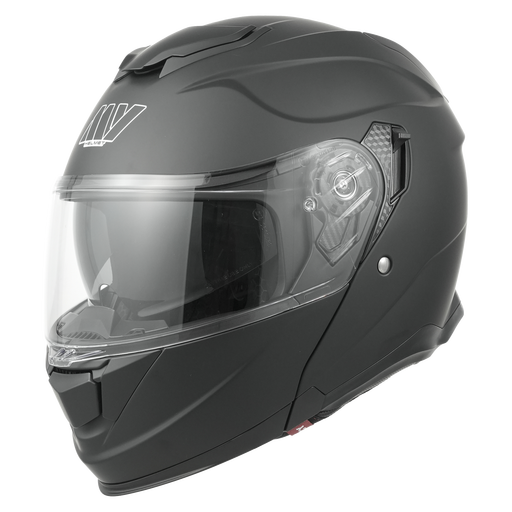
The ideal rider: Perfect for daily commutes in the city or on the motorway. Its versatility allows you to switch from full-face mode on the open road to jet mode at a stop, while its intercom-ready design makes navigation and calls easy.
It comes standard with the practical features that are often overlooked: the dual visor and a dedicated slot for a Bluetooth kit. This prevents unpleasant surprises down the road.
ECE 22.06 certification for up-to-date safety. Dual visor for optimal visual comfort in all conditions.
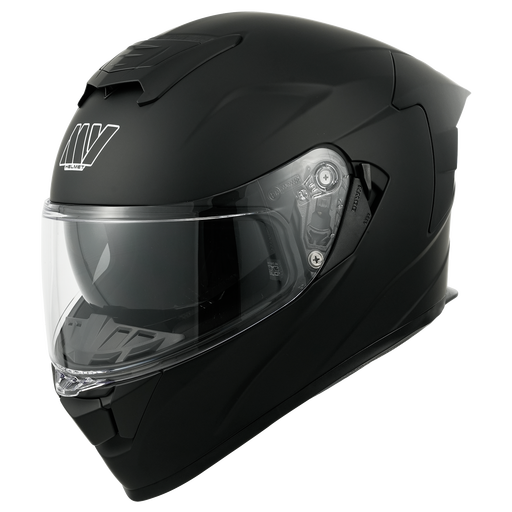
The ideal rider: Built for those who rack up the miles. The focus is on long-lasting comfort, with a liner designed to stay comfortable for hours and excellent shock absorption so you can ride with peace of mind.
It sidesteps the trap of long-distance discomfort. Its removable, washable liner and well-crafted interior prevent fatigue and irritation on extended journeys.
ECE 22.06 certification. Interior liner designed for long-distance comfort, removable and washable.
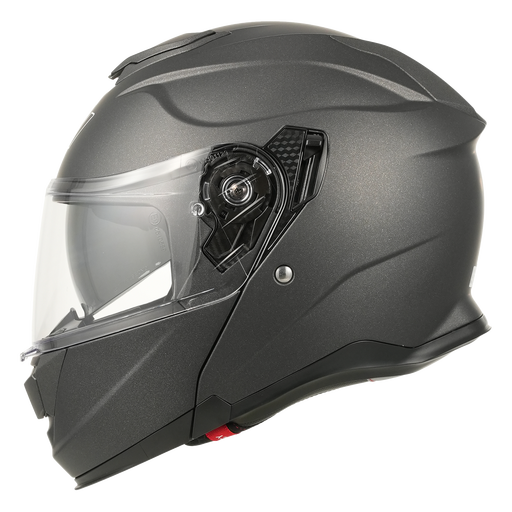
The ideal rider: For those whose top priority is safety. This helmet offers ECE 22.06 certification without sacrificing the practicality of a modular design, allowing you to benefit from the latest protection standard.
It helps you avoid falling into the trap of an outdated certification. By being ECE 22.06 certified, it guarantees a design and resistance that meet today's safety requirements.
ECE 22.06 certification. High-resistance ABS shell and EPS liner for maximum shock absorption.
Explore our full selection of helmets that meet these strict criteria and current safety regulations.
Not necessarily. While the tests are more rigorous, manufacturers have also optimised materials and design. An ECE 22.06 helmet can have a similar weight to an older ECE 22.05 model while offering far superior protection. The weight is always listed on the product sheet and is a matter of personal comfort.
No, and this is a crucial safety point. To legally and safely ride with the chin bar in the up position ("jet" mode), the helmet must have P/J dual-homologation. The letter "P" (Protective) validates its use as a full-face helmet, and the letter "J" (Jet) validates its use with the chin bar raised. Always check for this information on the helmet's certification label.
An intercom-ready helmet, like the models in our selection, has specific pockets for the speakers (cavities at ear level) and sometimes a dedicated channel for the microphone cable. Installation simply involves sliding the speakers into these slots under the liner and attaching the control module to the side of the helmet. This ensures a seamless and comfortable integration, without any discomfort or pressure points.