
Livraison le jour même ou le lendemain

Qualité garantie

Débloquez vos offres de bienvenue: Livraison GRATUITE | Jusqu'à -80 % | 30 jours d'essai gratuits à JoyPlus
Téléchargez l'application
Your smartphone battery is dead. Again. You plug in a charger that promises the world, but an hour later, you've barely gained 20% battery. Worse still, the cable you hastily bought three months ago is already giving up. These all-too-common scenarios are often the result of well-oiled marketing traps.
Before you spend a single penny, it's crucial to understand the common pitfalls that turn a promising purchase into a guaranteed disappointment.
To navigate the jungle of mobile charging accessories, it's best to focus on a few objective technical specifications. These are the only true guarantees of performance and safety.
Power, measured in watts (W), determines charging speed. But be warned, it must be paired with the right protocol. The main standards on the market are:
For truly fast charging, the charger, cable, and device must all "speak" the same language (protocol). Also, consider GaN (Gallium Nitride) technology. These components allow for smaller, cooler, and more energy-efficient chargers—a major advantage for a multi-port charger.
The cable is often the weakest link. A good USB-C cable is essential to handle high power levels. Check the following points:
The form factor of your accessory should match your lifestyle.
Here are a few products that meet specific needs, selected for their performance and practicality.
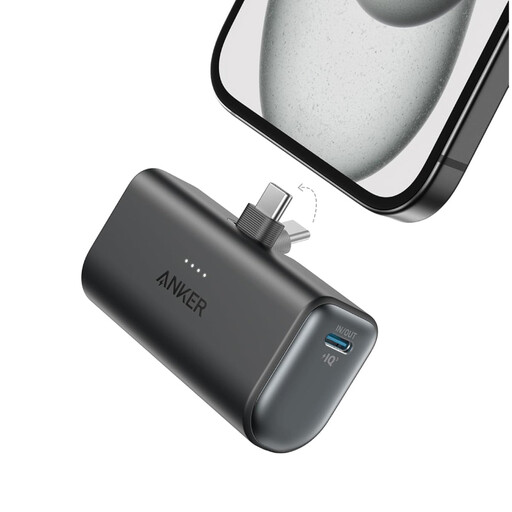
Why we chose it: Perfect for those who need a quick boost without the bulk. Its integrated, foldable USB-C connector means you don't have to carry an extra cable. Small enough to fit in your pocket, it's the perfect companion for long days in the city.
It doesn't promise to charge all your devices for a week. It meets a specific need: extreme portability. This avoids the trap of the overly heavy power bank that you end up leaving at home.
Integrated, foldable USB-C connector. 22.5W output for fast and efficient charging of modern smartphones.
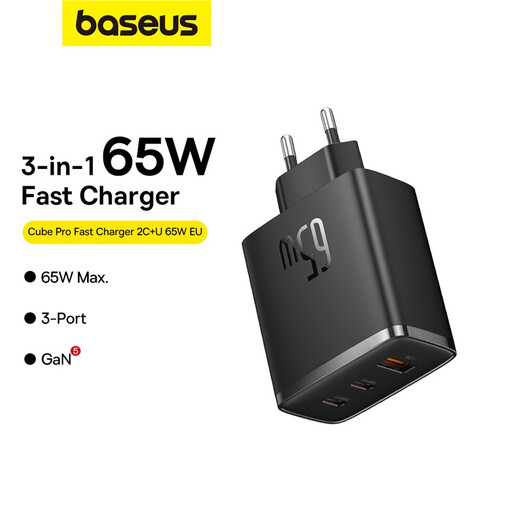
Why we chose it: For those who want to power a laptop, smartphone, and earbuds from a single outlet. GaN technology makes it surprisingly compact for its 65W output. Its two USB-C ports and one USB-A port offer great versatility.
It beats the "max power" trap by intelligently distributing power. For example, it can deliver 45W to a laptop and 20W to a smartphone simultaneously, ensuring optimal charging for each device.
GaN technology for a compact design. 65W total output, enough for a laptop. Three ports for maximum versatility.
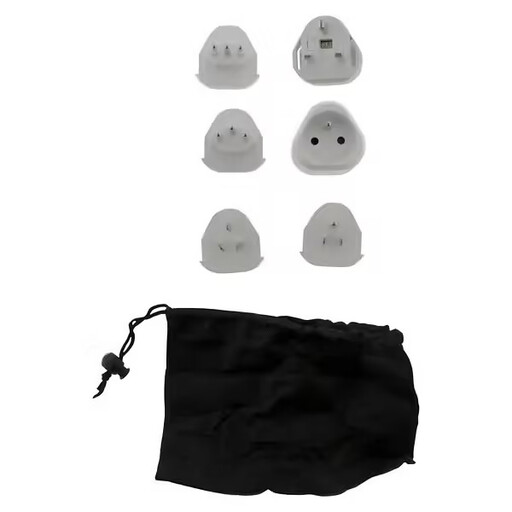
Why we chose it: For globetrotters, this kit is a simple and reliable solution. It covers over 100 countries with dedicated plugs (Switzerland, UK, USA, Oceania, Italy), all stored in a convenient pouch. A more robust approach than the often fragile all-in-one universal adapters.
It avoids the trap of the fragile and unreliable "all-in-one" adapter. By offering separate blocks, it ensures a more stable and secure connection in each country. It's clearly presented as a plug adapter, preventing any unpleasant surprises.
Complete kit for over 100 countries. Robust design with dedicated adapters. Storage pouch included to keep everything organized.
Explore our complete, up-to-date selection of products that meet our strict selection criteria and European safety standards.
No, a quality charger will not damage your device. Modern smartphones have built-in protection circuits that communicate with the charger to "request" only the amount of power they can safely handle. Using a 65W charger for a smartphone that only accepts 25W is not a problem; it will simply charge at 25W. The real risk comes from low-quality, uncertified chargers and cables that may ignore these safety protocols.
It all depends on its build quality and how you use it. A budget cable might give out in a few months, especially at the connectors, which are the weakest points. Conversely, a USB-C cable with a braided nylon sheath and reinforced joints, like the PAVAREAL Q51CTC 100W model, is designed to withstand thousands of bends and can last for several years with proper care. The golden rule: avoid bending it at sharp angles or yanking on it.
Yes, especially if you're looking for a compact and efficient charger. A GaN charger can be up to 30% smaller than a traditional charger of the same wattage. It also runs cooler, which improves its lifespan and safety. This is a decisive advantage for travel chargers and multi-port models, where size and heat management are critical concerns.