
Livraison le jour même ou le lendemain

Qualité garantie

Débloquez vos offres de bienvenue: Livraison GRATUITE | Jusqu'à -80 % | 30 jours d'essai gratuits à JoyPlus
Téléchargez l'application
When the temperatures soar, the search for the ideal mobile air conditioner often turns into a race against time. Faced with an overwhelming number of options and vague marketing claims, the risk of buyer's remorse is very real. Our mission: to help you decode the spec sheets and sidestep false promises to find the unit that will bring you genuine comfort, without any unpleasant surprises.
Before you even start looking for the best mobile air conditioner deal, let's identify the three common mistakes that lead to disappointment:
quiet mobile air conditioner, but the reality is often much louder. An underestimated noise level can quickly turn your nights into a nightmare or make working from home impossible.To avoid these pitfalls, a little technical knowledge is all you need. Here's what to look for.
To choose the right supplemental air conditioner, forget about the price for a moment. Three technical parameters are the key to your future satisfaction.
An air conditioner's power is expressed in BTU (British Thermal Unit). This value measures its ability to remove heat from a room. Choosing the right amount is essential for optimal comfort without sending your electricity bill through the roof.
As a general rule, here are the guidelines to follow:
Ignoring this power-to-area ratio is the number one cause of disappointment.
Thermal comfort is great, but not at the expense of acoustic comfort. The noise from the compressor and fan is a non-negotiable criterion, especially if the unit is intended for a bedroom.
Be vigilant and always check the advertised noise level, especially the value for "night mode" or the lowest fan speed.
Recent models are often 3-in-1 or 4-in-1 devices, a versatility that makes them useful all year round.
reversible mobile air conditioner): An excellent option for supplemental heating in autumn or spring, making the unit a worthwhile investment year-round.Rather than an endless list, we've selected three models that meet specific needs. It's up to you to find the one that's right for you.
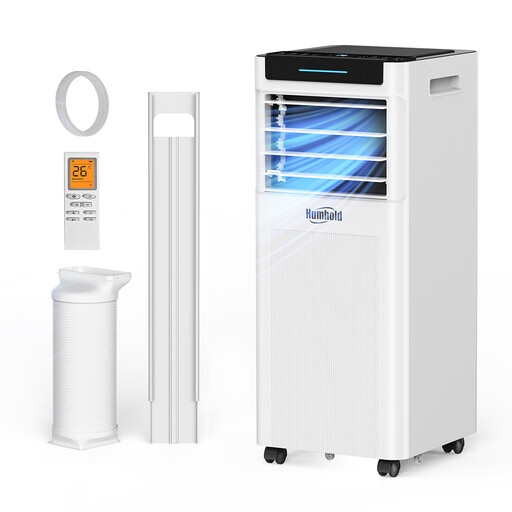
Editor's Verdict: This is the perfect solution for efficiently cooling a bedroom or office (up to 28 m?) without breaking the bank. Compact and relatively lightweight, it moves easily from one room to another.
Its 7000 BTU power is perfectly calibrated for the advertised area. The night mode, measured at under 49 dB, is a quantified promise that helps you avoid the "supposedly quiet" letdown.
3-in-1 versatility (cool, dehumidify, fan) and a self-evaporating system that saves you the chore of emptying the condensate tank too often.
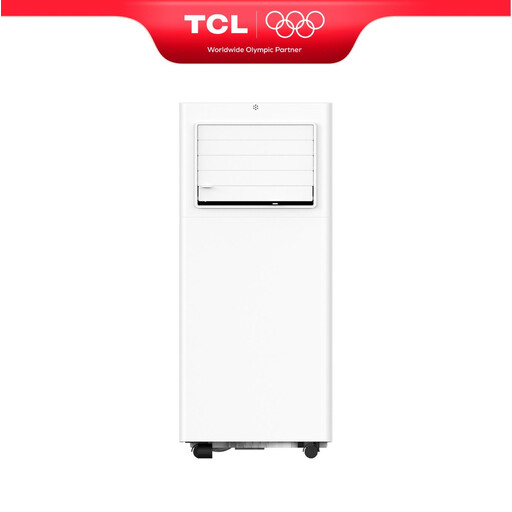
Editor's Verdict: With 9000 BTU, it strikes the right balance for cooling a living room or a large living space. A smart, all-rounder choice for most homes.
The power is consistent with "living area" use, without falling into unnecessary oversizing. The window sealing kit is included, a crucial detail for a clean installation and maximum efficiency.
3-in-1 functions, a 24h timer to control consumption, and a washable filter for easy maintenance and lasting performance.
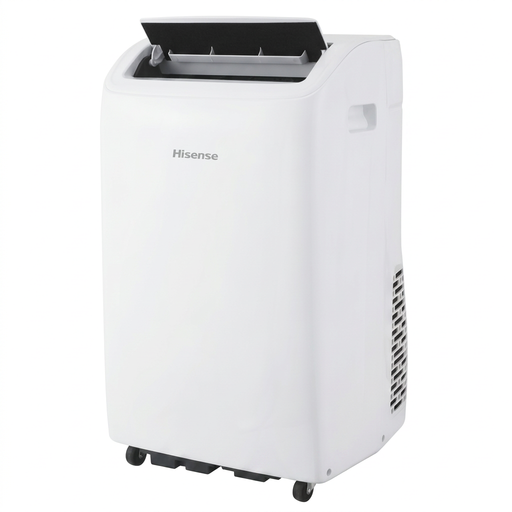
Editor's Verdict: For those looking for a four-season appliance. Its reversible (heating) function and Wi-Fi control make it as useful in winter as in summer, with the added convenience of remote control.
Here, the smart features aren't just a gimmick. The fundamentals are solid: the power (9000 BTU) and noise level (from 50 dB) are clearly stated, allowing for a choice based on performance, not just gadgets.
Reversible mobile air conditioner for 4-season use. Control via mobile app and voice commands (assistant compatible) for optimal user convenience.
If installing an exhaust hose is impossible in your home, alternative solutions exist. Check out our selection.
Yes, for a true mobile air conditioner, it's non-negotiable. Its principle is to extract heat from your room and expel it outside through the hose. Without this exhaust, the hot air discharged by the unit would remain inside, completely cancelling out the cooling effect. "Hoseless" devices are actually air coolers, which are far less effective.
It depends on its power (in kW), its energy class (aim for A or A+), and, of course, how long you use it. A 9,000 BTU model (about 2.6 kW) logically consumes more power than a 7,000 BTU model (about 2.0 kW). To keep your bill in check, use the timer to target the hottest hours and, most importantly, choose a power level appropriate for your space to prevent the compressor from running constantly.
No, a portable air conditioner is designed to handle the volume of a single room with the doors closed. It will never have enough power to cool an entire home. Its main advantage is its mobility: nothing stops you from rolling it from the living room (during the day) to the bedroom (at night), provided you have a way to vent the hose in each room.