
Livraison le jour même ou le lendemain

Qualité garantie

Débloquez vos offres de bienvenue: Livraison GRATUITE | Jusqu'à -80 % | 30 jours d'essai gratuits à JoyPlus
Téléchargez l'application
Navigating the world of mobile accessories can be a daunting task. Between promises of ultra-fast charging and a proliferation of standards, it's easy to end up with a product that's incompatible, or even dangerous for your devices. As the Head of Product Curation at Joybuy, my mission is to help you cut through the noise. Let's set aside the marketing jargon and focus on what really matters: how to make the right choice, every time.
First, let's review the three most common pitfalls that can end up costing you dearly?:
To avoid these disappointments, here are the key technical specifications you should never compromise on.
Power, measured in watts (W), determines charging speed. But on its own, it's not enough?: the charging protocol is just as crucial.
For a power bank, capacity is measured in milliampere-hours (mAh).
The key is to find the right balance between the battery life you need and the weight you're willing to carry.
Instead of just a list of products, we've identified solutions tailored to specific user profiles, ensuring each one checks all the boxes for performance and safety.
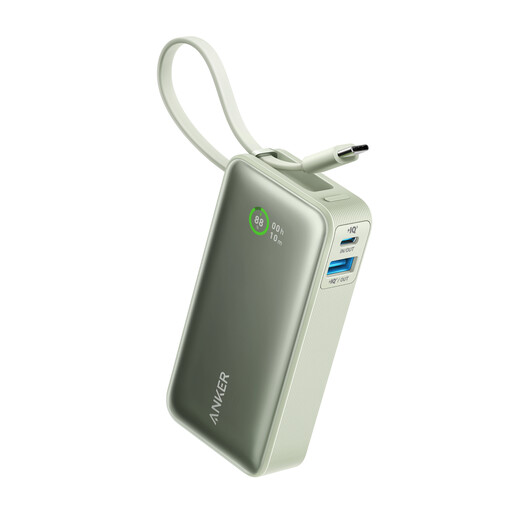
Why we chose it: For those who are always on the move, nothing beats simplicity. This power bank has a built-in USB-C cable, saving you from carrying an extra one. Its 10,000 mAh capacity offers the ideal compromise between battery life and portability for a busy day.
It does more than just feature a USB-C port. Its 30W PD two-way charging is clearly specified, guaranteeing a fast recharge for both the power bank itself and your devices. No false promises.
The built-in USB-C cable, combined with the additional ports (USB-C and USB-A), makes it a perfect all-in-one solution for travelling light.
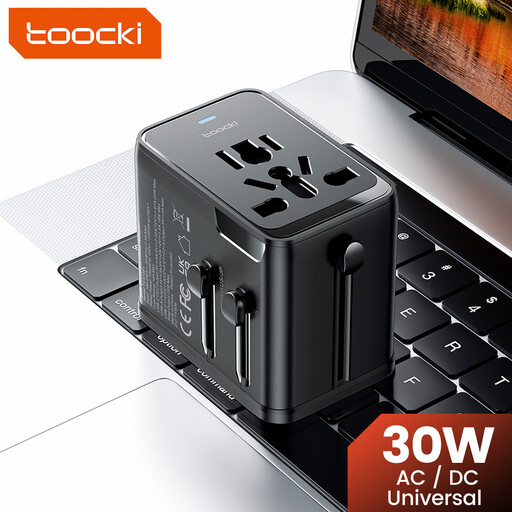
Why we chose it: For globetrotters, juggling a myriad of adapters is a real chore. This model solves the problem by combining a universal adapter (EU, UK, US, AUS compatible) with a modern multi-port charger. The ideal travel companion.
Much more than a simple plug adapter, it integrates a true 30W PD charger and multiple ports (2 USB-C, 1 USB-A). It sidesteps the "false universality" trap by offering a fast and truly versatile charging solution.
Its all-in-one design replaces three accessories: a travel adapter, a fast charger, and a multi-port charger.
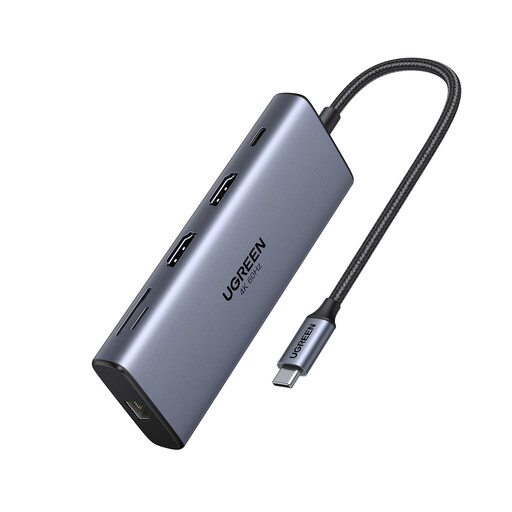
Why we chose it: For those who use their laptop (like a MacBook) as their primary workstation, a lack of ports is a recurring problem. This docking station transforms a single USB-C port into a true connectivity hub for a perfectly organised desk.
It goes far beyond simply adding more ports. It offers advanced features like dual 4K at 60Hz display support, 10 Gbps data ports, and 100W PD charging, enough to meet the most demanding needs without compromising on performance.
Ultra-comprehensive connectivity: 2 HDMI ports, 2 USB-C ports, 2 USB-A ports, Ethernet, SD/TF card readers, and PD charging. The ultimate solution for a clean and functional workspace.
We've compiled a complete, up-to-date selection of products that meet our strict selection criteria and European safety standards.
A GaN charger uses gallium nitride components instead of traditional silicon. In practical terms, this allows it to be much smaller and lighter than a conventional charger of the same wattage. It also runs cooler and wastes less energy, making it more efficient and durable. It's a more modern technology found in high-end chargers.
Yes, absolutely, and it's perfectly safe. Thanks to the USB Power Delivery (PD) standard, the charger and the iPhone "communicate" to determine the optimal charging power. A MacBook charger (e.g., 67W or 96W) will only deliver the maximum power the iPhone can accept (around 27W), without any risk of damaging it. This is one of the great advantages of the USB-C ecosystem.
The lifespan of a power bank is measured in charge cycles (one full charge and discharge). Most quality models are designed to retain about 80% of their original capacity after 300 to 500 cycles. With daily use, this typically translates to 2 to 3 years of reliable performance. To preserve its longevity, avoid exposing it to extreme temperatures and letting it fully discharge too often.