
Livraison le jour même ou le lendemain

Qualité garantie

Débloquez vos offres de bienvenue: Livraison GRATUITE | Jusqu'à -80 % | 30 jours d'essai gratuits à JoyPlus
Téléchargez l'application
Mixing bowls are used for combining dough, storing food, presenting a salad or enjoying a bowl of soup. On the surface, buying one seems straightforward. Yet the wrong choice can quickly become a daily frustration: a bowl that’s too small means working in batches, the wrong material scratches or stains, and an overly bulky set ends up cluttering your cupboards.
Before you choose a salad bowl, a mixing bowl or a pasta bowl, take a moment to check a few practical features. That way, you’ll compare products based on how you’ll actually use them, rather than on marketing claims that can be hard to judge.
The capacity listed doesn’t always match the amount of food the bowl can comfortably hold. When mixing dough or a salad, you need enough space to avoid splashes. A container that’s described as large can turn out to be impractical if it’s too narrow or very shallow.
For everyday preparations, also look at the diameter, height and whether there’s a rim. A mixing bowl that’s wide enough makes using a whisk or spatula much easier, while a deep salad bowl helps prevent spillovers when tossing.
Ceramic bowls are popular for their look on the table, but they’re heavier and can chip at the slightest knock. Stainless steel bowls generally stand up better to repeated handling, even if they’re not suitable for every heat-related use. Reusable plastic is lightweight and practical, as long as you check the manufacturer’s instructions for the dishwasher, oven and microwave.
Disposable bowls can be handy for a picnic or a party. They’re not designed for storage or reuse, unless the manufacturer explicitly states otherwise.
A set of bowls might seem like a good deal, but shapes that don’t stack will quickly take over an entire cupboard. A non-slip base, a lid or a textured finish can also make cleaning harder when residue gets trapped in the grooves.
Before you order, check the symbols and detailed instructions: dishwasher, fridge, oven, microwave and freezer are not interchangeable. For food containers, also look for information about compliance and food-contact safety provided by the seller.
For versatile use, an assortment of different sizes is often more practical than a set of identical bowls. Small sizes are great for sauces, desserts and pre-prepared ingredients. Medium sizes work well for cereals, soup or side dishes. Large bowls are perfect for batch cooking, cake batters and family-sized salads.
A set of bowls that stack makes storage much simpler. If there are several of you at home, also consider how many place settings you typically use, so you don’t end up having to mix and match with different styles.
The phrase “BPA-free” applies to certain plastic components, but on its own it doesn’t tell you about durability, capacity or compatibility with household appliances.
A product that’s advertised as dishwasher-, oven- or microwave-safe must be used according to its instructions. Sudden temperature changes can damage ceramic and glass. For a stainless steel container used for a bain-marie, indirect heat is essential: the bowl should never be placed directly on a hob.
Disposable bowls must be kept away from flames and should not be used with liquids hotter than the maximum temperature stated. These precautions are especially important during a buffet, barbecue or outdoor event.
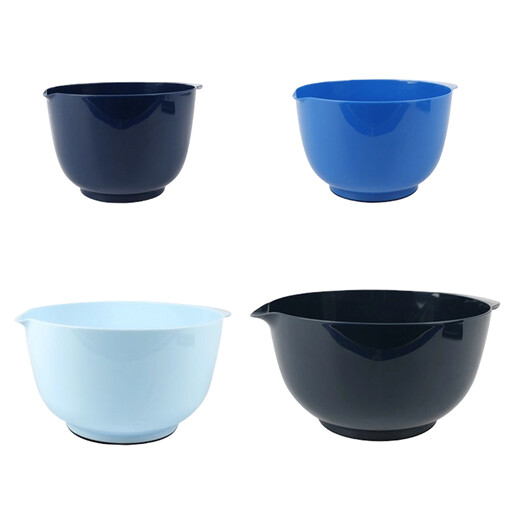
Why this choice suits this profile: This set of four reusable bowls supports your first preparations, ingredient storage and quick meals. Their stackable design fits easily into smaller kitchens, where every centimetre of cupboard space counts.
The non-slip base reduces movement during mixing, while stacking keeps clutter to a minimum. However, do check the care instructions before using with any heating appliance.
Four pieces, non-slip base, stackable design and BPA-free material.
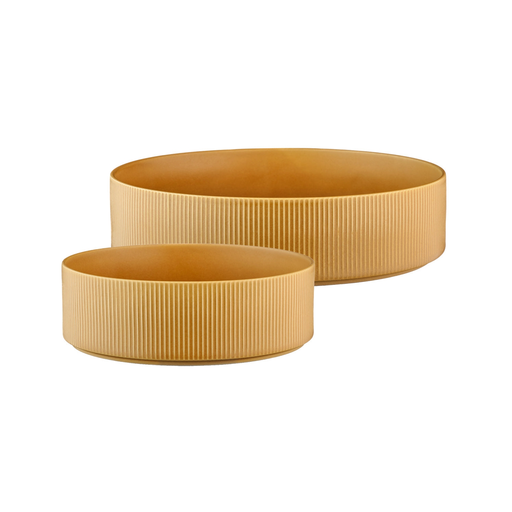
Why this choice suits this profile: These two salad bowls in recycled stoneware focus on elegant presentation, equally convincing for everyday use and when you’re entertaining. Their two diameters make it easy to separate salad, fruit and side dishes.
The dimensions are clearly stated and the stackable shape solves the storage issue. However, avoid sudden temperature changes and abrasive products, as the warnings recommend.
Two sizes, recycled stoneware, practical stacking and compatibility with dishwasher, microwave and oven up to 220 °C.
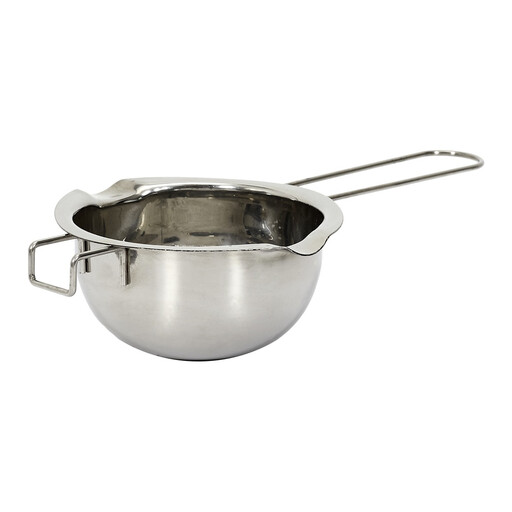
Why this choice suits this profile: This 26 cm stainless steel bowl is designed for delicate preparations such as chocolate, butter, sauces or custards. It’s aimed at home bakers who regularly use the bain-marie technique.
Its function is clearly specialised: it sits over a pan of simmering water, not directly on a hob. This distinction prevents misuse of the container.
Stainless steel, weight 800 g, dimensions 26 × 11 × 6 cm and dishwasher-safe.
A standard-sized soup bowl works well for individual portions. A wider, shallower pasta bowl makes it easier to serve saucy recipes. For a family, compare the diameter and depth rather than relying solely on the stated capacity.
No. Compatibility depends on the product and its finish. Check the manufacturer’s instructions and avoid thermal shock, for example by placing a very cold bowl directly into a hot appliance.
Some models are designed for soup or warm dishes, while others are only for cold food. Check the maximum temperature allowed, the intended uses and whether they are suitable for the oven or microwave. For regular use, reusable bowls are generally a better choice.