
Livraison le jour même ou le lendemain

Qualité garantie

Débloquez vos offres de bienvenue: Livraison GRATUITE | Jusqu'à -80 % | 30 jours d'essai gratuits à JoyPlus
Téléchargez l'application
A bowl can be used to prepare a batter, present a salad, reheat a soup, or even organise a buffet. Yet product listings don't always give you all the useful information to make a practical choice. Before buying mixing bowls, it's worth focusing on a few concrete criteria rather than relying solely on colour, the number of pieces or a vague promise of durability.
A 200 ml bowl is fine for sauces, individual desserts or small portions. However, it will quickly feel limited for a generous soup or a pasta dish. Conversely, a large salad bowl can prove cumbersome for everyday use.
Labels like "soup bowl", "pasta bowl" or "salad bowl" should therefore be considered alongside the capacity, diameter and depth. Some foreign listings also give volumes in ounces: check their equivalent in millilitres before ordering.
Ceramic bowls are prized for their appearance and good stability, but they can crack after thermal shock or a drop. Glass is practical for cold preparations and presentation, but some models are neither dishwasher-safe nor oven-safe.
Stainless steel bowls generally withstand repeated handling well and are very practical for preparation. However, a bowl designed for a bain-marie should not be placed directly on a hob. Each use must be confirmed on the product listing.
A bowl set may seem economical, but sizes that don't stack can quickly take up a lot of cupboard space. In a small kitchen, a stackable design or a set of different sizes will often be more functional. Also consider the weight, whether a lid is included, and compatibility with your appliances.
For everyday use, a bowl of around 500 to 900 ml can work for soups, cereals or individual dishes, depending on its shape. Smaller sizes of 150 to 250 ml are better used as ramekins, sauce bowls or containers for toppings.
For a salad bowl or serving bowl, the diameter matters just as much as the capacity. A wide model makes mixing and presenting easier, while a deeper one reduces splashes when it comes to soup or a saucy dish.
Never deduce compatibility from the material alone. One ceramic piece may be designed for the oven, while another should stay at room temperature. For each item, look for mentions of dishwasher, microwave, oven, fridge and freezer.
Plastic lids may have different temperature limits from the container itself. They often need to be removed or left slightly open before reheating.
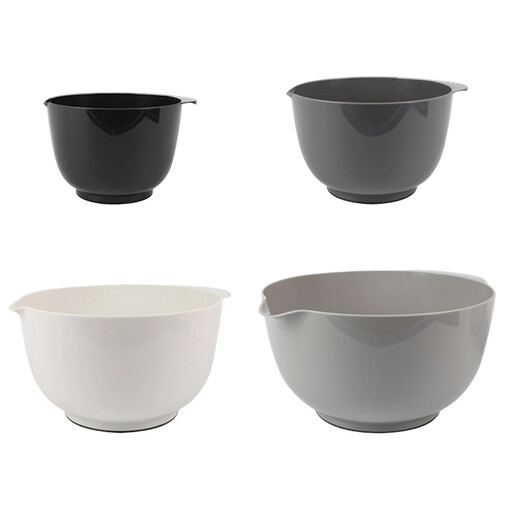
Why this suits this profile: This set of four reusable bowls is ideal for home baking, meal preparation and everyday salads.
The non-slip base and stackable design address two often-overlooked issues: stability and storage.
Four pieces, BPA-free material and stackable storage to save space.
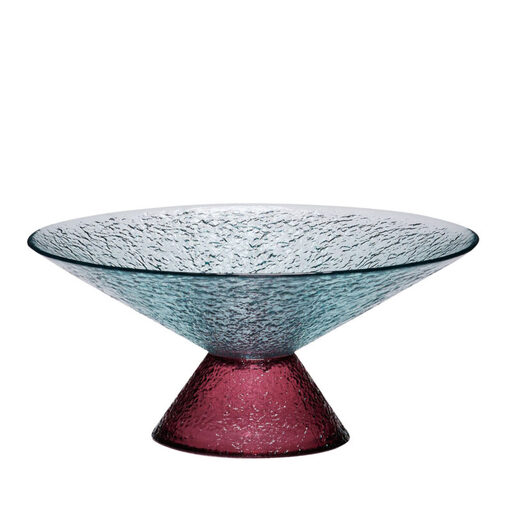
Why this suits this profile: This large handmade glass bowl is for those looking for a beautiful piece to present salads, fruit or cold accompaniments.
The listing clearly states it is for cold food contact only and is not suitable for the oven, microwave or dishwasher.
A diameter of 25 cm, height of 12 cm and a handmade blue and red finish.
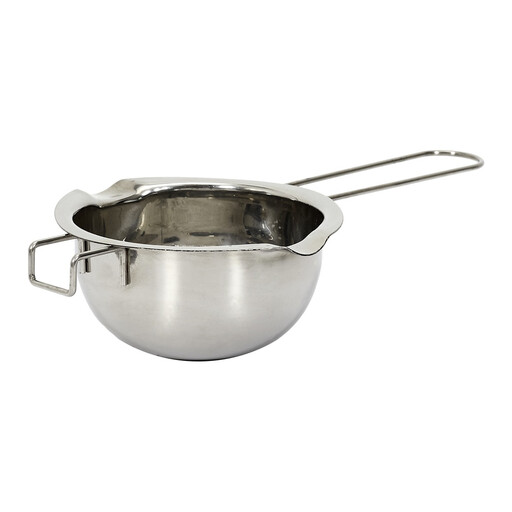
Why this suits this profile: This stainless steel bowl is aimed at baking enthusiasts, regular cooks and small businesses who prepare sauces, chocolate or melted butter.
Its dimensions and bain-marie use are clearly stated, preventing it from being treated as a container for direct heat.
Stainless steel, dimensions of 26 × 11 × 6 cm, weight of 800 g and stated dishwasher compatibility.
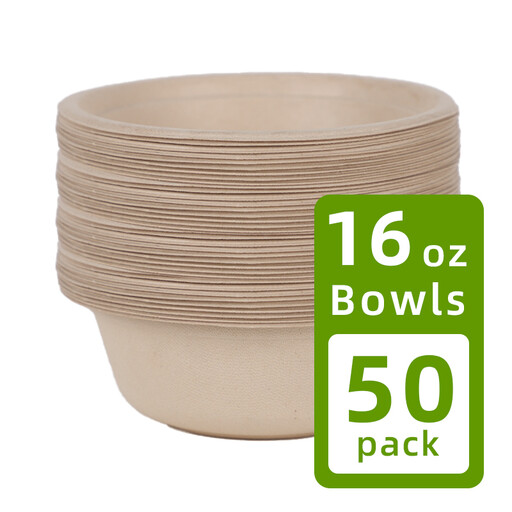
Why this suits this profile: The pack of 50 is ideal for barbecues, buffets, picnics and events where service needs to be quick.
The 500 ml capacity and bulk pack allow you to plan ahead rather than accumulating lots of small packaging.
Pack of 50 bowls of 500 ml, with a design claimed to be biodegradable and leak-resistant.
For soup, go for a bowl that is deep enough and has a capacity to match your portion. For pasta, a wide, slightly curved model makes serving easier and helps prevent sauce from spilling over. If you regularly reheat your dishes, check its microwave compatibility.
No. Compatibility depends on the model, the glaze, any decorations and the manufacturer's instructions. Even when a bowl is stated as dishwasher-safe, avoid thermal shock and check regularly that it has no chips or cracks.
It all depends on their composition and technical specifications. A bowl described as biodegradable is not automatically suitable for very hot liquids, the oven or the microwave. For soup or a hot dish, explicitly check its heat resistance and usage instructions before buying.