
Livraison le jour même ou le lendemain

Qualité garantie

Débloquez vos offres de bienvenue: Livraison GRATUITE | Jusqu'à -80 % | 30 jours d'essai gratuits à JoyPlus
Téléchargez l'application
A mixing bowl isn’t just for tossing a salad. It can also hold eggs for whisking, dough for kneading, vegetables for rinsing, a marinade, or a side dish to serve at the table. Yet some purchases turn out to be disappointing in use: an unstable bowl, poorly chosen sizes, awkward stacking, or misunderstood compatibility with cooking appliances.
To choose a mixing bowl that’s truly right for your kitchen, it’s better to focus on the practical features rather than the colour, the number of pieces, or the promises on the product page.
A diameter of 25 cm isn’t enough to determine a bowl’s actual capacity. The height, the shape of the base, and the thickness of the walls all affect the available volume. A wide, shallow bowl is ideal for serving salad or pasta, whereas a deeper bowl will limit splashes when you’re using a whisk.
In a household, a set of mixing bowls in several sizes is often more useful than a single bowl. The smaller bowls are great for ingredients, sauces or dressings, while the largest one suits family-sized preparations.
A silicone base can improve stability, reduce noise on the worktop and help prevent scratches. However, it doesn’t make a bowl impossible to tip over. A bowl that’s overfilled or placed on an uneven surface can still slide or topple.
Also remember to check the care instructions for that base. Some models are dishwasher-safe, but hand washing can help preserve the silicone and its grip for longer.
Compatibility depends first and foremost on the material. A stainless steel mixing bowl must never go in the microwave. Ceramic may be suitable for the oven or microwave, but only if the manufacturer says so: sudden temperature changes should still be avoided. A product page that mentions dishwasher safety does not mean the bowl is compatible with all appliances.
A set of bowls is only worthwhile if each size serves a real purpose. Three or four different sizes can be enough for making a vinaigrette, whisking eggs, mixing dough or serving a dish.
A stackable mixing bowl helps save space in your cupboards. Before choosing, check that the bowls nest together properly and that the handles or silicone base don’t get in the way of stacking.
A rolled or neatly finished rim makes the bowl more comfortable to hold. A wide base reduces movement during mixing. For a mixing bowl that’s dishwasher safe, make sure this compatibility applies to all parts, including the lid and base.
Avoid abrasive sponges on stainless steel and harsh products on decorated surfaces. With ceramic, regularly check for chips and cracks, especially before serving hot food in it.
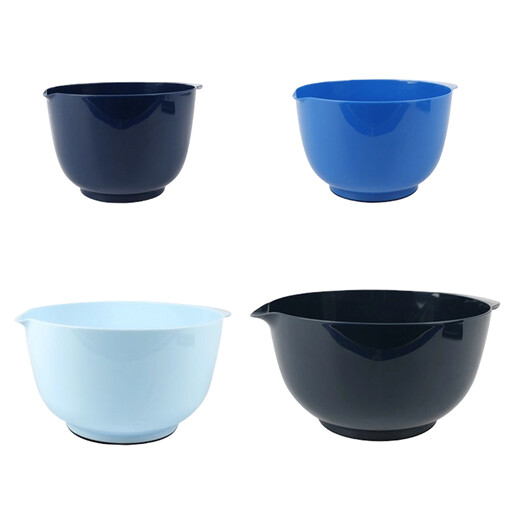
Why this choice suits this profile: This reusable set is ideal for a first kitchen, meal prep and everyday baking. The different bowls nest inside one another for storage.
The product page mentions a non-slip base, practical stacking and a BPA-free design. A more versatile set than a single large bowl.
Four pieces, non-slip base, stackable and reusable design for preparing salads, pasta and other everyday recipes.
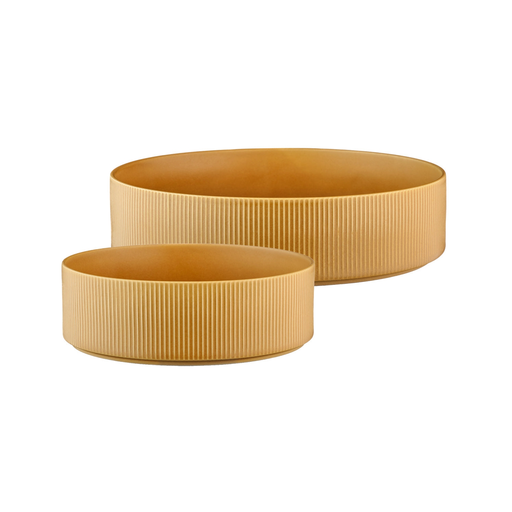
Why this choice suits this profile: With its two sizes and ochre colour, this set is aimed at those who want to coordinate kitchen prep with table service.
The dimensions are clearly stated and the stackable shape avoids having too many decorative pieces that are hard to store.
Claimed recycled stoneware, two diameters, stackable and stated compatibility with dishwasher, microwave and oven up to 220 °C.
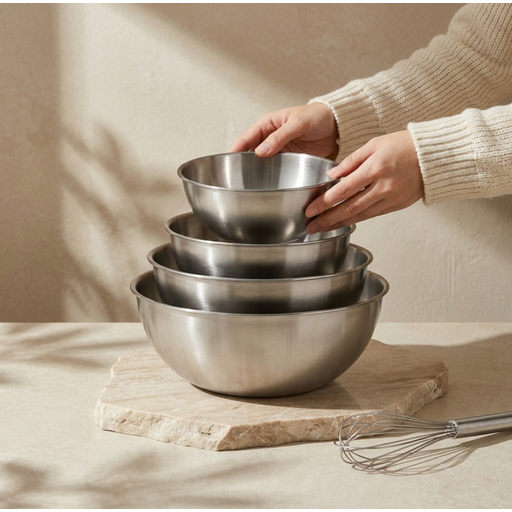
Why this choice suits this profile: The four stated sizes – 19, 22, 25 and 28 cm – are ideal for repeated prep, portioning and compact storage.
The product page specifies 304 stainless steel, no coating, a rolled rim and the ability to stack the bowls. The essential features are therefore easy to check.
Four sizes, 304 stainless steel, rim claimed to be burr-free, high temperature resistance and dishwasher cleaning.
We’ve put together a comprehensive, real-time updated selection of products that meet these demanding criteria, while also taking European safety regulations into account.
Stainless steel is perfect for prep, whisking and kneading. Ceramic and stoneware are more suited to tableware. For varied uses, a set of several sizes will often be more practical than a single large mixing bowl.
Many stainless steel models are stated as dishwasher safe. However, check the product page and dry the bowl properly after washing. Stainless steel must never be placed in the microwave.
Avoid thermal shock with ceramic, abrasive sponges on stainless steel, and overfilling during mixing. Store stackable bowls only when they are clean and completely dry. For a model with a non-slip lid or silicone base, follow the care recommendations specific to each part.