Parents keeping an eye on added sugars
If you’re looking for a recipe with no added sugars for the new school year, check the amount of naturally occurring sugars in the nutritional information too.


When choosing a mixed fruit juice for the new school year, compare the product description and the ‘of which sugars’ figure per 100 ml, rather than relying solely on the ‘no added sugars’ claim. This claim doesn’t rule out naturally occurring sugars. For everyday drinks, Manger Bouger recommends choosing water and limiting fruit juice.
If you’re looking for a recipe with no added sugars for the new school year, check the amount of naturally occurring sugars in the nutritional information too.
At breakfast or snack time, choosing between a bottle and a small carton mainly depends on how much you plan to serve.
This term is no substitute for reading the label: compare the ‘of which sugars’ figure and remember that Manger Bouger recommends choosing water for everyday drinking.
Start by distinguishing the claim about sugars from the amount actually listed per 100 ml. Then check the recipe and choose a format that suits the portions you’ll serve.
| What matters | What to check | Who is it for? |
|---|---|---|
| Added sugars and sugars present | Compare ‘no added sugars’ with the ‘of which sugars’ figure per 100 ml and the amount you’ll serve. | I want to avoid added sugars without taking this claim to mean the drink contains no sugar; around 42% of consumers would prioritise this distinction. |
| Juice or nectar | Read the product description and ingredients, and check the fruit percentage if it’s listed. | Before choosing a drink for the new school year, I want to know whether the recipe contains water and how much fruit it includes; almost 33% of consumers would put this composition first. |
| Format and portions | Check the container size and storage instructions after opening. | For breakfast or snack time, I prefer a container suited to the amount I’ll serve; around 25% of consumers would make the format their priority. |
Naturally occurring sugars are still listed in the nutritional information. The Carrefour and E.Leclerc product pages for Carrefour Classic’ and Jafaden mixed fruit nectars with no added sugars each list 9.8 g of sugars per 100 ml.
Compare the ‘of which sugars’ figure per 100 ml, then take the amount actually poured into account.
Manger Bouger recommends choosing water and limiting fruit juice to no more than one glass a day.
Pack water for the day and, if you serve juice, measure out a glass at breakfast or snack time.
The product description matters: according to the definition published by Légifrance, fruit juice is made from the edible parts of fruit. The Carrefour and E.Leclerc product pages for the mixed fruit nectars mentioned here also list water as an ingredient.
Compare the product description and ingredients before comparing sugar content.
Carrefour offers a 1 L mixed fruit nectar with no added sugars, with a stated fruit content of at least 75%.
E.Leclerc offers several Jafaden mixed fruit juices and nectars. Its 1 L nectar with no added sugars has a stated fruit content of at least 81%.
Auchan’s range includes juices, nectars and mixed fruit products made from concentrate, including one recipe labelled as having no added sugars.
Lidl France offers a Solevita mixed fruit juice made from concentrate.
Auchan’s mixed fruit range includes several Tropicana fruit blends, including multivitamin varieties.
This selection includes mixed fruit juices, mixed fruit nectars and a mango and apple nectar to serve in portions at home. Several are labelled ‘no added sugars’: compare this claim with the sugars listed on each label.
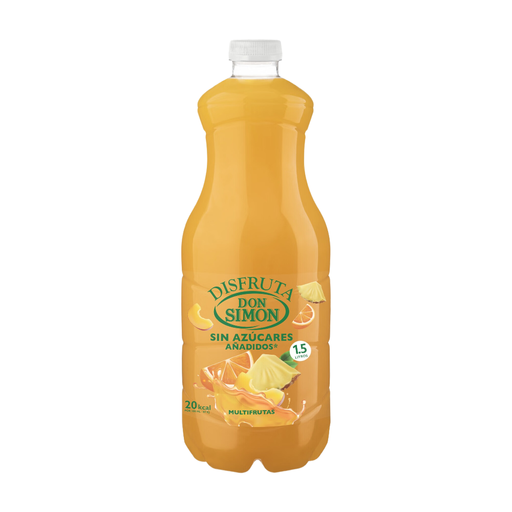 Image unavailable
Worth considering if you’re serving several glasses at home; measure out each portion.
1.5 L PET bottle. The ‘no added sugars’ claim is no substitute for checking the ‘of which sugars’ figure.
 Image unavailable
For serving at home, measure out glasses from this large bottle rather than treating the whole bottle as one portion.
1.5 L mixed fruit juice; check the sugars per 100 ml and the storage instructions after opening.
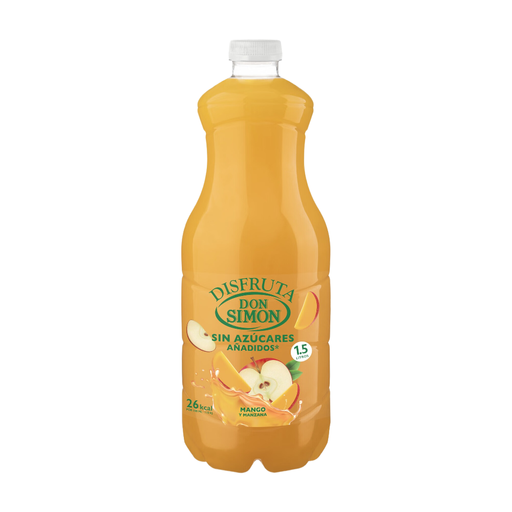 Image unavailable
If you’re specifically looking for a mango and apple recipe to serve at home, note that this nectar is different from products described as ‘mixed fruit’.
1.5 L PET bottle; compare the ‘of which sugars’ figure and ingredients with those of other nectars.
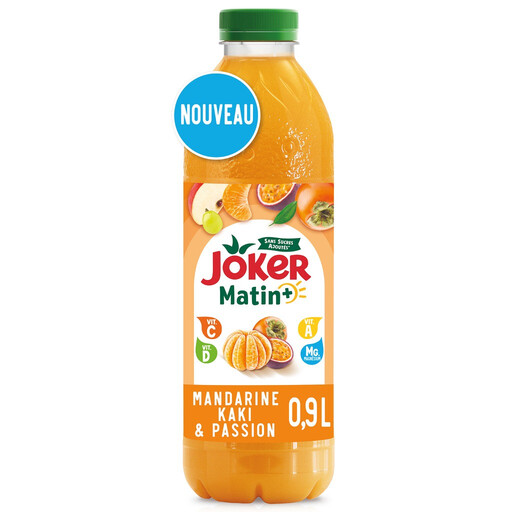 Image unavailable
If you’re serving juice at breakfast, compare this fruit recipe with those in other bottles and measure out the glass.
900 ml container; check the nutritional information and storage instructions after opening.
 Image unavailable
When serving mixed fruit juice at home, a bottle lets you choose how much to pour each time.
1 L format; check the ‘of which sugars’ figure and storage instructions after opening.
No: the claim doesn’t remove the sugars naturally present in fruit. Carrefour explains the difference on the product page for a Joker juice. To compare products, read the ‘of which sugars’ figure per 100 ml and take the amount in your glass into account.
Choose water for the school day. Manger Bouger recommends limiting fruit juices of all kinds to no more than one glass a day; whole fruit is a better choice than juice.
Check the recipe and product description: Légifrance defines fruit juice as being made from the edible parts of fruit, while the product pages for Carrefour Classic’ and Jafaden mixed fruit nectars also list water. Compare the ingredients, stated fruit content and ‘of which sugars’ figure, without assuming that the product description alone tells you which option has less sugar.
No: it makes the amount in the container easier to see, but you can measure out a glass from a bottle too. E.Leclerc offers Jafaden formats including 4 × 20 cl packs and larger bottles; choose according to the portions you plan to serve and check the storage instructions after opening.