
Livraison le jour même ou le lendemain

Qualité garantie

Débloquez vos offres de bienvenue: Livraison GRATUITE | Jusqu'à -80 % | 30 jours d'essai gratuits à JoyPlus
Téléchargez l'application
Every artist's nightmare? Paper that buckles at the first drop of gouache or bleeds through from a heavy-handed marker. Whether you're an art student, a seasoned illustrator, or simply a passionate hobbyist, you need a reliable surface—a blank canvas that elevates your creativity without holding it back. That's the promise of a good mixed-media sketchbook: to handle both dry and wet media with grace, without ever buckling or bleeding.
This guide is here to help you navigate the options. We'll break down the key criteria and present a selection of tried-and-true favourites, from portable sketchbooks for the road to workhorse pads for the studio.
Before diving into our selection, let's review the technical characteristics that make all the difference.
Expressed in grams per square metre (g/m?), paper weight is the number one indicator of a sheet's thickness and durability.
The choice of format depends entirely on your creative habits.
The surface texture, known as the "tooth," plays a crucial role in how pigment adheres and the final look of your artwork.
We've selected a few gems for you from the catalogue of the French brand Clairefontaine, an undisputed leader in fine art supplies.
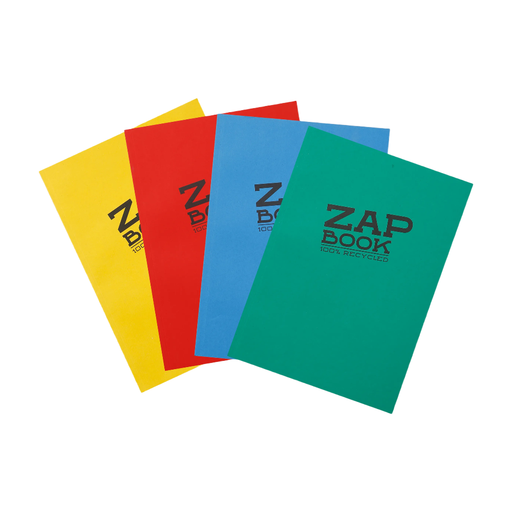
Why we love it: It's the ultimate travel companion. With 160 sheets and a pocket-friendly format, it's designed to ensure you never let an idea slip away. Its 100% recycled paper makes it a smart, eco-friendly choice for your daily sketches.
Pros:
Who is it for?: For artists on the move, students, and anyone who loves to pull out their sketchbook to capture the moment with a pencil, pen, or charcoal. Its 80?g/m? weight makes it best suited for dry media.
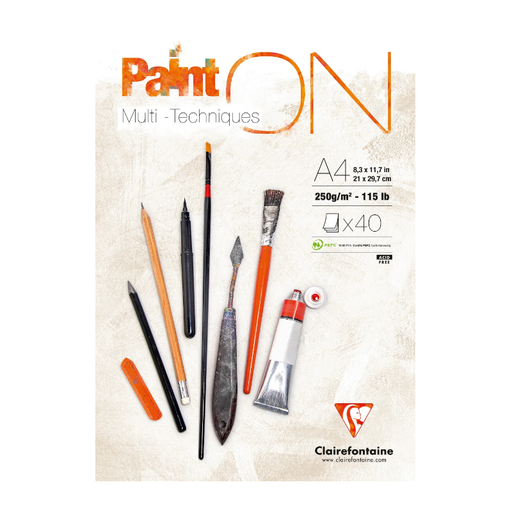
Why we love it: This is the quintessential mixed-media sketchbook. Its thick 250?g/m? pure cellulose paper, brilliant white colour, and very fine grain make it an impressively versatile surface, ready to handle everything from technical drawing to painting.
Pros:
Who is it for?: For illustrators, artists, and art students looking for THE go-to, do-it-all paper for the majority of their projects. A reliable choice for those who love to mix techniques.
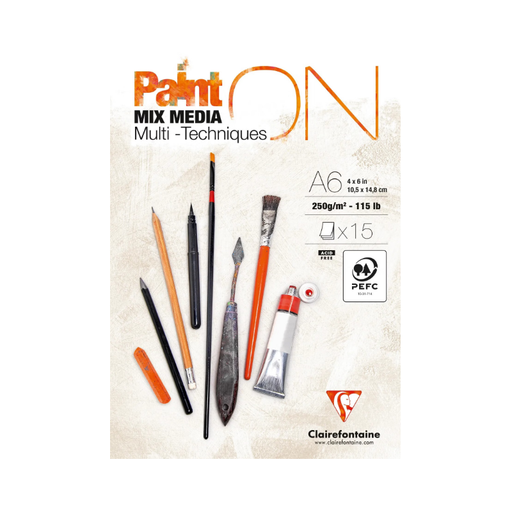
Why we love it: This pad packs all the quality of Paint'ON paper into an ultra-practical, pocket-sized format. It allows you to use wet media on the go without sacrificing the quality of your surface.
Pros:
Who is it for?: For creatives who want to produce finished mixed-media pieces, even when away from their studio. This is the A6 sketchbook for those who accept no compromise on performance, wherever they are.
Choosing a paper is a very personal affair, one that evolves with your projects. If our selection doesn't check all your boxes, or if you want to explore other types of bindings and formats, you might be interested in our collection of adhesive paper and notebooks.
1. What paper weight should I choose for mixed media? For truly versatile use, a weight between 200 and 250?g/m? is ideal. It offers the perfect balance: sturdy enough for wet media like gouache or ink, without being too stiff for pencil drawing.
2. Can I use watercolour on 250?g/m? paper? Absolutely. A 250?g/m? paper can easily handle light watercolour or gouache washes and will resist buckling much better than a thinner paper. However, for techniques involving a lot of water (multiple washes, "wet-on-wet" work), a dedicated watercolour paper of 300?g/m? or more, often cotton-based, will yield better results.
3. What's the difference between cellulose and cotton paper? Cellulose paper, made from wood pulp, is the most common type for drawing and mixed media. It offers excellent value and great versatility, as seen in the Paint'ON range of Clairefontaine drawing paper. 100% cotton paper, on the other hand, is the gold standard, especially for watercolour. It's more durable, more absorbent, and more stable over time, but it is also more expensive.