Hosts keeping an eye on sugar per glass
If you’re serving several people, the phrase “no added sugar” alone won’t tell you how much sugar is in each glass. Both the figure per 100 ml and the serving size matter.


For a film night, choose according to what matters most to you: the amount of sugar in each glass, the fruit content or whether you’re happy to have a sweetener in the recipe. “No added sugar” doesn’t mean “sugar-free”: compare the “of which sugars” figure per 100 ml, then factor in how much you pour. A nectar with sweetener may show a different figure from a pure juice, but it’s made to suit a different preference when it comes to ingredients.
If you’re serving several people, the phrase “no added sugar” alone won’t tell you how much sugar is in each glass. Both the figure per 100 ml and the serving size matter.
You want to tell the difference between a pure juice and a nectar containing water or a sweetener, without assuming that a recipe with more fruit necessarily contains less sugar.
You’re looking for a size that suits your group and how much will be left to drink afterwards. The bottle size and storage instructions after opening can help you decide.
To choose between pure juice and nectar, start with the recipe you want to serve, then compare the sugar content on the same per-100 ml basis. Carrefour and E.Leclerc product listings show why “no added sugar” and the presence of a sweetener should be considered separately.
Consider this: if your priority is a product described as pure fruit juice.
Bear in mind: no added sugar doesn’t mean that naturally occurring sugars have disappeared.
Consider this: if you prefer a nectar made with fruit and water.
Bear in mind: this description doesn’t mean it has the same composition as pure juice, nor does it indicate low sugar content by itself.
Consider this: if you compare sugar per 100 ml first and are happy to have a sweetener in the recipe.
Bear in mind: this is nectar, not pure juice; check that you’re happy with the ingredients list.
| What to consider | What to check | Who is it for? |
|---|---|---|
| Sugar per glass | The “of which sugars” figure per 100 ml and how much you plan to pour. | I don’t want to mistake “no added sugar” for “sugar-free” when I’m pouring the drinks. Around 33% of consumers prioritise the amount of sugar actually served. |
| Size and storage | The bottle size and the stated storage time after opening. | If several people are coming round, I want enough to drink without choosing a bottle I can’t finish in time. The right pack size is the main concern for around 20% of consumers. |
| Fruit content | The product description, the fruit content if it’s shown on the pack, and the ingredients list. | I’d rather choose between pure juice and nectar based on their recipes than on the word “diet”. For around 27% of consumers, composition comes before other criteria. |
| Sweetener | Whether it’s listed in the ingredients, then the sugar figure per 100 ml. | If I want to reduce the sugar shown on the label, I need to decide whether a recipe with sweetener suits me. Around 20% of consumers prioritise this choice of ingredients. |
A drink can carry this claim and still contain sugars naturally present in fruit. According to E.Leclerc, the label for JAFADEN mixed fruit nectar with no added sugar shows 9.8 g of sugars per 100 ml.
Compare the “of which sugars” figure per 100 ml, then work out how it relates to the amount in each glass.
The DGCCRF distinguishes between juice and nectar descriptions. According to its E.Leclerc product listing, ECO+ mixed fruit nectar contains a sweetener, E960a, among other ingredients, so it shouldn’t be treated as having the same composition as pure juice.
Read the product description and ingredients list before comparing the nutritional information.
The size of the bottle doesn’t tell you how long it can be kept once opened. For the Tropicana Tropical and Pressade products featured in its listings, Auchan advises drinking them within five days of opening and keeping them chilled, following the specific instructions for each product.
Estimate how many glasses you’ll serve, then follow the instructions on the bottle you buy.
A bottle left open beyond the stated storage time may not be finished.
Organic describes how the ingredients are produced, not the sugar content per 100 ml. Choosing organic and keeping an eye on sugar are two separate considerations.
First compare the nutritional information for the products you’re considering, then check their ingredients and organic status if that matters to you.
The Tropical product featured by Auchan is a large-format pure mixed fruit juice to consider.
These two Carrefour products help illustrate the difference between mixed fruit nectar with no added sugar and organic pure mixed fruit juice.
E.Leclerc’s product listings let you compare a nectar with no added sugar and a pure mixed fruit juice from this range.
The mixed fruit nectar described by E.Leclerc is worth considering if you’re happy to have a sweetener in the recipe.
The organic mixed fruit product featured by Auchan offers another point of comparison among nectars with no added sugar.
These mixed fruit juices with no added sugar and nectars, including mango and apple and pomegranate recipes, offer a range of ingredients and pack sizes to consider for a film night. For each bottle, distinguish the claim “no added sugar” from the amount of sugar shown in its nutritional information.
 Image unavailable
Worth considering if you want to serve a bottle of mixed fruit nectar to share. The title states 1.5 L; check the ingredients list and sugar content on the bottle before choosing.
 Image unavailable
Compare this if you’d prefer a juice made from several fruits to a nectar. It comes in a 1.5 L size; no added sugar doesn’t mean you can skip checking the “of which sugars” figure.
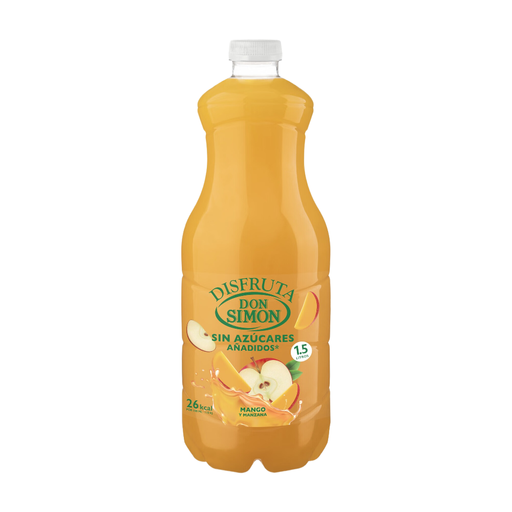 Image unavailable
Worth considering if the mango and apple flavours suit your guests. This nectar isn’t described in the same way as a mixed fruit juice. The bottle is listed as 1.5 L.
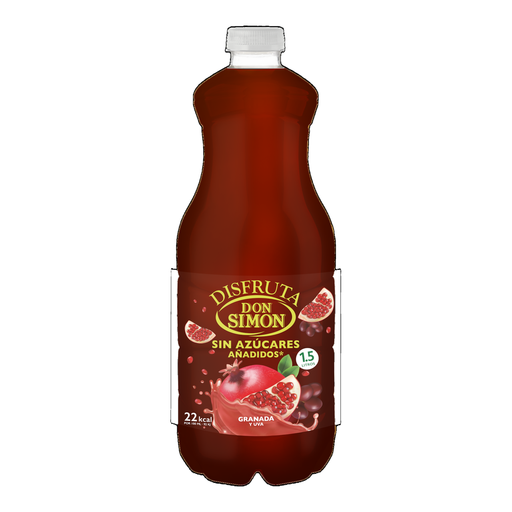 Image unavailable
This pomegranate nectar is another flavour to consider for a bottle to share. The listed size is 1.5 L; compare its ingredients and sugar per 100 ml with the other drinks you’re considering.
 Image unavailable
Compare the 1 L size with the number of glasses you plan to serve. If your priority is the amount of sugar in each glass, check the figure per 100 ml rather than relying on the claim “no added sugar” alone.
No. This claim doesn’t rule out sugars naturally present in fruit. To find out how much sugar is in the glass you serve, check the “of which sugars” figure per 100 ml in the nutritional information and take the serving size into account.
They’re distinct product descriptions, governed by rules on composition and labelling outlined by the DGCCRF. Check the exact description and ingredients on the bottle: nectar shouldn’t be mistaken for pure juice.
Not necessarily: the figure depends on the specific recipe. For comparison, two E.Leclerc product listings show that ECO+ mixed fruit nectar with sweetener contains 4.9 g of sugars per 100 ml, while JAFADEN mixed fruit nectar with no added sugar contains 9.8 g per 100 ml. Compare the labels of the products you’re actually considering.
Follow the storage time and temperature shown on the bottle in question. For the Tropicana Tropical and Pressade products featured by Auchan, the product listings advise keeping them chilled and drinking them within five days of opening; the stated temperature conditions differ.