Parents keeping an eye on sugar intake
You want to compare the declared grams of sugar rather than rely on the word ‘diet’ or the ‘no added sugar’ claim alone.


For a children’s birthday party, don’t choose a mixed-fruit juice just because it says ‘diet’ or ‘no added sugar’: fruit contains sugars too. If your priority is the amount of sugar served, compare the ‘of which sugars’ figure per 100 ml, then check the portion size. Also check whether it’s juice or nectar. Manger Bouger recommends limiting juice for children and offering water as the drink of choice.
You want to compare the declared grams of sugar rather than rely on the word ‘diet’ or the ‘no added sugar’ claim alone.
You’re happy with the sugars naturally present in fruit, but want to check the recipe and distinguish juice from nectar.
You’re looking for a size that suits the portions you plan to serve and can store any leftovers according to the bottle’s instructions.
For a children’s party, start with how much you plan to serve, then compare the sugar content per 100 ml and the ingredients in the bottles you’re considering. A claim on the front of the pack doesn’t replace these checks.
| Criteria | What to check | Who it matters to |
|---|---|---|
| Sugar content | Compare the ‘of which sugars’ figure per 100 ml, then work it out for the portion you’ll serve. | If I want to limit the sugar poured into each glass, the figure shown for the specific bottle matters more than the word ‘diet’. Around 40% of consumers are said to put this quantity at the top of their list of criteria. |
| Ingredients | Read the product description, ingredients list and any ‘no added sugar’ claim. | I’m happy with the sugars in fruit but want to avoid added sugar in the recipe; nearly 30% of consumers are said to prioritise ingredients. |
| Portions and pack size | Provide water, decide on the small portions you’ll serve and check how to store the bottle after opening. | If I’m serving several children without opening more juice than necessary, I also consider what I can keep after the party. Around 30% of consumers are said to make this their main consideration. |
The sugars naturally present in fruit still count. Auchan’s product listings for two Joker no-added-sugar recipes show 10 g and 11 g of sugar per 100 ml respectively.
Compare the ‘of which sugars’ figures for the same volume and plan a small portion rather than deciding based only on the claim on the front of the pack.
These descriptions refer to different categories of drink. The DGCCRF points out that labelling rules differ for juices and nectars, so two bottles labelled ‘mixed fruit’ may have different recipes.
Check the product description and ingredients on each bottle before comparing their nutritional information.
Storage instructions after opening depend on the product. Joybuy’s listing for Joker Le Fruit 1.5 L says to refrigerate the bottle and consume it within 3 to 4 days of opening.
Estimate how many portions you’ll need for the party and check the instructions on the bottle you buy.
Any juice left over that you can’t drink within the stated time may go to waste.
The range includes a reduced-sugar mixed-fruit juice and purée drink, as well as a mixed-fruit nectar.
Carrefour offers a 1 L mixed-fruit nectar with no added sugar.
The Joker mixed-fruit recipes considered here include a juice from concentrate and a pure juice, both labelled no added sugar.
Auchan’s range includes mixed-fruit juices and nectars, including an Auchan juice from concentrate with no added sugar.
Lidl offers SOLEVITA mixed-fruit pure juice.
These 1 L or 1.5 L bottles are mixed-fruit juices and nectars labelled no added sugar, which you could consider for a party where you’ll be serving several children. This claim alone doesn’t tell you how much sugar will be in each glass: compare the labels of the products you’re interested in.
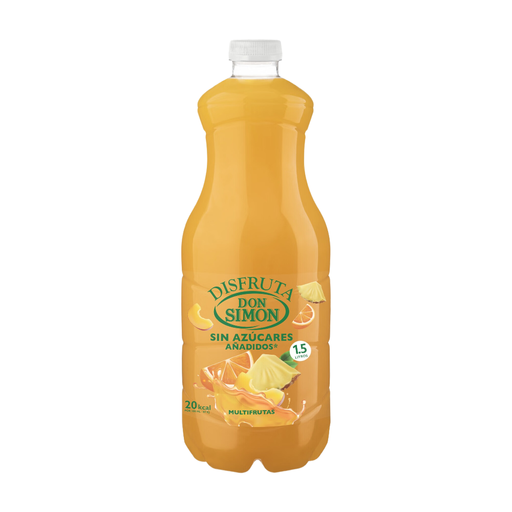 Image unavailable
This 1.5 L PET bottle of nectar could be a good option if you’re planning to serve several small portions. The product name states that it has no added sugar; check the label for the ingredients, including any sweeteners, and the ‘of which sugars’ figure.
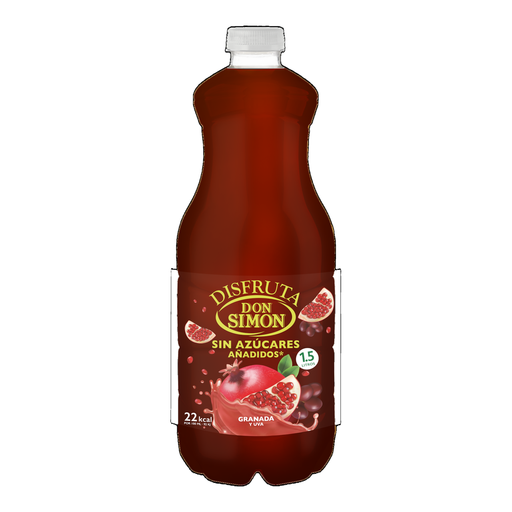 Image unavailable
This pomegranate version comes in a 1.5 L PET bottle, suitable for serving several glasses. If the ‘no added sugar’ claim is important to you, also check the ingredients and sugar content per 100 ml on the packaging.
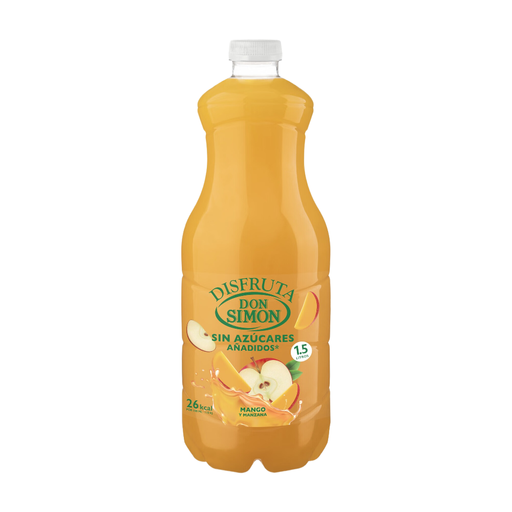 Image unavailable
The mango and apple version could work if this fruit combination suits the drinks you’re planning to serve. The PET bottle holds 1.5 L; read the label to compare its sugar content and check the ingredients before serving.
 Image unavailable
This 1.5 L size can be shared if you’re planning small portions. Joybuy’s listing for this product says to refrigerate the bottle after opening and consume it within 3 to 4 days; also check the sugar content shown on the label.
 Image unavailable
The 1 L bottle is another size to consider, depending on how many glasses you plan to serve. To choose between this juice and a nectar, check the product description, ingredients and ‘of which sugars’ figure on each pack.
No: the sugars naturally present in fruit remain in the product. For example, Auchan’s listings for two Joker no-added-sugar recipes show 10 g and 11 g of sugar per 100 ml; check the figures for the bottle you choose.
Serve small portions and make water available. For sugary drinks, including fruit juice, Manger Bouger recommends no more than half a glass a day for children under 11 and one glass a day for older children; water remains the drink of choice.
No, the product description alone isn’t enough to make this comparison. Check the sugar content per 100 ml on both bottles and read the ingredients; the category tells you what kind of product it is, not that every recipe will have the same sugar content.
Follow the storage instructions for the product you’ve bought. Joybuy’s listing for Joker Le Fruit 1.5 L says to refrigerate it after opening and consume it within 3 to 4 days; this timeframe doesn’t automatically apply to other bottles.
No: it doesn’t tell you how much sugar is in the portion you’ll serve. To compare specific products, read their product descriptions, ingredients and ‘of which sugars’ figures per 100 ml.