Anyone keeping an eye on added sugar
You want a drink for brunch with no added sugar, while also comparing the sugars listed per 100 ml. These two details answer different questions.


When choosing a mixed fruit drink for brunch, don’t be guided by the word ‘diet’: check the drink’s description, its ingredients and the ‘of which sugars’ figure per 100 ml. If you want to avoid added sugar, a juice or nectar labelled as having no added sugar may suit you, but the two categories are made differently and both still contain sugars from fruit.
You want a drink for brunch with no added sugar, while also comparing the sugars listed per 100 ml. These two details answer different questions.
You’re choosing drinks for a group and want to know the drink category, the fruit used and the other ingredients before picking a bottle.
You’re looking for a size that works for brunch, while keeping in mind how to store any leftovers once opened. The products featured here come in 1 L and 1.5 L sizes.
First, decide whether no added sugar is your main priority. Then look at whether it’s juice or nectar, and how much you’ll need to serve. This will help you compare bottles without assuming that ‘mixed fruit’ tells you everything about the recipe.
Worth considering: if you want juice and avoiding added sugar matters to you.
Bear in mind: this claim doesn’t mean ‘sugar-free’ or ‘low in sugars’; the sugars from the fruit are included in the nutrition information.
Worth considering: if you prefer a nectar recipe but want to avoid added sugar.
Bear in mind: nectar isn’t pure juice. The Carrefour Classic' product information cited for this category states that it contains at least 75% fruit; check the composition of the bottle you choose.
Worth considering: if the nectar recipe matters more to you than avoiding added sugar.
Bear in mind: the mixed fruit nectar from Pampryl lists sugar among its ingredients, so this product isn’t suitable if you’re looking for one with no added sugar.
| What to look for | Check | Who is it for? |
|---|---|---|
| Added sugars and sugars present | The no-added-sugar claim, the ingredients list and the ‘of which sugars’ figure per 100 ml. | I want to avoid added sugar, but also know how much sugar is in the glass I’m serving. Around 50% of consumers would make this double-check their priority. |
| Category and recipe | Whether it’s described as ‘juice’ or ‘nectar’, the fruits used and the fruit content, if stated. | To choose a recipe that works for brunch, I want to tell juice and nectar apart rather than rely on the name ‘mixed fruit’ alone. This would be the main priority for around 30% of consumers. |
| Size and storage | The bottle size and its storage instructions once opened. | If I’m serving a group, I’d rather plan a suitable amount and know what to do with any leftovers. Around 20% of consumers would make this their priority. |
Fruit naturally contains sugars. For example, Joybuy’s product information for Joker mixed fruit juice, 1 L, lists 11 g of sugars per 100 ml, even though no sugar has been added.
Compare the ‘of which sugars’ figure per 100 ml, then consider how much you plan to serve.
Two bottles labelled ‘mixed fruit’ can differ in category, fruit content and other ingredients.
Check the description and ingredients list for each product before comparing them.
A bottle meant for sharing may still be open after brunch, and how long it keeps will depend on the product.
Estimate how much you’ll serve and follow the bottle’s instructions once it’s open.
Its mixed fruit drinks let you compare the ‘no added sugar’ claim with the sugar content of the specific bottle.
The products mentioned include a Carrefour Classic' mixed fruit nectar with no added sugar and a Carrefour Bio pure juice made with pineapple, mango and passion fruit.
The Jafaden mixed fruit products mentioned by E.Leclerc include a 1 L pure juice and a 2 L nectar.
Auchan features, among other products, a 90 cl Tropicana banana and passion fruit pure juice labelled ‘no added sugar’.
The mixed fruit nectar described by Pampryl offers a point of comparison with products that have no added sugar.
These products let you compare mixed fruit juices and fruit nectars labelled ‘no added sugar’. The mango and apple nectar is an option if you prefer those two fruits, but it isn’t a pure juice.
 Image unavailable
This 1.5 L bottle of mixed fruit juice is worth considering if you’re planning to serve several people and want to avoid added sugar.
When comparing bottles, also check the ‘of which sugars’ figure per 100 ml and the storage instructions once opened.
 Image unavailable
This 1.5 L mixed fruit nectar is for anyone looking for a nectar rather than a juice, with no added sugar.
Check the ingredients list, especially if the presence of a sweetener matters to you, as well as the fruit content.
 Image unavailable
This 1 L mixed fruit juice may suit you if you’re looking for this size and want to avoid added sugar.
The ‘no added sugar’ claim doesn’t replace checking the ‘of which sugars’ figure on the bottle.
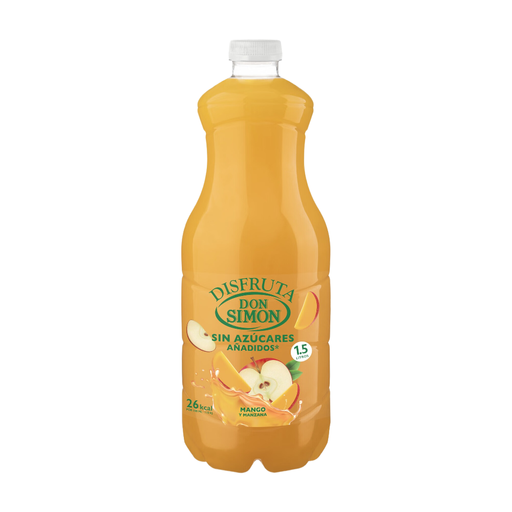 Image unavailable
This 1.5 L nectar is an option if you’re specifically looking for a mango and apple blend with no added sugar, rather than mixed fruit juice.
Check the ingredients if you want to know whether it contains a sweetener, and don’t confuse this nectar with pure juice.
No: the word alone doesn’t tell you how much sugar a mixed fruit juice contains. Even with no added sugar, juice contains sugars from fruit. Compare the ‘of which sugars’ figures per 100 ml on the bottles you’re considering.
First, check the drink’s description, then read the ingredients list. Carrefour Classic' states that its mixed fruit nectar with no added sugar contains at least 75% fruit. Pampryl’s product information for its mixed fruit nectar states that it contains at least 35% fruit juices and purées made from concentrate, and lists sugar among the ingredients.
Work it out based on the number of glasses you plan to serve, rather than the bottle size alone. Manger Bouger recommends limiting fruit juice, whatever the type, to one glass a day. You could also offer water and whole fruit.
Follow the storage instructions and time limit given for the product you buy. Auchan’s product information for Joker Le Fruit mixed fruit juice, 1.5 L, says to keep it refrigerated and consume it within five days of opening. This guidance doesn’t automatically apply to other bottles.
Compare the ‘of which sugars’ figures using the same unit, usually per 100 ml for juice bottles. The DGCCRF explains that nutrition information is given per 100 g or 100 ml. Check the ingredients list separately to see whether any sugars have been added.