
Livraison le jour même ou le lendemain

Qualité garantie

Débloquez vos offres de bienvenue: Livraison GRATUITE | Jusqu'à -80 % | 30 jours d'essai gratuits à JoyPlus
Téléchargez l'application
Whether you’re fitting skirting boards, trimming moulding or cutting cable trunking, an adjustable multi-purpose mitre shear can save you from switching between a saw and a mitre box. However, it’s important to choose a model suited to the materials you actually use.
Product descriptions often boast impressive versatility. Yet a few details can make all the difference, whether you’re on a building site or simply tackling DIY jobs at home. Here are the key criteria to check before buying, along with a selection of models suited to different uses.
A shear advertised as adjustable from 45 to 135 degrees does not, on its own, guarantee a precise cut at every setting. Check for a clearly readable scale, an adjustable cursor or well-defined stops. Without a reliable reference point, the angle can vary from one cut to the next, particularly when fitting skirting boards or moulding.
These tools are designed for soft or relatively thin materials. They may be suitable for cutting PVC, strips, rubber seals, flexible moulding, softwood and some types of cable trunking. However, manufacturers generally advise against using them on metal, hardwood and particularly tough materials.
Forcing the tool through an unsuitable piece can damage the cutting edge, deform the material and increase the risk of slipping.
A blunt blade crushes the piece rather than cutting it cleanly. It also means you have to apply more pressure, which reduces both precision and safety. The inclusion of replacement SK5 blades therefore deserves your full attention, especially if you’re a tradesperson or use the tool regularly.
Compare the number of blades supplied with your intended use. Two blades may be enough for occasional jobs, while a pack of ten means you won’t need to order additional consumables at short notice.
For finishing work, look for a clearly stated angle range and easy-to-read markings. A range of 45° to 135° covers bevel cuts, angled joints and several moulding configurations.
Maximum capacity should also be checked. The permitted diameter or width depends on the shape of the piece. The GARTOL extendable model claims a cutting capacity of up to 6.8 cm — a figure to compare with the dimensions of your skirting boards, strips or cable trunking.
SK5 steel is commonly used for cutting-tool blades. In the product descriptions reviewed, it is paired with replaceable blades, allowing you to restore an effective cutting edge without replacing the entire tool.
An aluminium-alloy handle generally offers a good balance between lightness and strength. A non-slip PPC or PVC coating improves grip, particularly when making a series of cuts. However, this feature does not replace the need to maintain a stable position and apply pressure gradually.
Choose a model fitted with a rotary safety lock or an equivalent mechanism. The shear should be locked when stored, kept out of children’s reach and stored separately from other tools.
After use:
Before starting, hold the piece on a stable surface and keep your fingers away from the blade’s path.
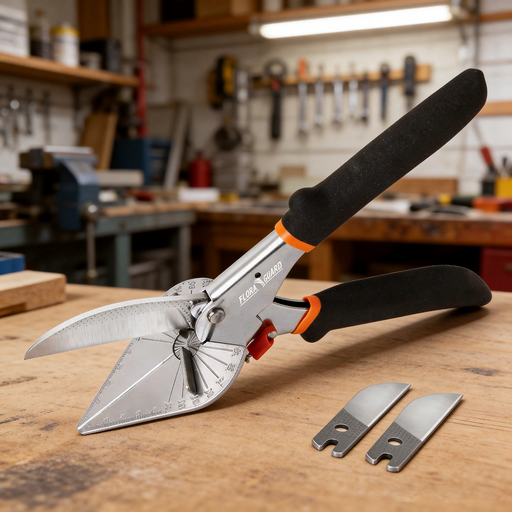
Why this product suits this profile: its 45° to 135° adjustment range and 2 replacement blades make it suitable for small repairs, cutting flexible skirting boards, PVC and seals.
The engraved scale and adjustable cursor eliminate the need to set the angle “by eye”. Replaceable blades also reduce the risk of continuing to work with a worn cutting edge.
45° to 135° range, aluminium-alloy handle with PPC coating, rotary safety lock and 2 SK5 blades included.
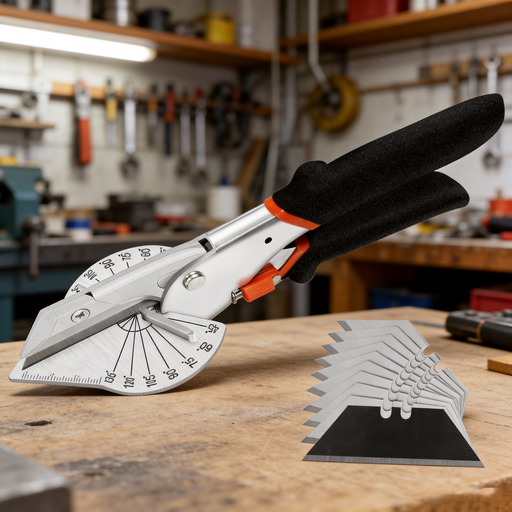
Why this product suits this profile: this pack is ideal for anyone who wants to keep a supply of blades to hand for regular finishing and interior improvement work.
The 10 blades included reduce interruptions caused by having to buy more consumables. However, the model remains intended only for the soft materials specified by the manufacturer.
10 replaceable SK5 blades, 45° to 135° scale, non-slip PPC handle and rotary lock.
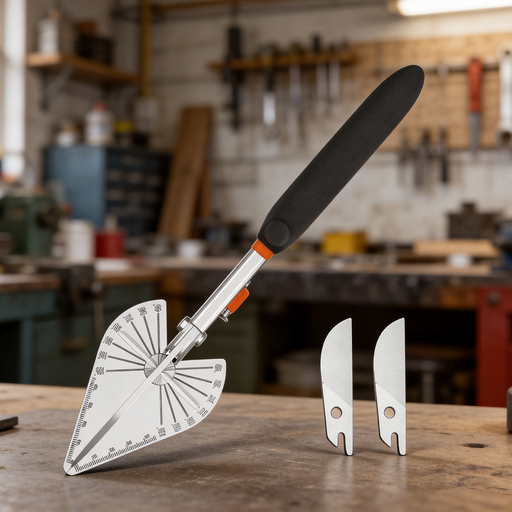
Why this product suits this profile: its extendable design and claimed capacity of up to 6.8 cm may appeal to installers working with moulding, trim, cable trunking and wider pieces.
The stated cutting capacity and angle markings let you check whether it meets your needs before buying, rather than relying solely on the word “multi-purpose”.
45° to 135° adjustment, stated capacity of 6.8 cm, SK5 blade, aluminium handle with non-slip coating and rotary lock.
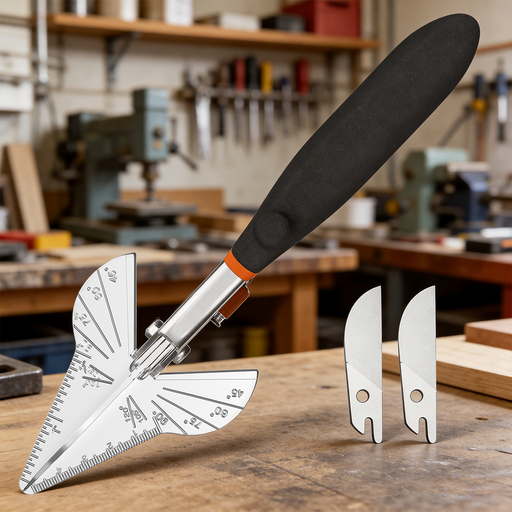
Why this product suits this profile: its built-in markings and 2 replacement blades are designed for cutting PVC, MDF, pine, strips, skirting boards and cable trunking.
The marked positions, including 45°, 60°, 75°, 90°, 105° and 120°, make repeated adjustments easier and reduce guesswork during installation.
SK5 blade, angle markings, 45° stop, steel handle with PVC coating and 2 replacement blades included.
Start by measuring the piece and marking the cutting line. Then set the angle using the scale and check that the piece is firmly positioned against the stop. Applying pressure gradually is better than making a sudden movement, particularly with PVC strips and rubber seals.
When cutting softwood, check the thickness and strength of the piece. If the material splits, compresses or requires excessive force, it’s better to choose a suitable tool rather than applying even more pressure.
No. The models shown are designed for soft or relatively tender materials, such as PVC, moulding, seals, some strips and softwood. Metal and hardwood require a tool specifically designed for these materials.
Clean them after every use, dry them before storing the tool and use the safety lock. Replace the blade as soon as the cut becomes uneven or unusual pressure is required. Its lifespan depends on how frequently you make cuts, as well as the thickness and type of materials.
It depends on the wall configuration and the type of joint. A 45° to 135° scale offers plenty of options, but it’s best to test on a scrap piece before cutting the final piece.