
Livraison le jour même ou le lendemain

Qualité garantie

Débloquez vos offres de bienvenue: Livraison GRATUITE | Jusqu'à -80 % | 30 jours d'essai gratuits à JoyPlus
Téléchargez l'application
When installing baseboards, mouldings, or trunking?: flawless finishes all come down to the precision of your angle cuts. Being off by just a millimetre can ruin the entire look. This is precisely where miter shears come in—an incredibly effective hand tool for making clean, precise cuts in soft materials.
As the Head of Product Recommendations at Joybuy, my mission is to do the groundwork for you. In this guide, you'll find no useless marketing jargon, just practical advice for finding the perfect shears for your projects, followed by a selection of models that have caught our eye.
To make the right choice, here are the key technical points to check. They will make all the difference in the effectiveness and versatility of your future shears.
The main advantage of multi-angle shears is, of course, their flexibility. Most models cover an adjustable cutting range from 45 to 135 degrees. Make sure the most common angles (45°, 90°, 120°) are clearly marked, ideally with detents for quick locking. A precise guide, like an engraved scale with a slider, is a real bonus?: it guarantees identical cuts every time, without any hassle for each angle cut.
The quality of the cut depends entirely on the blade. An SK5 steel blade is an excellent mark of quality, known for its toughness and ability to hold an edge longer. Remember to check if replacement blades are easy to find, as even the best one will eventually wear out. The tool's body shouldn't be overlooked either?: a handle made of steel or an aluminium alloy with a non-slip grip (PVC, PPC) determines both its sturdiness and comfort.
For working precisely and without fatigue, a good grip is essential. An ergonomic, non-slip handle will give you better control. Another crucial point?: safety. Check for a locking system (latch, rotating mechanism) that keeps the shears closed. This is indispensable for safe storage, both for you and for the blade's edge.
Let's get practical. Here are a few models that caught our eye for their design and performance, each catering to specific needs.
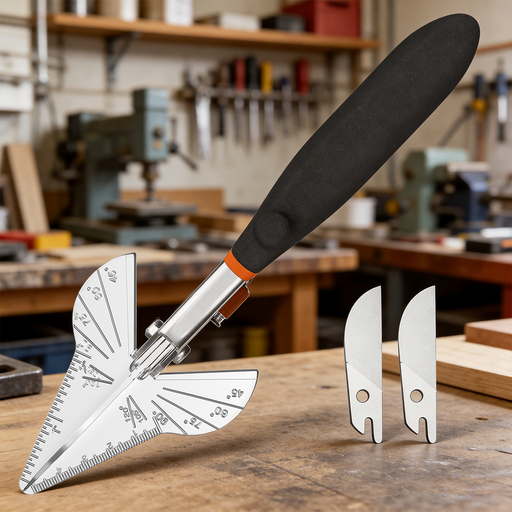
What sets it apart This model focuses on robustness with its steel body and SK5 stainless steel blade. The main angles (120°, 105°, 90°, 75°, 60°) are clearly marked on the protractor, with a fixed stop at 45°, making repetitive cuts at standard angles especially fast.
Key features
Who is it for?? Perfect for avid DIYers looking for a reliable and versatile tool for their finishing work, such as installing mouldings or cutting PVC trunking.
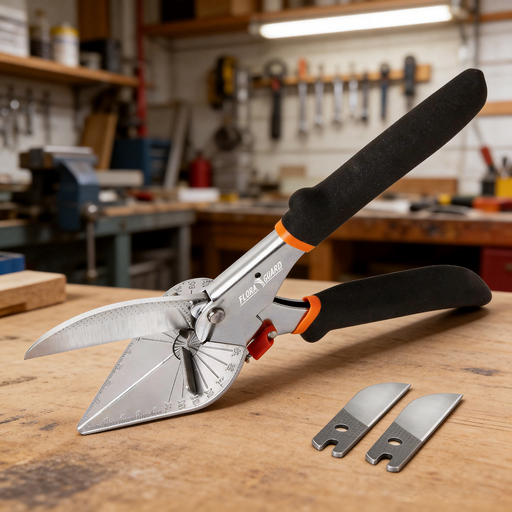
What sets it apart This model is all about precision and comfort. Its aluminium alloy handle makes the tool lighter, while its high-precision engraved scale, paired with an adjustable slider, allows for adjustments to the exact degree. The rotating safety lock is also a mark of convenience.
Key features
Who is it for?? For DIYers who prioritise precision and comfort, especially for delicate work on rubber seals, thin mouldings, or projects requiring very specific angles.
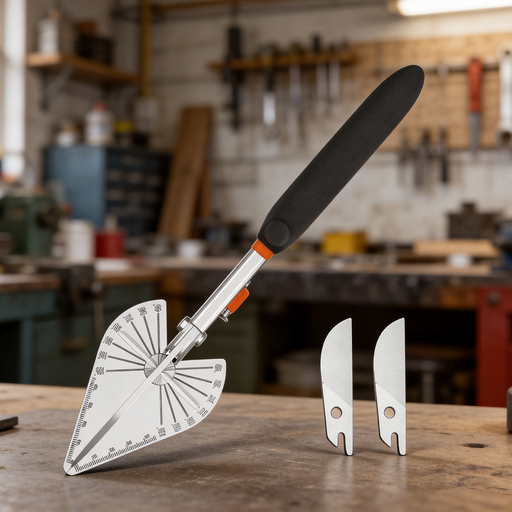
What sets it apart This lengthened version stands out with its superior cutting capacity, allowing it to slice through materials up to 6.8 cm wide. It retains the range's precision features, like the engraved scale and slider, while tackling tougher profiles.
Key features
Who is it for?? The choice for professionals and expert DIYers who regularly work with materials of various sizes and need an above-average cutting capacity.
The shears in this selection are specialists for angle cuts on soft materials. For other projects or to complete your workshop, feel free to explore our full range of tools.
? Discover our selection of Watering Equipment & Garden Tools
Miter shears, also known as angle snips, are a manual tool that cuts with a shearing action, like heavy-duty scissors. They are quiet, dust-free, and designed for soft materials (softwood, PVC, plastic, rubber). In contrast, a miter saw is a power tool with a circular blade. It's used for harder and thicker materials, like solid wood or aluminium, but it is much louder and produces sawdust.
Absolutely not. Using miter shears on hardwood (oak, beech, etc.) or metal is the surest way to irreversibly damage the blade, bend the mechanism, and injure yourself. Use them exclusively for the materials they are designed for?: pine, MDF, PVC, plastics, and other soft materials.
To extend its lifespan, some basic maintenance is required. Wiping the blade with a dry cloth after each use is enough to remove any glue or plastic residue. Always store it in a dry place to prevent rust. If the cuts become less clean and require more force, it's a sign that the blade needs to be replaced. Fortunately, good models often come with replacement blades.