
Livraison le jour même ou le lendemain

Qualité garantie

Débloquez vos offres de bienvenue: Livraison GRATUITE | Jusqu'à -80 % | 30 jours d'essai gratuits à JoyPlus
Téléchargez l'application
Whether you're a daily commuter, a weekend rider, or an avid mountain biker, safety is non-negotiable. You've likely heard about MIPS technology and are considering investing in a helmet that features it. Excellent choice. The problem? The market is flooded with models and marketing claims that can quickly become confusing. As a product expert at Joybuy, my mission is to help you see things more clearly.
This guide is designed to break down the key points to help you choose a MIPS helmet that fits your needs and, most importantly, avoid the common pitfalls that lead to buyer's remorse.
Navigating the helmet jungle is no easy task. Too many cyclists regret their purchase because of details that seemed trivial at first. Here are the most common mistakes to avoid.
Seeing the small yellow MIPS (Multi-directional Impact Protection System) sticker is reassuring, but it doesn't guarantee the overall quality of the helmet. Some entry-level models simply integrate a basic version of this technology without optimising the rest: ventilation, weight, fit system... A good MIPS cycling helmet is a cohesive whole, where the shell, EPS foam, and MIPS system are designed to work in perfect synergy.
A lightweight bike helmet is, of course, more comfortable on long rides. But this lightness should never come at the expense of protection. A helmet that skimps on coverage for the back of the neck or temples to shave off a few grams misses its primary purpose. The coverage area is just as crucial a criterion as weight.
A helmet that looks like a colander isn't necessarily a good ventilated bike helmet. Effective ventilation relies on the design of internal channels that create a genuine airflow from front to back to dissipate heat. A few large, well-designed vents, combined with deep channels, are often far more effective than a myriad of small holes with no real air circuit.
To make an informed choice, focus on these three pillars. They are the foundation of a helmet that is both safe and comfortable.
In Europe, every bike helmet must meet the EN 1078 standard. This certification validates its ability to protect against direct impacts. MIPS technology adds specific protection against the rotational forces generated during an angled impact—a very common scenario in cycling falls. A top-quality helmet therefore combines these two levels of protection.
A helmet that wobbles on your head is useless in a crash. Check for an occipital adjustment system (the dial at the back) for a precise fit around your head. The chin straps should also be easy to adjust to sit ideally under your ears and jaw. A well-fitted helmet doesn't move when you shake your head, yet it doesn't create uncomfortable pressure points.
A helmet's design is almost always optimised for a specific discipline:
To put theory into practice, here are a few models that check all the boxes for safety and design, each tailored for a specific user profile.
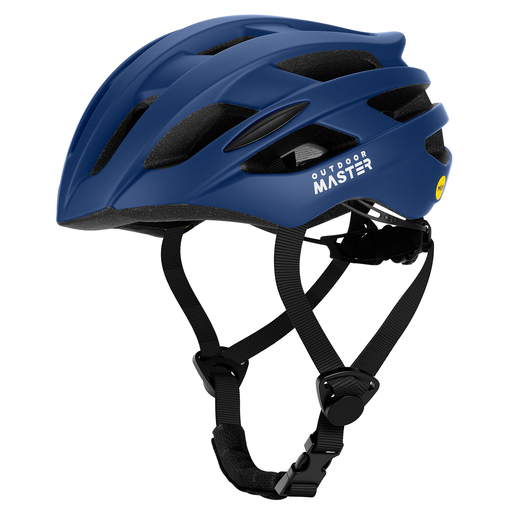
Why we recommend it: Built for the tarmac, it combines MIPS protection with a performance-focused design. Perfect for those who rack up the miles and want lasting comfort.
It does more than just sport the MIPS logo. Its 25 vents are paired with internal channels that create real air circulation, thus avoiding the ineffective "colander" helmet trap.
MIPS protection against rotational forces. Optimised ventilation thanks to 25 vents and internal channels, to keep your head cool even in mid-summer.
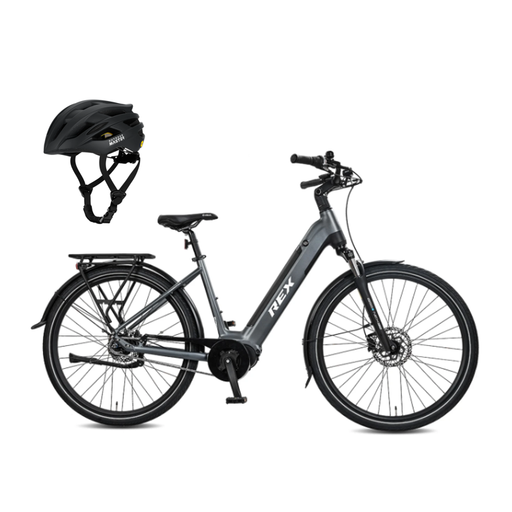
Why we recommend it: This pack is the turnkey solution for commuters. It includes not only a MIPS helmet but also an electric bike (e-bike), providing a complete, safe, and efficient urban mobility solution.
By offering a cohesive package, this bundle avoids the trap of tunnel vision focused only on the helmet. Here, safety is comprehensive: a high-performance MIPS helmet paired with a reliable e-bike for daily trips.
All-in-one solution ideal for commuting. The included helmet is an OutdoorMaster with MIPS, ensuring cutting-edge protection for urban journeys.

Why we recommend it: Its well-balanced design makes it equally at home on the road, on easy MTB trails, or in the city. The smart choice for the cyclist who doesn't want to be confined to a single discipline.
This helmet strikes the perfect balance between weight, ventilation, and coverage, avoiding the trap of over-specialisation. It offers certified MIPS protection without ever sacrificing everyday comfort.
Great versatility for different types of riding. Custom fit thanks to the dial and interchangeable pads for personalised comfort.
If you're aiming for pure performance on the asphalt, we've curated a full range of products that meet our strictest selection criteria.
It is generally recommended to replace your helmet every 3 to 5 years, even with no visible impact. Materials like EPS foam degrade over time due to UV exposure, sweat, and temperature changes. And, of course, it is imperative to replace it immediately after the slightest impact, as its protective structure could be damaged, even if it's not visible.
A helmet certified to EN 1078 already provides essential protection against direct impacts. MIPS technology adds protection against rotational forces, which are typical of a fall with an angled impact. According to studies by the MIPS laboratory, this low-friction layer allows for 10 to 15 mm of movement between the helmet and the head during impact, which helps to dissipate these rotational forces and reduce stress on the brain. It is therefore an additional safety feature, specifically designed for this type of impact.
A perfect fit is crucial. Measure your head circumference with a tape measure, placing it about 2 cm above your eyebrows. Then, refer to the manufacturer's size guide. Once the helmet is on your head, tighten the rear adjustment dial until it is secure, but without feeling any compression. It should not tilt forward or backward. The final test: shake your head; it should stay perfectly in place.