For a hotel buffet or coffee station, individually wrapped tea bags make it easier to serve consistently. Loose-leaf tea is better suited to a service where the team can follow a set brewing method. In either case, if your hotel promises the Fairtrade/Max Havelaar label, check that the specific product you buy carries it: ‘organic’ and ‘fair trade’ do not, by themselves, refer to the same certification.
Who are these options for?
Hoteliers with specific labelling requirements
If your marketing mentions Fairtrade/Max Havelaar, check the label on the product you serve. A general ‘fair trade’ claim or the WFTO certification stated by ETHIQUABLE is not enough to confirm that it carries this specific label.
Buffet and self-service managers
When several people are responsible for service, tea bags save the team from weighing out each portion. Keep the packaging or product information sheet handy too, so the team can answer questions about the ingredients.
Teams offering table service
Loose-leaf tea can work well if the team has the equipment and time to follow the recommended amount, water temperature and brewing time for the product you choose.
What should you check?
For a hotel coffee station, start by choosing a format your team can serve consistently. Then check the exact product’s ingredients and certification against your requirements.
| Criteria |
What to check |
Who this matters to |
| Proof of fair-trade certification |
The label shown on the product and batch you buy, especially if your requirements specify Fairtrade/Max Havelaar. |
If I need to tell customers that a product carries a specific label, a general ‘fair trade’ claim doesn’t provide the proof I need. Around 31% of consumers put this check at the top of their list. |
| Consistent service |
The format, number of tea bags and brewing instructions to share with the team. |
For a buffet, I want every team member to be able to make a cup without weighing out loose tea. Around 31% of consumers prioritise this convenience. |
| Recipe and preparation |
The type of mint, whether flavourings are included and, for loose-leaf tea, the product-specific brewing method. |
For table service, I prefer to choose the recipe and be able to repeat the brewing process. Around 23% of consumers put ingredients and preparation ahead of other criteria. |
| Reordering and storage |
The best-before date, storage instructions and the work involved in serving each format. |
When I manage stock, I need to be able to replenish it without making service more complicated. Around 15% of consumers prioritise this kind of organisation. |
Mistakes to avoid
-
Confusing ‘organic’, ‘fair trade’ and Fairtrade/Max Havelaar
These terms don’t automatically mean that a tea carries the same label. For example, ETHIQUABLE states that its mint green tea is certified by the World Fair Trade Organization. This is distinct from proof that it carries the Fairtrade/Max Havelaar label.
If your hotel promises Fairtrade/Max Havelaar, check the label on the product delivered. Otherwise, only refer to the approach actually stated for that product.
-
Choosing loose-leaf tea without a brewing method
Without agreed amounts, water temperature and brewing times, the tea may taste different from one cup to the next.
For its Thé Vert Menthe variety Nanah loose-leaf tea, ETHIQUABLE recommends 2 g per 20 cl, water at 80 °C and a brewing time of 3 to 4 minutes. Don’t apply these instructions to another recipe without checking its guidance.
Allow for measuring equipment, containers, training time and the cleaning involved in serving loose-leaf tea.
-
Discarding the packaging without keeping the product information
For non-prepacked foods, the European Commission says allergen information must be available, including in cafés and restaurants.
Keep the information for the batch being served and make sure the team can find it when customers have questions.
Mint tea brands to consider
CLIPPER
An organic mint green tea, sold in a box of 20 tea bags and described by Carrefour as fair trade.
- Carrefour’s product information lists spearmint and natural nana mint flavouring.
- If you require Fairtrade/Max Havelaar or a recipe without added flavouring, check the label and ingredients on the box you buy.
ETHIQUABLE
Mint green teas in tea-bag and loose-leaf formats, with detailed ingredients and preparation instructions provided by the brand.
- ETHIQUABLE states that its tea-bag version contains 60% green tea and 40% Nana mint; its loose-leaf version is described as having no added flavourings.
- The World Fair Trade Organization certification stated for the range does not, by itself, prove that it carries the Fairtrade/Max Havelaar label. Loose-leaf tea also requires a set serving method.
Jardin BiO étic
An organic mint green tea sold in a box of 20 tea bags, according to Carrefour’s product information.
- Carrefour says that 90% of the agricultural ingredients in this product meet fair-trade standards.
- The product information says ‘fair trade (subject to availability)’ for the mint. Check the details on the batch before making claims about its ingredients or fair-trade credentials.
Mint teas on Joybuy
These tea-bag products could suit a buffet or coffee station. Compare their recipes and packaging labels with your hotel’s requirements; their inclusion here does not prove that they carry the Fairtrade/Max Havelaar label.
 Image unavailable
PUKKA Mint Matcha Green Tea, 20 sachets
A tea-bag format for serving without measuring out loose tea.
The blend combines green tea, spearmint, peppermint and matcha; the recommended brewing time is 3 to 5 minutes.
The product information states that 80% of the ingredients are Fair for Life certified. If your hotel requires Fairtrade/Max Havelaar, check the label on the batch you buy.
View on Joybuy
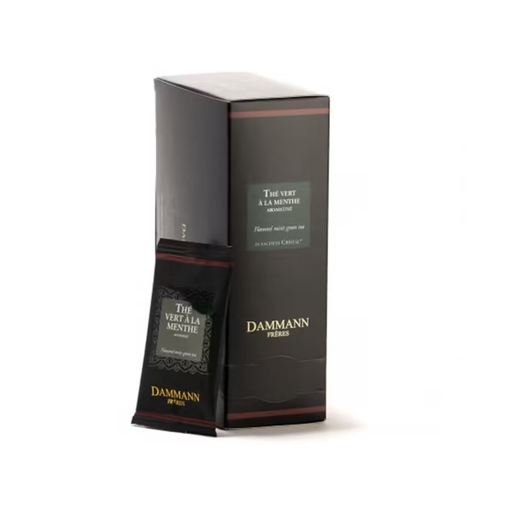 Image unavailable
DAMMANN Green Tea with Mint, 24 sachets, 48 g
Individually wrapped tea bags are well suited to a service where the team follows the same preparation instructions.
The product information lists two types of mint and natural mint flavouring. For a 200 ml cup, it recommends brewing for 3 to 5 minutes at 80–85 °C.
If your requirements specify a particular fair-trade certification, check the label on the product you buy.
View on Joybuy
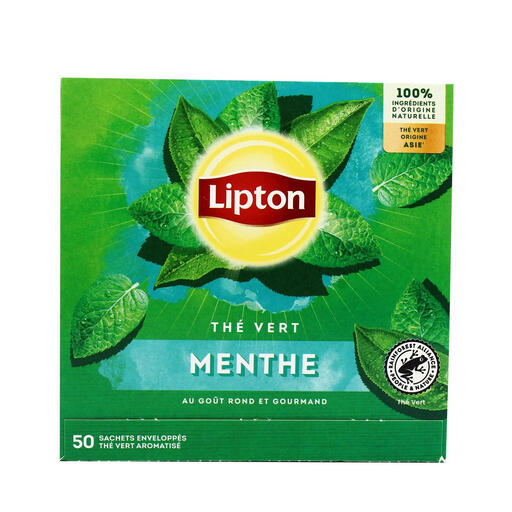 Image unavailable
Lipton Green Tea with Mint, 50 sachets, 80 g
A box of 50 tea bags is a practical choice for regular service without portioning out loose tea.
The listed ingredients are 64% green tea, 27% spearmint and 9% natural mint flavouring; the recommended brewing time is 2 to 3 minutes.
The Rainforest Alliance claim does not prove that the product carries the Fairtrade/Max Havelaar label. Check the packaging if this label is required.
View on Joybuy
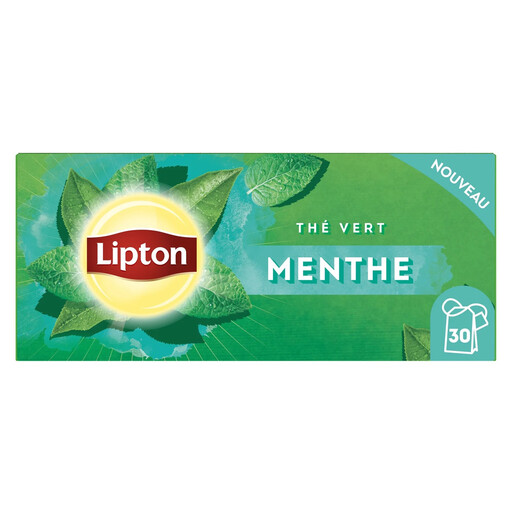 Image unavailable
Lipton Green Tea & Mint, 30 sachets, 48 g
The 30 tea bags and brewing instructions can help the team prepare each cup consistently.
The product information recommends brewing for 2 minutes at 90 °C and lists natural mint flavouring in the recipe.
The Rainforest Alliance certification stated for this product is not a substitute for proof that it carries the Fairtrade/Max Havelaar label.
View on Joybuy
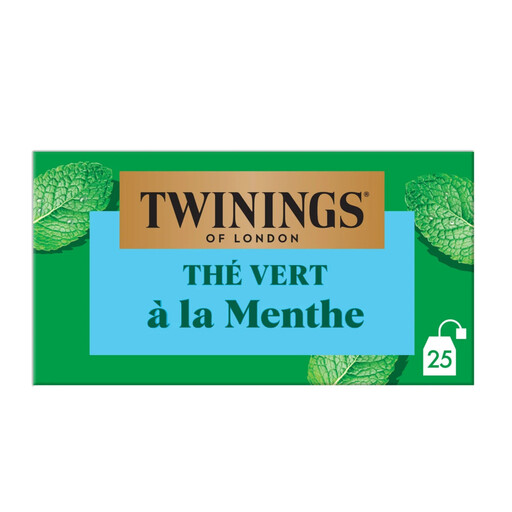 Image unavailable
Twinings Green Tea & Mint, 25 sachets, 50 g
The 25 individually wrapped tea bags are ideal for a buffet where guests make their own cups.
The listed ingredients are 73% green tea, 20% spearmint and 7% natural flavouring. Check the packaging for brewing instructions and to confirm whether it carries any label required by your hotel.
View on Joybuy
Frequently asked questions
Does tea described as fair trade always carry the Fairtrade/Max Havelaar label?
No. A fair-trade claim or another certification does not prove that a specific product carries the Fairtrade/Max Havelaar label. If your hotel uses this name in its marketing, check the label on the product delivered.
How should I prepare ETHIQUABLE loose-leaf mint tea?
For its Thé Vert Menthe variety Nanah loose-leaf tea, ETHIQUABLE recommends 2 g per 20 cl, water at 80 °C and a brewing time of 3 to 4 minutes. These instructions apply to this product, not to all mint teas.
What information should I keep if the tea is served out of its box?
Keep the information for the product and batch being served available to the team. The European Commission says allergen information must be available for non-prepacked foods, including in cafés and restaurants.
How can I restock without accidentally changing the recipe?
Check the product, ingredients list, best-before date and storage instructions with every batch. If the recipe or label changes, update the information used by the team before serving the new batch.


