People who buy tea for everyday drinking
You regularly make tea at home or at work and want to compare pack weights and the number of tea bags before choosing a size.


For your regular shop, compare the weight and number of tea bags, then choose a recipe based on how much green tea, mint leaves and flavouring you want. A higher proportion of mint doesn’t guarantee you’ll prefer the taste. Organic refers to the production method, while an infusion without tea leaves meets a different need from green tea with mint.
You regularly make tea at home or at work and want to compare pack weights and the number of tea bags before choosing a size.
You want to know exactly how much mint is in your cup. The ingredients listed by Auchan for 1336 and Twinings, and by Joybuy for Lipton, let you distinguish between mint leaves and natural flavouring without predicting which taste you’ll prefer.
You look at how the tea is produced, or want to distinguish green tea with mint from an infusion without tea leaves. Anses reminds us that tea naturally contains caffeine.
For your everyday shop, start with a pack size that suits your needs, then check the ingredients. Organic status and the presence of green tea are separate considerations: they tell you about different things.
| What to consider | What to check | Who is it for? |
|---|---|---|
| Pack size for regular use | Compare the total weight and number of tea bags in each pack. | If I make tea often, I want a pack size that fits the space I’ve set aside for it in my shopping. Around 39% of consumers would prioritise this need. |
| Blend ingredients | Check the stated proportions of tea and mint, and whether flavouring is included. | To find a cup with the right amount of mint for me, I want to distinguish leaves from flavouring rather than relying on the product name alone. This would be the main consideration for around 31% of consumers. |
| Organic status and sourcing | Check the details for the specific product; follow the on-pack recycling instructions for each packaging component. | If the production method guides my choice, I check the relevant information separately from the blend’s flavour profile. Around 15% of consumers would prioritise this. |
| Green tea content | Check whether the ingredients include tea leaves or whether it is a mint infusion without tea. | For an evening drink, I’d rather avoid the caffeine in green tea. This would be the top concern for around 15% of consumers. |
The number of tea bags alone doesn’t tell you the total weight. Carrefour Sensation and Yate product listings each show 25 tea bags weighing 40 g; other products come in different pack sizes.
Consider the weight, number of tea bags and how much you usually make together.
The ingredient lists published by Auchan for 1336 and Twinings, and by Joybuy for Lipton, show different proportions of mint. Some recipes also include natural flavouring.
Choose by checking the ingredients for the specific product, rather than relying on the words “mint tea” alone.
Green tea naturally contains caffeine, as Anses reminds us. An infusion without tea leaves also has a different composition from green tea with mint.
If you want to avoid caffeine from tea, check the ingredients list for the infusion you choose.
Organic refers to the production method. Information about tea bags and packaging relates to other characteristics; the government departments responsible for the ecological transition describe the on-pack recycling label as the guide to follow when sorting waste.
Check the organic claims, ingredients and recycling instructions for each component separately.
These ingredient details apply to the products mentioned, not every product from each brand. Use them to compare the ingredients and pack sizes that matter to you.
A tea-bag option to consider for regular use.
An E.Leclerc Marque Repère product, with 25 tea bags weighing 40 g in total.
A blend to consider if you’re looking for a recipe made mainly with green tea.
A 25-tea-bag pack weighing 50 g, with a blend of spearmint and flavouring.
A green tea with mint option in a pack of 30 tea bags weighing 48 g.
These products include green tea and mint blends in different pack sizes, as well as a cold mint and lime drink. Compare their ingredients and preparation methods based on the drink you want to make.
 Image unavailable
Worth considering if you’d like to compare green tea with mint and matcha against classic green tea and mint blends.
Box of 20 tea bags. Check the ingredients for this product if its production method is important to you.
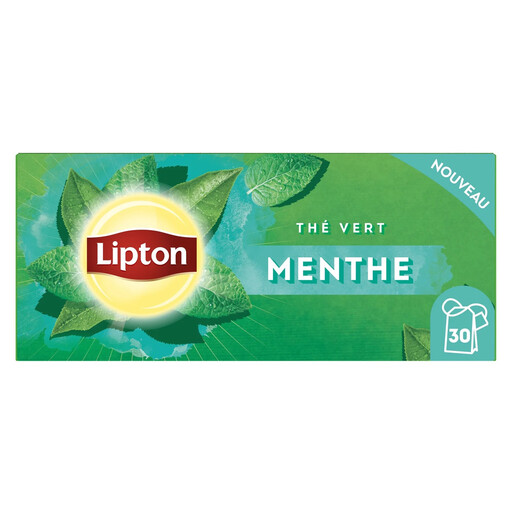 Image unavailable
Compare this tea-bag blend if you want to know how much spearmint it contains.
The Joybuy listing for this 48 g product states that it contains 64% green tea, 27% spearmint and 9% natural flavouring. It recommends infusing for 2 minutes at 90 °C.
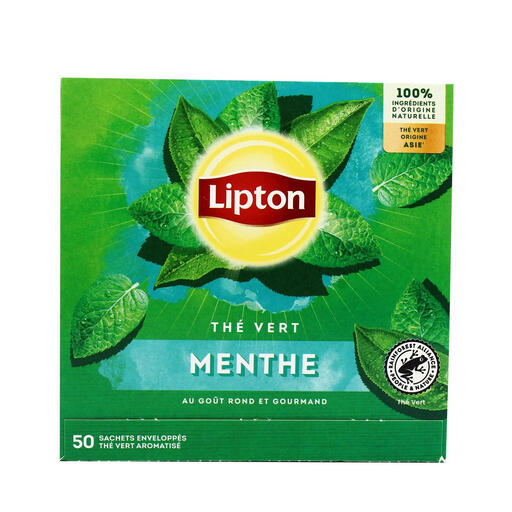 Image unavailable
Compare it with smaller packs if you regularly use green tea and mint bags.
Box of 50 tea bags, weighing 80 g in total. Check the label on this pack to confirm its ingredients.
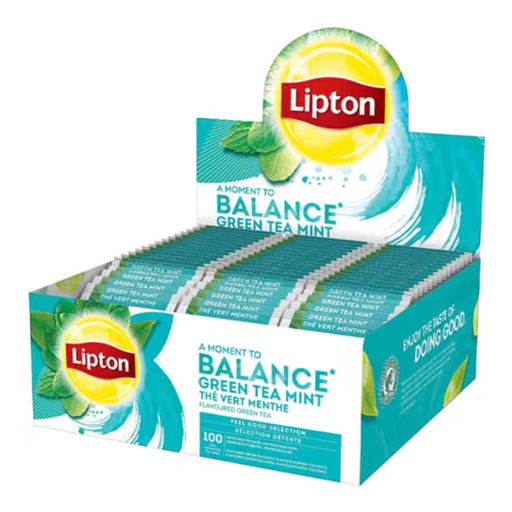 Image unavailable
A pack size to consider if you get through a lot of green tea and mint bags.
Box of 100 tea bags. To compare it with other packs, check the total weight and ingredients too.
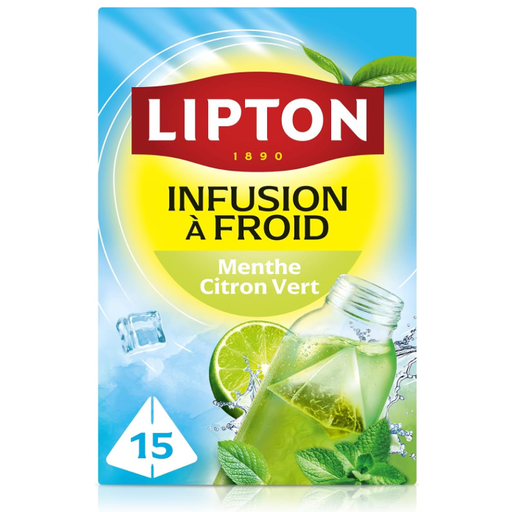 Image unavailable
Worth considering for a cold mint and lime drink rather than a hot cup of green tea with mint.
Box of 15 tea bags. If you want to avoid caffeine from tea, check the ingredients for this infusion.
Compare the total weight, number of tea bags and ingredients for each product. Even if two packs weigh the same, the proportion of mint can differ: the Carrefour and E.Leclerc listings state that Carrefour Sensation contains 22% mint leaves, while Yate contains 13% spearmint.
No. The stated proportion describes the ingredients, not your taste preference. Check whether the recipe includes flavouring too, and follow the brewing instructions for the pack you choose.
No. Organic refers to the production method, which is governed by European regulations, according to the Ministry of Agriculture. To find out whether your chosen product contains flavouring, check its ingredients list separately.
Green tea naturally contains caffeine. An infusion without tea leaves avoids this source of caffeine, provided you check the ingredients. Anses notes that the effects of caffeine on sleep vary from person to person and depend on individual habits.
Follow the on-pack recycling instructions for the relevant components rather than relying on the words “recyclable” or “compostable” alone. The government departments responsible for the ecological transition describe this labelling as a guide to sorting everyday products.