Households that regularly use tea bags
If you want to keep track of how many portions you have left and replenish your supply easily, compare boxes of 25 or 50 tea bags to find a size that suits your consumption.


For a mint tea supply that’s easy to count and serve, choose tea bags to suit how often you drink it; loose-leaf tea is a good option if you prefer to measure it yourself. Check the ingredients too, as the proportions of tea, mint and flavouring vary between products. A jar is an optional storage container: use one that’s suitable for food and keep the information from the original packaging.
If you want to keep track of how many portions you have left and replenish your supply easily, compare boxes of 25 or 50 tea bags to find a size that suits your consumption.
If you like to prepare a teapot or several cups and adjust the amount yourself, a pack of loose-leaf mint tea is another option. The 100 g Naturela product should be kept away from heat and moisture.
If you decant tea to keep your cupboard organised, choose a container suitable for food contact and keep the useful information from the packaging with it. The DGCCRF stresses the importance of using containers suitable for food.
First, decide between ready-to-infuse portions and tea that you measure yourself. Then check the ingredients and storage instructions for the product you choose. If you plan to decant the tea, choose a jar separately.
| Criteria | What to check | Who is it for? |
|---|---|---|
| Pack size | Compare the number of tea bags and the net weight with how often you make tea. Available options include packs of 25 tea bags weighing 40 g and 50 tea bags weighing 80 g. | I want to know how many portions I have left without keeping an opened box for longer than necessary. Around 33% of consumers are said to prioritise managing their supplies this way. |
| Storage and jars | Follow the instructions on the pack. If you decant the tea, choose a container suitable for food contact and keep the best-before date and labelling information. | With loose-leaf tea or an opened pack, my main concern is protecting the tea and being able to find its information after putting it away. Around 27% of consumers are said to put this first. |
| Ingredients | Read the ingredients list and, where they’re given for the specific product, check the percentages of green tea, mint and flavouring. | If I switch products, I want to know what the new recipe contains before stocking up. This is said to be the main criterion for around 20% of consumers. |
| Loose-leaf tea and organic labelling | For loose-leaf tea, check the weight and what equipment you’ll need to brew it. If organic labelling matters to you, check that it appears on the specific product. | I prefer to measure my own tea, or I’m looking for a product with clear organic labelling, without confusing these two features. Around 20% of consumers are said to favour this choice. |
Carrefour, Auchan and E.Leclerc product listings give different proportions of green tea, mint and flavouring, depending on the product. So the category name alone doesn’t tell you exactly what’s in it.
Compare the ingredients lists for each product before buying several boxes.
You could lose the best-before date, ingredients and storage instructions needed to identify the tea in the jar.
Keep the packaging, or store its label and useful information with the jar, including the ingredients and any allergen information.
A jar used to hold tea directly must be suitable for food contact. The DGCCRF recommends using containers designed for food.
Check that the container is suitable and follow its instructions before decanting the tea into it.
More tea bags won’t necessarily make storage easier if you rarely drink this tea. Once opened, you should still follow the storage instructions for the product you choose.
Choose a number of tea bags that suits your usual consumption, and close the pack as instructed.
These products let you compare specific pack sizes and recipes, without assuming that the characteristics apply to every product from each brand.
Mint green tea bags, including boxes of 30 and 50, for a supply in individual portions.
A 25-teabag, 40 g pack to consider if you’re looking for a smaller option.
A 100 g pack of organic loose-leaf mint green tea for people who prefer to measure out their own brew.
A 25-teabag, 40 g Marque Repère product, useful for comparing another smaller pack size.
These five tea-bag products are ready-to-infuse portions that are easy to store. Choose the number of tea bags to suit how quickly you use them, and check the ingredients for each recipe, especially the one that combines mint and matcha.
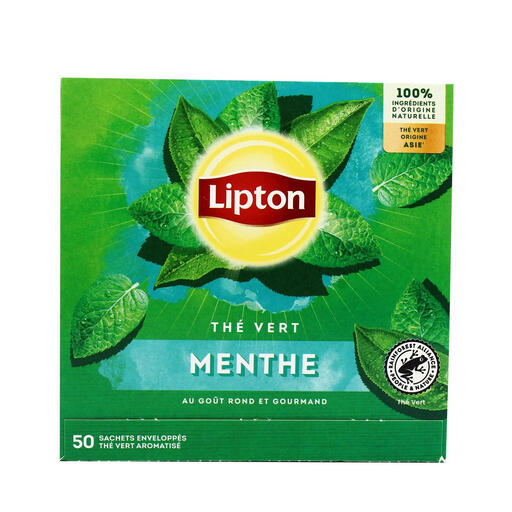 Image unavailable
A pack of individual portions that means you won’t need to replace your tea bags as often.
The listing for this product gives the recipe as 64% green tea, 27% spearmint and 9% natural mint flavouring. It recommends storing the tea in a cool, dry place at a temperature no higher than 25 °C.
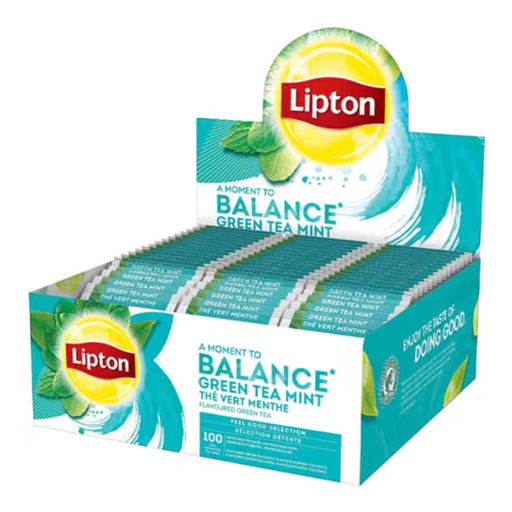 Image unavailable
The 100-teabag box is suited to households that drink this tea regularly and have suitable storage space.
The listing gives the recipe as 21% mint and 15% flavouring. Check the pack for storage instructions after opening.
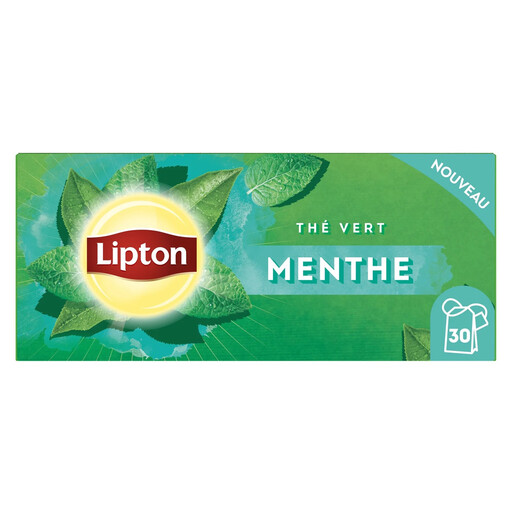 Image unavailable
A box of 30 tea bags for a supply of individual portions, without opting for the 50-teabag pack.
The listing gives the recipe as 64% green tea, 27% spearmint and 9% natural mint flavouring. Once opened, keep the pack tightly closed in accordance with its instructions.
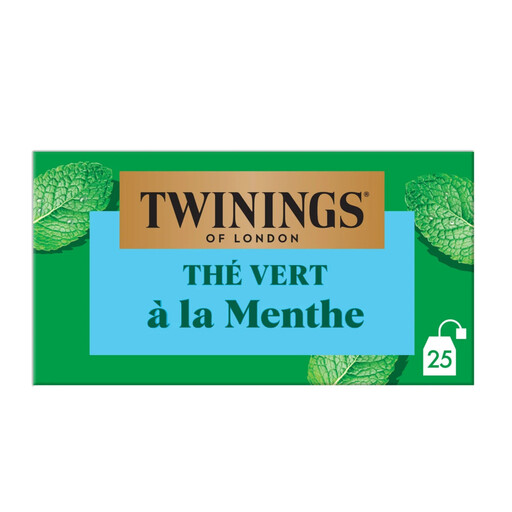 Image unavailable
The 25-teabag pack gives you a smaller supply of individual portions.
The listing gives the recipe as 73% green tea, 20% spearmint leaves and 7% natural mint flavouring. It recommends storing the tea in a cool, dry place away from sunlight and moisture.
 Image unavailable
Consider this tea-bag blend if you’re specifically looking for a recipe that combines several types of mint with matcha, rather than a simple green tea and mint blend.
The listing gives the recipe as 60% green tea, 20% spearmint, 18% peppermint and 2% matcha, and states that the ingredients come from organic farming. Check the net weight on the pack when comparing sizes.
Yes, as long as you use a jar suitable for food contact and follow its instructions, as the DGCCRF advises. For loose-leaf tea such as Naturela, also protect it from moisture and heat.
Keep the information you need to identify the product and find its best-before date, ingredients list and storage instructions. Keep any allergen information shown on the packaging too; you can leave the original label next to the jar.
Yes. Compare the best-before date with how quickly you expect to use the tea, and follow the storage instructions. The French Ministry of the Economy distinguishes the best-before date from the use-by date: they don’t mean the same thing.
Tea naturally contains caffeine, as the Anses points out. If this matters to you, check the information for the product you’re considering and take account of any other caffeinated drinks you consume.