Preparing several lunchboxes
If you’re packing snacks in advance, count the sealed rolls or packs rather than just the individual pieces in the multipack.


If you’re preparing several lunchboxes, first decide how many individual units you need to hand out. Rolls of sweets work if everyone can have a whole roll, while small packs of chewing gum let you give each person a separate pack. A large pack is better suited to sharing as a group. In every case, check the ingredients of the exact product, as mint sweets and sugar-free chewing gum may suit different preferences.
If you’re packing snacks in advance, count the sealed rolls or packs rather than just the individual pieces in the multipack.
If you’re offering mints to several people or for different breaks, choose between individual units and a shared container, depending on how the group will use them.
If the ingredients influence your choice, distinguish between mint sweets and sugar-free chewing gum, and read the ingredients and warnings for the specific product.
The right format depends mainly on how you’ll hand out the contents: by the roll, by the pack or from a shared pack. The ingredients are a separate consideration from the packaging.
Worth considering: if you can give a whole roll to each lunchbox or share several rolls between breaks. The Mentos Mint multipack featured by Carrefour France contains four rolls of 14 pieces.
Bear in mind: a roll separates the sweets into group-sized portions, not small sealed portions for each person. For this Mentos product, Auchan France lists 69 g of sugars per 100 g.
Worth considering: if each person needs their own pack. Carrefour France, for example, features a five-pack Hollywood Green Mint multipack, with eight pieces in each pack.
Bear in mind: ‘sugar-free’ doesn’t mean ‘sweetener-free’. Check the ingredients and warnings on the pack you choose.
Worth considering: if the group will help themselves from one pack rather than having portions prepared in advance.
Bear in mind: if you’re filling separate lunchboxes, you’ll need suitable containers and should check the packaging of the product you buy.
| What to consider | What to check | Who is it for? |
|---|---|---|
| Portioning | Count the separate containers and check whether they are rolls, individual packs or one shared pack. | I’m preparing several lunchboxes and want to give each one a sealed unit. Portioning would come first for around 40% of consumers. |
| Sugars and sweeteners | Check the nutritional values per 100 g, then read the ingredients list and warnings for the chosen variety. | I prefer a sugar-free product, while taking into account the sweeteners listed for the people who’ll be eating it. This would be a priority for around 30% of consumers. |
| Quantity to share | Compare the net weight, number of units and how the pack will be stored between uses. | For a group, I mainly want a suitable amount to share, without necessarily preparing a portion for each person. Around 30% of consumers would put quantity first. |
A shared container is no substitute for rolls or packs that are already separated when each lunchbox needs its own portion.
Work out how many sealed containers you need before comparing the total weight of the packs.
You may need extra reusable boxes or bags to divide up a large pack.
The sugar-free chewing gums listed by Carrefour France and Mentos France contain sweeteners; warnings vary by product.
Before handing out several packs, check the ingredients list and information on the exact product.
Auchan France lists 69 g of sugars per 100 g for Mentos Mint sweets in rolls, while Mentos France describes Pure Fresh Menthe Douce as sugar-free chewing gum. These are two different products.
Check the nutritional information for the product you plan to take with you, rather than relying on the brand name alone.
The net quantity, ingredients and date on the pack are all useful when choosing a format to share and store.
Check this information and the allergens before preparing the lunchboxes. Keep the original packaging handy so you can refer back to the product details.
The range includes mint sweets in rolls and mint chewing gum, so check which type you’re looking at before comparing multipacks.
Packs of mint chewing gum can be a good choice when each person needs their own separate pack.
The mint confectionery range includes larger containers to consider when sharing from one pack.
These three products are mint or menthol chewing gums to consider for sharing or for breaks on the go. If you’re preparing lunchboxes, check how many units in each pack can actually be handed out separately.
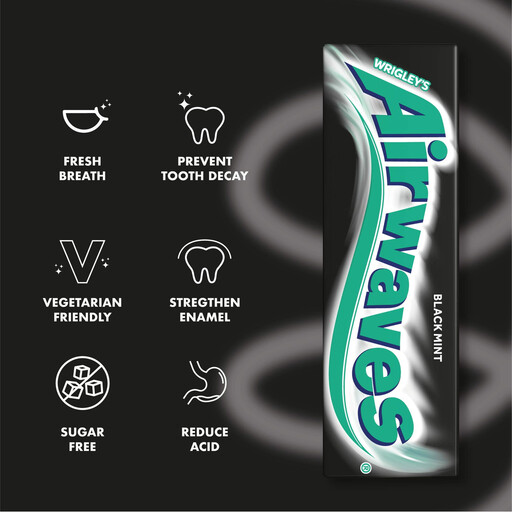 Image unavailable
If you’re handing out menthol chewing gum for several breaks, check how many separate packs the multipack contains. The product name says ‘10pcs’; check the packaging to see what this number refers to.
Also check the ingredients and warnings, including information about soya, phenylalanine and excessive consumption.
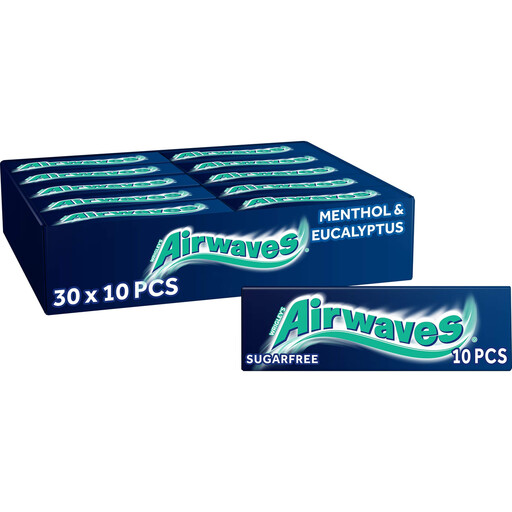 Image unavailable
This menthol variety is worth considering if you plan to share chewing gum while you’re out and about. The product name says ‘10pcs’, so check how many separate packs there are before planning to give one to each person.
Read the ingredients and warnings on the packaging, including information about soya, phenylalanine and excessive consumption.
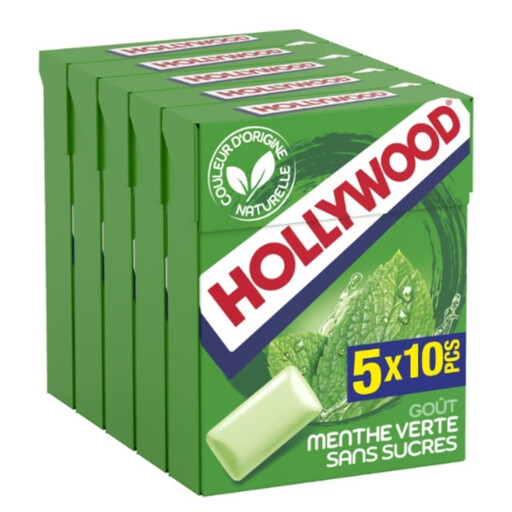 Image unavailable
The stated 5 × 14 g format may suit you if you want to split the multipack between several breaks or people. Check that the packaging gives you the sealed portions you need.
If aspartame is a concern, check the ingredients list for the variety you choose before handing it out.
They give you four rolls to share out, but not four small portions containing just a few pieces. Carrefour France lists the Mentos Mint multipack as four rolls of 14 pieces. If everyone needs a smaller container, compare it with separate packs.
No. ‘Sugar-free’ doesn’t mean there are no sweeteners. For example, Mentos France lists Pure Fresh Menthe Douce as containing 0 g of sugars and 70 g of polyols per 100 g. Check the ingredients of the specific chewing gum you want to buy.
Check the product name, ingredients, allergens, net quantity, nutritional information and date. The DGCCRF explains that food labelling gives you access to product information. Keep these details available if you’re splitting up the contents.
Read the date and storage instructions on each pack, rather than assuming the type of date from the fact that it’s a mint product. The Ministry of the Economy distinguishes between a use-by date and a best-before date; check the label on the specific product to see which applies.