Mint tea fans looking for an everyday cuppa
If you make several cups a week, compare the ingredients and brewing instructions rather than assuming that all mint green teas taste the same.


When choosing mint green tea for your regular shop, start with the recipe rather than the brand alone. Check whether it contains mint leaves, extracts or flavourings, then look at the proportions if they’re listed. If organic certification matters most to you, check the details for the exact product. For regular use, consider the pack size and brewing instructions too.
If you make several cups a week, compare the ingredients and brewing instructions rather than assuming that all mint green teas taste the same.
If organic certification guides your choice, check the logo and accompanying information on the specific product, along with its ingredients list. The packaging alone won’t tell you this.
If mint green tea is a regular part of your shop, check both the number of tea bags and the net weight. Two boxes with the same number of tea bags won’t necessarily contain the same amount of tea.
Start with the blend’s ingredients, then check the details that matter for how you’ll use it: certification, pack size or preparation. Ingredient proportions describe the recipe, but on their own they can’t predict exactly how it will taste in your cup.
| What to consider | What to check | Who is it for? |
|---|---|---|
| Blend ingredients | Compare the stated proportions of green tea and mint; distinguish between leaves, extracts and flavourings. | I want to know what gives the tea its minty notes before choosing a blend for my everyday cups. Around 36% of consumers prioritise this balance of ingredients. |
| Organic certification and ingredient information | Check the EU organic logo and accompanying information on the exact product, as well as its ingredients list. | When certification comes before my other criteria, I want to be able to identify it on the box I buy. This is a priority for around 29% of consumers. |
| Pack size for regular purchases | Check both the net weight and the number of tea bags, especially if you’re choosing between different pack sizes. | When restocking the tea we drink at home, I look for an amount that suits our needs rather than relying on the size of the box alone. Around 21% of consumers put pack size first. |
| Brewing and caffeine | Check the brewing time and temperature for the specific blend; if you’re sensitive to caffeine, consider when you drink tea. | I like being able to adjust my cup, while keeping in mind that green tea naturally contains caffeine. Brewing is the main consideration for around 14% of consumers. |
The Lipton and Twinings blends described by Carrefour and Auchan respectively combine mint leaves with natural mint flavouring. The name of the blend alone doesn’t tell you where all its minty notes come from.
Read the ingredients list if you prefer leaves on their own or want to distinguish between leaves, extracts and flavourings.
The products reviewed have different numbers of tea bags and net weights. Counting the bags alone won’t tell you how much tea each box contains.
Check both details on the packs you’re considering.
The European Commission presents the organic logo as a certification mark, not as a measure of mint intensity or a guarantee that you’ll like the taste.
Use the logo to check certification, then look separately at the recipe and brewing instructions.
Anses notes that caffeine is naturally present in tea. Adding mint to green tea doesn’t make it a caffeine-free herbal infusion.
If you’re sensitive to caffeine, consider how much tea you drink and when you drink it.
The 30-tea-bag, 48 g mint green tea product described by Carrefour and Joybuy is a good option for comparing ingredients for everyday use.
The 25-tea-bag, 50 g product featured by Auchan provides a detailed breakdown of its ingredients, with different brewing times depending on the strength you prefer.
The mint green tea featured by Carrefour lists ingredients from organic farming and comes in a pack of 20 tea bags.
This own-label product gives you another mint green tea recipe to compare, in a pack of 25 tea bags weighing 1.6 g each.
The E.Leclerc catalogue features Yate mint green tea in a pack of 25 tea bags, with a net weight of 40 g.
These tea-bag options let you choose by ingredients, pack size and, for some products, brewing instructions. Compare each variant separately: details listed for one box won’t necessarily apply to another.
 Image unavailable
Worth considering if you’re looking for a blend of green tea, mint and matcha, rather than mint green tea without matcha.
The box contains 20 tea bags.
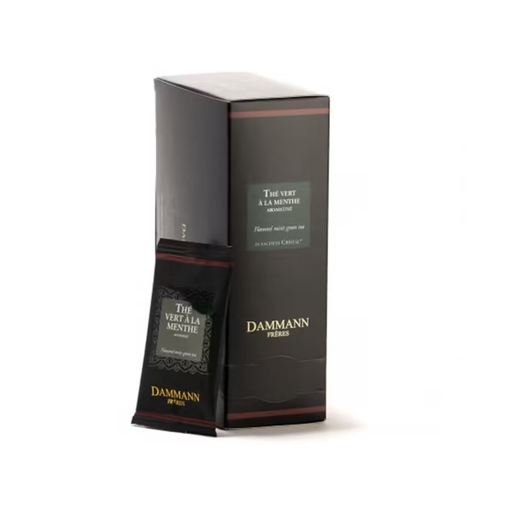 Image unavailable
Worth a look if you’re after a blend with two types of mint leaves and natural mint flavouring.
The Joybuy listing for this product gives its ingredients as green tea, spearmint and peppermint leaves, with 24 individually wrapped tea bags weighing 48 g in total.
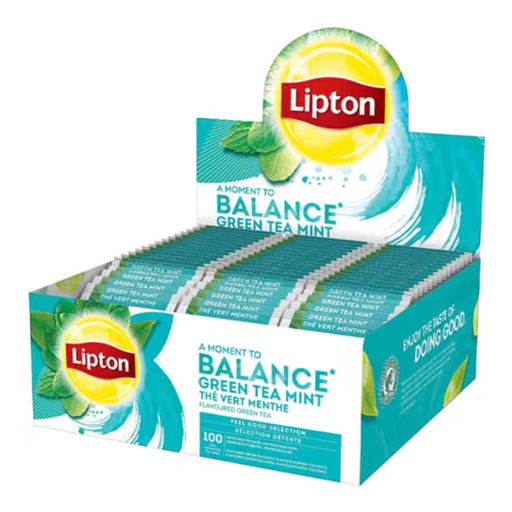 Image unavailable
The 100-tea-bag pack could suit you if you’re choosing primarily by the number of bags for regular use.
Check the ingredients list on this gift box if the blend’s proportions matter to you: don’t assume they’re the same as those for the 30-tea-bag Lipton product.
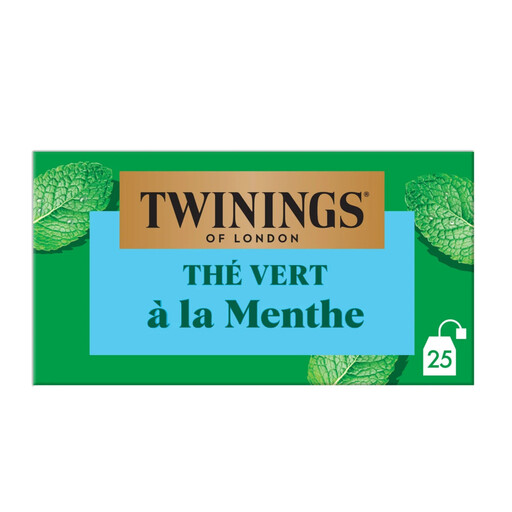 Image unavailable
Compare this one if you’d like a blend with stated ingredient proportions and the option to adjust the brewing time.
For this 25-tea-bag, 50 g product, Auchan lists 73% green tea, 20% spearmint and 7% natural mint flavouring. The brand recommends brewing for 3 minutes for a classic cup or 4 minutes for a stronger one.
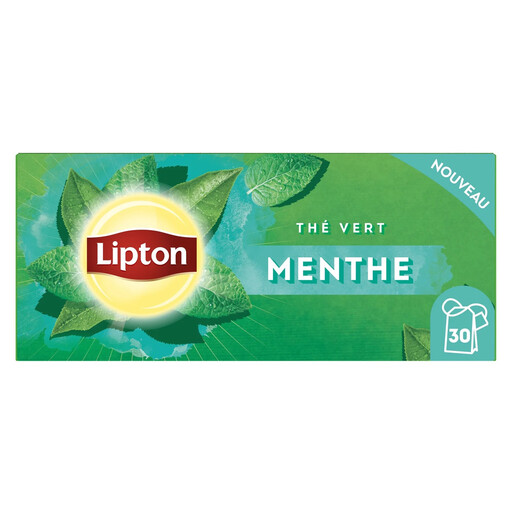 Image unavailable
Worth considering if you want to know the proportions of tea, mint and flavouring before choosing your regular blend.
Carrefour and Joybuy list this product as containing 64% green tea, 27% spearmint and 9% natural mint flavouring, in a box of 30 tea bags weighing 48 g. The recommended preparation is 2 minutes at 90 °C for 200 ml of water.
No. Green tea made from the tea plant naturally contains caffeine, even when the blend includes mint. Anses notes that sensitivity to caffeine varies from person to person, so consider how much tea you drink and when you drink it.
Start with the temperature and brewing time recommended for your chosen product, then adjust the time to suit your taste. Carrefour recommends 2 minutes at 90 °C for the Lipton pack of 30 tea bags. For the Twinings pack of 25, the instructions featured by Auchan give separate brewing times of 3 and 4 minutes.
According to the European Commission, it identifies a product certified as organic by an approved control body; it doesn’t describe its taste. If certification guides your purchase, check the logo and the accompanying control and origin information on the specific box.
The number of tea bags alone doesn’t tell you how much tea is in the box, so compare the net weight too. The products featured include boxes of 25 tea bags weighing either 40 g or 50 g, depending on the product.