To prepare a specific amount before a late-night snack, choose chocolate that states the number of pieces and the weight of each one. According to the brand, Lindt’s Mini Santa bag contains 22 pieces weighing 10 g each. A small, sealed pack can also help you keep track of how much you eat, even if it doesn’t state the weight of each piece. Then compare the sugars and energy per 100 g, and check the recipe’s allergens. In France, the Nutri-Score is still optional, as the Ministry of the Economy points out.
Who is this choice for?
Anyone who likes to prepare a portion
If you’d rather not help yourself straight from a large bag, look for the number of pieces and, if possible, the weight of each chocolate. For example, Lindt states that each piece in its Mini Santa bag weighs 10 g.
Anyone who compares food labels
Nutrition values per 100 g make it easier to compare packs of different sizes. The DGCCRF uses this as the basis for nutrition declarations; the Nutri-Score, however, is a voluntary label.
Anyone who checks for allergens
A small chocolate or an assortment may contain several ingredients that someone needs to avoid. Check the ingredients list and allergen information for the exact product before choosing a size.
What should you check?
When choosing Christmas chocolate for a late-night snack, start by deciding how much you want to prepare. Then compare the label and recipe before settling on a size.
| Criteria |
What to check |
Who it matters to |
| Amount per piece |
Number of chocolates and stated weight per piece, or the size of the sealed pack. |
To prepare my snack before opening the pack, I need to know how many pieces I’m having and what they add up to. Around 40% of consumers put this ability to predict their portion first. |
| Nutrition values |
Sugars and energy per 100 g, followed by the amount you plan to eat. |
When comparing two different pack sizes, I want to compare the sugar content on the same basis rather than relying on the word “mini”. This is the main concern for around 30% of consumers. |
| Ingredients and allergens |
Ingredients, highlighted allergens and “may contain” statements on the exact product. |
If I need to avoid an ingredient, the recipe matters more to me than the shape of the chocolate. Around 20% of consumers prioritise this check. |
| Buying and storage |
Availability at your chosen shop, the best-before date and storage instructions. |
To keep the chocolates until the evenings I have planned, I need to be able to get the size I want and store it as directed on the packaging. This is the main concern for around 10% of consumers. |
Mistakes to avoid
-
Assuming “mini” means less sugar
The size of each piece helps you plan how much to eat, but it doesn’t tell you how much sugar is in 100 g of the product. Size and ingredients answer two different questions.
Compare the “of which sugars” line and the energy per 100 g, then factor in how many pieces you plan to have.
-
Expecting every pack to display a Nutri-Score
In France, the Ministry of the Economy explains that displaying the Nutri-Score is voluntary. If it’s not there, you’ll still need to read the nutrition information.
If it appears on the packaging, use it as an extra source of information, and check the nutrition table and ingredients too.
-
Judging allergens by the size of the chocolate
Recipes vary between different chocolates, especially filled ones. Their small size won’t tell you what ingredients they contain.
Read the allergens and any “may contain” statements on the packaging of your chosen product, even if you’re switching to a different assortment.
-
Relying on a particular seasonal product being available
A listing for a Christmas chocolate doesn’t guarantee that it will be stocked at the shop where you do your shopping.
Check that it’s available at the shop or collection service you plan to use before planning your snacks around that size.
Brands and retailers to consider
Lindt
The brand offers, among other products, a Mini Santa bag and LINDOR chocolates in bite-sized portions. These are two formats to consider separately.
- According to Lindt France, the 220 g Mini Santa bag contains 22 mini moulded chocolates weighing 10 g each. The weight per piece gives you a useful guide when preparing a portion.
- This doesn’t tell you about the sugar content or allergens, so check the recipe of the bag you choose.
Ferrero
Ferrero Rocher is available, among other options, in a small pack of chocolate, hazelnut and wafer bites.
- Carrefour lists a pack of three pieces weighing 38 g, which may suit you if you prefer to keep track of your portion by pack.
- This is the weight of the pack. Check the recipe and labelling of this product before buying.
Carrefour
The retailer lists chocolate bites, including products in its festive range.
- Product listings can help you check the size and details of the product you’re interested in.
- Check availability at your local shop: the listings for two products we looked at showed them as unavailable.
Auchan
The retailer stocks, among other products, Côte d’Or mini bites and a pack of LINDOR chocolates.
- Auchan’s listing for the 158 g Côte d’Or mini bites states that it contains around 17 pieces, giving you an approximate count.
- An approximate number of bites won’t tell you the exact weight of each one.
E.Leclerc
The retailer offers chocolates and confectionery, as well as Christmas promotions at participating stores.
- To choose a particular mini chocolate, check its listing and confirm that it’s available at the store you’re planning to visit.
Lidl
The retailer promotes seasonal Christmas offers.
- If you’re interested in a mini chocolate, check its own label for the number of pieces, nutrition values and allergens.
Chocolate advent calendars on Joybuy
These advent calendars offer Christmas chocolates in individual pieces. The windows can help you keep track of how many pieces you’ve taken, but the calendar’s total weight alone won’t tell you the weight of each one.
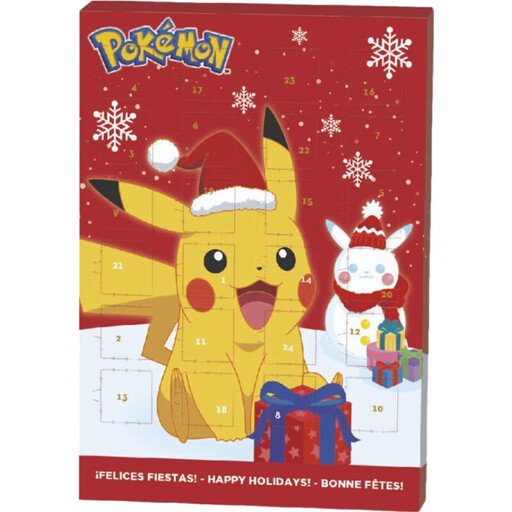 Image unavailable
POKÉMON chocolate advent calendar, 65 g
An advent calendar is a good choice if you’d rather count the chocolates you take than help yourself from an open bag. The 65 g is the total weight: if the weight of each piece matters to you, check the packaging for this information. Also check the allergen information on the product you receive.
View on Joybuy
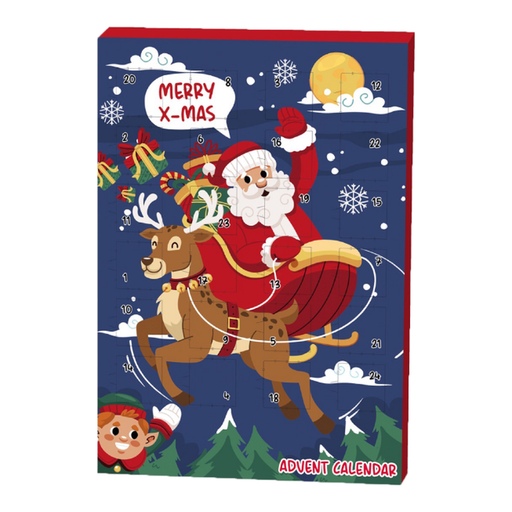 Image unavailable
Chocolate advent calendar, 50 g
This calendar also lets you plan how many chocolates to have before a late-night snack. It weighs 50 g in total, but that alone doesn’t tell you how much each piece weighs. Check the label if you want to portion them by weight. Check the ingredients and allergens on the exact product too.
View on Joybuy
Frequently asked questions
Is the Nutri-Score compulsory on Christmas chocolates in France?
No. The Ministry of the Economy explains that the Nutri-Score is voluntary. For pre-packed foods that must display a nutrition declaration, check the nutrition information on the packaging even if the logo isn’t shown.
Does the “soda tax” apply to solid Christmas chocolates?
No. The levies on non-alcoholic drinks mentioned by the Ministry of the Economy don’t apply to solid chocolates. When choosing between two chocolates, sugar content is still worth checking on their labels, regardless of this tax.
How can you compare mini chocolates of different weights?
First compare the energy and sugars per 100 g: the DGCCRF uses this as a common basis for nutrition declarations. Then check the net weight, number of pieces and weight per piece where stated, so you can relate these values to the amount you plan to have.
Which allergens should you check in filled chocolates?
Read the ingredients list, highlighted allergens and any “may contain” statements for the exact product. Recipes can vary between different chocolates and assortments, so check the packaging you receive too.
How should you store chocolates before eating them?
Follow the instructions on the packaging. The Auchan listings we checked for Côte d’Or and LINDOR products advise keeping them in a cool, dry place. Also check the best-before date on the pack you choose.


