Parents who need to follow nursery rules
Before choosing a format, ask whether the nursery allows food brought in from outside and how it would like it to be handed out. Keep the packaging so you can check the ingredients.


For a nursery snack, first ask whether the setting allows you to bring in chocolate, then check any dietary restrictions and the ingredients of the product you have in mind. Individually wrapped pieces are easier to count and hand out if they’re allowed. With an assorted box, you’ll need to check each variety, and choosing a mini format doesn’t mean chocolate should be the only thing on the snack menu.
Before choosing a format, ask whether the nursery allows food brought in from outside and how it would like it to be handed out. Keep the packaging so you can check the ingredients.
Individually wrapped pieces let you decide how many to hand out, rather than serving them straight from a large box. Manger Bouger nevertheless recommends limiting fatty and sugary foods day to day and offering a varied snack.
The ingredients must be suitable for the child’s dietary restrictions. If an individual care plan (PAI) applies, its dietary requirements should be taken into account in consultation with the nursery, as Assurance Maladie explains.
For a group snack, start by getting the nursery’s approval and checking dietary restrictions. Then choose the quantity and how the chocolates will be handed out.
| What matters | What to check | Who is this for? |
|---|---|---|
| Approval and allergens | Ask whether brought-in chocolates are allowed, and check the ingredients and any ‘may contain’ warnings on the pack you buy. | If the nursery doesn’t allow outside food, or the ingredients aren’t suitable for someone’s dietary restrictions, I’ll need to choose something else. Around 40% of consumers put approval and dietary restrictions first. |
| Portion size | Check the weight and sugar content per piece if listed, then decide how many pieces to hand out. | I want to plan a small amount of chocolate without making it the whole snack. This is the priority for around 40% of consumers. |
| Handing them out | Check the number of pieces and whether they’re individually wrapped. If it’s an assortment, check the ingredients of each variety. | When serving several children, I’d rather be able to identify and share out the pieces easily. Ease of distribution comes first for around 20% of consumers. |
A small piece makes it easier to count portions, but it isn’t a varied snack in itself. Manger Bouger recommends limiting fatty and sugary foods day to day.
Decide how much to serve based on the child and the rest of the snack, rather than relying on the format’s name alone.
Fillings and different pieces in a box may have different ingredients and ‘may contain’ warnings. The mini Côte d’Or bite listed by Auchan, for example, contains hazelnuts, almonds, milk and soya. Its product listing says the pieces aren’t individually wrapped.
Once the nursery has approved, check every variety on the packaging and leave out any that aren’t suitable for known dietary restrictions.
In France, the DGCCRF says that prepacked foods must carry a nutrition declaration. The Ministry of the Economy explains that displaying a Nutri-Score is optional.
Whether or not there’s a logo, read the nutrition information and ingredients, and check how much you’ll actually serve.
Carrefour listings for Lindt mini chocolates say that the products in question are unavailable. A listing doesn’t guarantee that the product is in stock or that the pack you find in store has the same ingredients.
For your planned snack, check availability and read the label on the product you actually buy.
Lindt offers LINDOR bites and seasonal mini formats, among other products.
Under the Kinder brand, Ferrero offers chocolate in small formats, including Kinder Chocolat Mini.
Carrefour offers assorted chocolates under its Carrefour Extra brand, among other products.
E.Leclerc offers P’tit Déli mini chocolate cakes from its Marque Repère range. These are cakes, not a box of chocolates.
Auchan lists mini bites from various manufacturers, including a Côte d’Or milk chocolate variety filled with hazelnuts and almonds.
Lidl promotes its Way To Go chocolate range by highlighting how it is sourced.
These two Kinder formats suit different needs: individually wrapped bars that are easy to count, or mini bites whose distribution details need checking. In either case, ask the nursery for approval first.
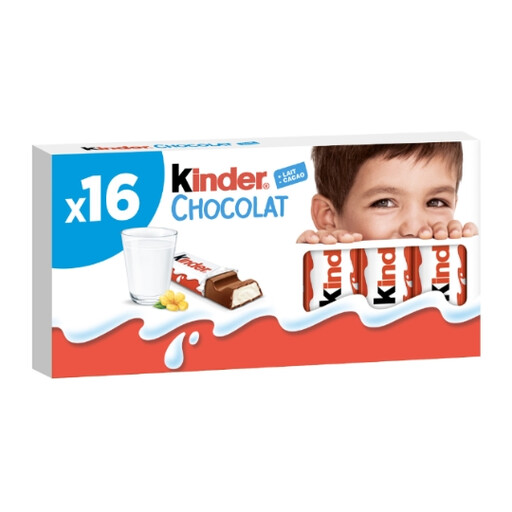 Image unavailable
This pack of 16 individually wrapped bars may be suitable if the nursery allows this way of handing them out and the ingredients meet the dietary requirements of the children concerned. It contains milk and soya. The bars aren’t confirmed as a mini format, so check the amount per bar on the pack before planning portions.
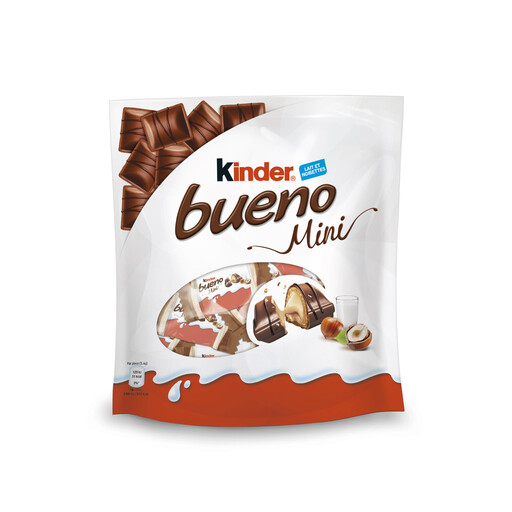 Image unavailable
These mini bites may suit anyone looking to share out small pieces, as long as you check the number of pieces and whether they’re individually wrapped on the bag. The product has a hazelnut filling and contains milk and soya, so check the ingredients against any dietary requirements. To work out how much to serve, also read the nutrition information on the pack.
No. The Ministry of the Economy says that this logo is optional, while the DGCCRF says prepacked foods must carry a nutrition declaration. If there’s a Nutri-Score on the box, read it alongside the ingredients, nutrition information and the amount you plan to serve.
No, not as a levy on non-alcoholic drinks. The Ministry of the Economy says it applies to drinks, not solid chocolate. When choosing a box, check its ingredients and nutrition information instead.
Read the ingredients and ‘may contain’ warnings on the pack you’ll be handing out, then check them against the restrictions shared with the nursery. If a child has an individual care plan (PAI), follow the dietary requirements agreed with the nursery, in line with the role described by Assurance Maladie.
Their small size makes them easier to count, but they don’t make a varied snack on their own. Manger Bouger recommends limiting fatty and sugary foods day to day. It suggests, for example, serving bread and a few squares of chocolate with a piece of fruit or some fruit purée.