Families putting together a lunch
If brioche is just one part of the meal, the best format also depends on what else you’re planning to serve. Manger Bouger recommends adapting children’s portions to their age and appetite.


If you’re serving several children, individually wrapped mini brioche rolls make it easier to hand them out. A plain brioche roll is a good choice if you’d rather build the rest of the plate yourself, while two fresh mini brioche rolls may suit a sit-down lunch. The size alone doesn’t determine how much to serve: take account of each child’s age and appetite, as well as the rest of the meal. Compare the nutritional information per 100 g and per portion, then check the allergens on the product you buy.
If brioche is just one part of the meal, the best format also depends on what else you’re planning to serve. Manger Bouger recommends adapting children’s portions to their age and appetite.
Knowing the weight of each piece makes serving easier to organise. Brioche Pasquier lists a 40 g portion for its Briochettes, while Auchan’s product listing for Harrys Mini Tressée shows six 35 g pieces.
Recipes and precautionary statements about possible traces vary between products. Check the pack you’re actually buying or, for brioche from the chilled aisle, the information provided in store.
Start by deciding how you’ll serve the brioche, then check the weight of each piece and the details for the specific product you plan to serve.
Choose this if : you want to share the rolls easily between several children or pack them for an outing.
Bear in mind : the weight of each piece is a useful serving guide, but it isn’t automatically the right amount for every child.
Choose this if : you’re planning to serve the roll with other foods as part of the lunch.
Bear in mind : anything you add to the roll also contributes to the overall meal.
Choose this if : you’re serving lunch at the table and would prefer a smaller pack; Carrefour lists Nanterre brioche rolls sold in pairs.
Bear in mind : check the allergen information and any warnings specific to the retailer.
| What matters | What to check | Who is this for? |
|---|---|---|
| What’s in the meal | Plan what else you’ll serve; in particular, compare sugars and fat per 100 g. | If brioche is part of the lunch, I want to consider the whole plate before choosing. Around 37% of consumers put the overall make-up of the meal first. |
| Serving and taking it with you | Check the number of pieces, how they’re packed and the storage instructions. | For an outing or a meal shared between several children, I’m mainly looking for a format that’s easy to divide and take along. Around 27% of consumers prioritise this convenience. |
| Portion size at a glance | Check the weight per piece and the nutritional values per portion, where provided. | I want to know how much each piece weighs, without assuming it’s automatically right for every child. Around 27% of consumers prioritise having a clear portion guide. |
| Allergens | Read the ingredients, highlighted allergens and any precautionary statements about traces on the product you buy. | If I need to avoid certain ingredients, I base my choice on the exact recipe and its warnings. Around 9% of consumers put checking allergens first. |
The products mentioned list portions of 35 g or 40 g, but the name of the format doesn’t tell you how much to serve each child. Manger Bouger recommends adapting portions to a child’s age and appetite.
Use the weight of each piece to help plan how much to serve, taking the rest of the lunch into account.
Two packs with pieces of different weights can’t be compared by piece count alone. The DGCCRF says that nutritional values per 100 g provide a common basis for comparison.
Compare the values per 100 g first, then check the weight and information per piece for the way you plan to serve them.
Ingredients and precautionary statements about traces can vary between recipes, even within the same brand.
Read the exact packaging you’re buying. For a product from the chilled aisle, also check the retailer’s warnings.
Briochettes are an option to serve plain or as part of a meal you put together yourself.
Mini Tressée au sucre perlé is a mini brioche sold in individual pieces.
The retailer lists Nanterre brioche rolls sold in pairs, a handy option for serving at the table.
E.Leclerc’s page for pastries and brioches includes, among other products, packs of six mini chocolate-chip brioche swirls.
The retailer lists products including Harrys Mini Tressée in its brioche and pastry range.
These ham and Emmental brioche bites are a good fit if you want to serve a filled option at lunch, rather than the plain or sugar-topped mini brioche rolls mentioned above.
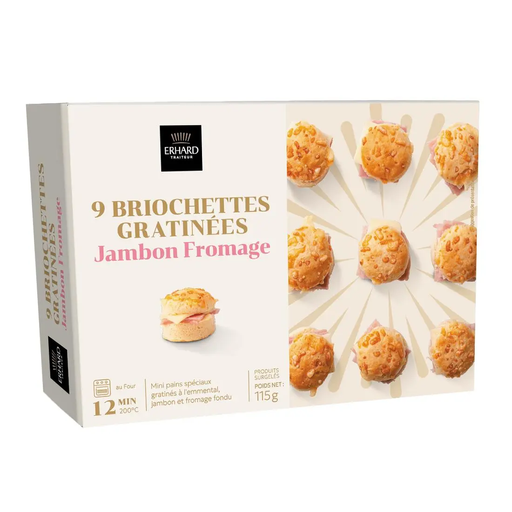 Image unavailable
This pack contains 9 filled brioche bites, weighing 115 g in total, for serving at lunch. Before serving, check the weight per piece, preparation instructions and allergen information on the packaging.
For a varied lunch, plan to serve other foods rather than relying on brioche alone. Manger Bouger also recommends adapting children’s portions to their age and appetite.
First compare the nutritional values per 100 g, then check the weight and values per piece where provided. The DGCCRF presents the information per 100 g as a basis for comparison; the weight of each piece then helps you judge how much you’ll be serving.
Read the ingredients and precautionary statements about traces for the exact product you’re buying. The listings mentioned for Brioche Pasquier and Harrys both include wheat and eggs, but their other ingredients and warnings differ. You can’t tell what allergens a product contains from its mini size alone.