What should you look for first?
If you’re considering an occasional snack for a child under 3, start with their ability to chew and the specific product, then decide how much to serve before offering it.
| What to check |
What to look for |
Who should consider this? |
| Texture |
Check for pieces and hard inclusions, and consider the texture of the biscuit or filling in relation to what your child can already chew. |
If my child is still getting used to lumps, even a small bite could be difficult to eat. Around 28% of consumers would prioritise suitable texture. |
| Sugars and ingredients |
Compare the ‘of which sugars’ figure per 100 g for products of the same type, and read their ingredients. |
For an occasional treat, I want to know what’s in it rather than rely on the word ‘mini’. Sugar content would be the top priority for around 28% of consumers. |
| Portion and packaging |
Check the number of sachets, the pack weight and, if stated, the weight of each piece. |
When I take a snack out with me, I prefer to decide what will be served before opening the pack. Around 22% of consumers would put portion control first. |
| Allergens |
Check the exact recipe, the allergens listed and any ‘may contain’ statements. |
If my child needs to avoid certain foods, I need to rule out unsuitable recipes before considering the format. Around 22% of consumers would prioritise this check. |
A biscuit option on Joybuy
This white chocolate biscuit is an option for a biscuit-based snack, rather than a filled bite. For a toddler, it’s only suitable if they can manage the texture and an adult prepares the portion.
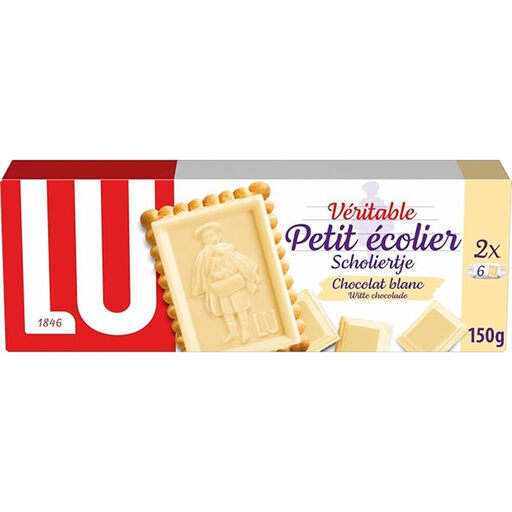 Image unavailable
Petit Écolier Choco Blanc, 150 g
Consider it as a white chocolate biscuit for an occasional snack, only if your child can already manage its texture. The pack weighs 150 g; check the size of each biscuit, allergens and nutritional information before deciding how much to serve.
View on Joybuy
Frequently asked questions
Does the French tax on sugary drinks apply to mini white chocolate?
No, not to solid white chocolate or a coated biscuit. Article 1613 ter of the French General Tax Code, published by Légifrance, applies to drinks and liquid preparations for drinks. This contribution therefore isn’t a relevant factor when comparing these chocolates.
Is the Nutri-Score compulsory on these products in France?
No. According to the DGCCRF, the Nutri-Score is voluntary, while a nutrition declaration is generally compulsory on pre-packed foods. Even if no Nutri-Score is displayed, you can compare the ‘of which sugars’ figure per 100 g for products of the same type.
Is the Nutri-Score enough to choose a snack for a child under 3?
No. It doesn’t, on its own, tell you about the product’s texture or allergens. The French decree of 14 March 2025 published by Légifrance excludes the use of the Nutri-Score on infant foods intended for children aged 0 to 3; that doesn’t mean an ordinary mini chocolate is an infant food. Check the exact product and your child’s ability to chew.
Which allergens should you check in a biscuit or filled bite?
Read the label for the exact product: ingredients vary between coated biscuits, filled bites and assortments. Carrefour France’s product information for Milka Mini Stars White lists wheat, milk and soya, and also says it may contain egg. The information for the Lindt Création assortment at Auchan France lists hazelnuts, milk, soya, wheat and barley, among other ingredients. Also check for any ‘may contain’ statements when buying the pack.


