What should you check before choosing?
First, distinguish between having a prepared portion during a break and tracking your carbohydrate intake during exercise. The format and nutritional values per 100 g only help you measure what you eat if you know how much you’ve consumed.
White chocolate bites
Consider if: you want to prepare a few bites for a break and can work out their weight.
Bear in mind: the Lindt France product information for Lindor white chocolate states that it contains 45 g of sugars and 48 g of fat per 100 g. These figures don’t tell you how much is in a single bite.
Mini white chocolate biscuits
Consider if: you’d like to count out biscuits and are happy with a biscuit product rather than a white chocolate bite.
Bear in mind: Milka Mini Stars combine biscuit, milk filling and white chocolate coating. They aren’t the same as a white chocolate bite.
Measured sports nutrition product
Consider if: you need to calculate your carbohydrate intake during a demanding ride.
Bear in mind: check the carbohydrate content per portion and choose an amount that suits your ride. A bite of chocolate can only be included in your calculation if you know its weight.
| What to check | Check for | Who is it for? |
|---|
| Carbohydrate per piece |
Carbohydrate per 100 g and the weight of the amount you actually eat. |
If I’m planning my intake during a ride, I need to be able to count the carbohydrates in each serving. Around 36% of the consumers concerned would make this their priority. |
| Prepared portion |
How many pieces to take and the weight of each, if stated. |
To avoid eating straight from a large bag, I prefer to decide before setting off how many bites to take. Portion control would be the main requirement for around 29% of the consumers concerned. |
| Ingredients and allergens |
The product name and allergens on the packaging for the exact product. |
When the recipe matters to my choice, I want to know whether I’m buying white chocolate, a chocolate-coated biscuit or a hazelnut bite. Around 21% of the consumers concerned would put this check first. |
| Transport |
Storage instructions and the condition of the packaging before your ride. |
If my portion needs to stay in my pocket until a break, I want to be able to store and open it in suitable conditions. This would be the priority for around 14% of the consumers concerned. |
Formats to consider on Joybuy
These products include a white chocolate and strawberry bite, a white chocolate biscuit and a wafer bar. If you’re choosing a portion to take on a bike ride, check what type of product it is and how much it weighs before calculating the carbohydrates you plan to consume.
 Image unavailable
Just The Fun Part Strawberry & White Chocolate, 120 g
Consider this if you’d like to prepare a few white chocolate and strawberry bites for a break. The bag contains 120 g in total. Check or weigh an individual bite before calculating its carbohydrate content. The ingredients include wheat, milk and soya; check the allergens and storage instructions on the packaging.
View on Joybuy
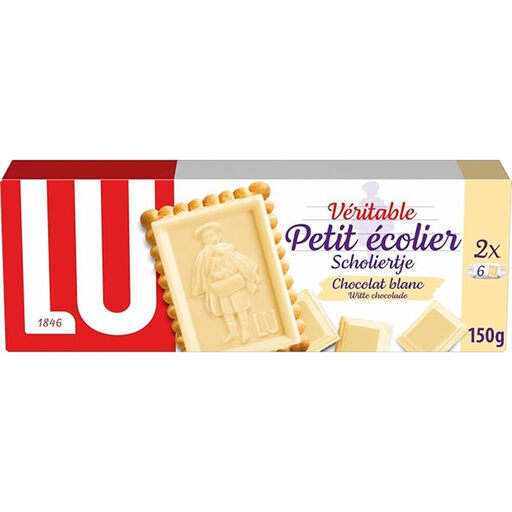 Image unavailable
PETIT ECOLIER Choco, Blanc, 150 g
Consider this if you’d rather prepare biscuits than white chocolate bites. The pack weighs 150 g, but that doesn’t tell you how much an individual biscuit weighs. Check the weight of your portion to calculate its carbohydrate content. This is a biscuit with white chocolate; check the packaging for ingredients including wheat, milk and soya.
View on Joybuy
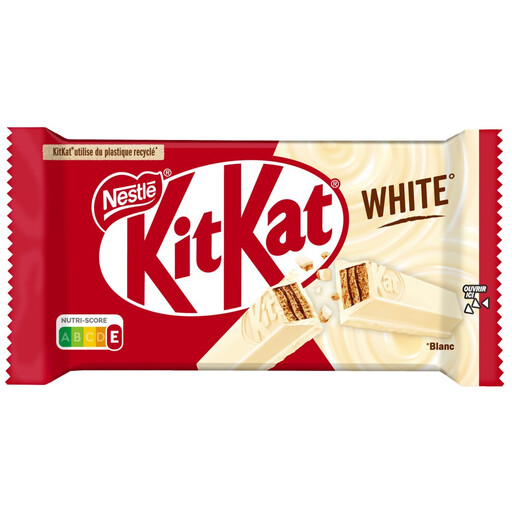 Image unavailable
KitKat White Unite, 41,5 g
Consider this if you’re looking for a bar rather than mini bites. Its stated weight is 41,5 g. If you only eat part of it, calculate the carbohydrate content based on the amount you actually consume. The product information describes a wafer and lists wheat and milk; check the ingredients for the exact product.
View on Joybuy
Frequently asked questions
Does the ‘soda tax’ apply to solid white chocolate in France?
No. The French Ministry of the Economy describes this levy as applying to sugary drinks, not solid white chocolate. To choose your portion, check its weight and nutritional information instead.
Is Nutri-Score compulsory on mini white chocolate?
No. Santé publique France states that its use is voluntary. European rules do, however, require a nutrition declaration for prepacked foods. Whether or not a Nutri-Score is shown, read the ingredients and nutritional values per 100 g. Don’t assume that a product is suitable for your ride based on the logo alone.
How do you calculate the carbohydrates in a bite?
Multiply the carbohydrate content per 100 g by the weight of the bite in grams, then divide by 100. If the bite’s weight isn’t stated, weigh the amount you plan to take before setting off. Don’t work out the carbohydrates in one piece from the weight of the whole bag alone.
Which allergens should you check in these formats?
Read the ingredients for the exact product. Under European rules, allergens present must be highlighted. Depending on the recipe, the products covered here list milk, soya, wheat or hazelnuts, and some product information warns that they may contain traces of other allergens.


